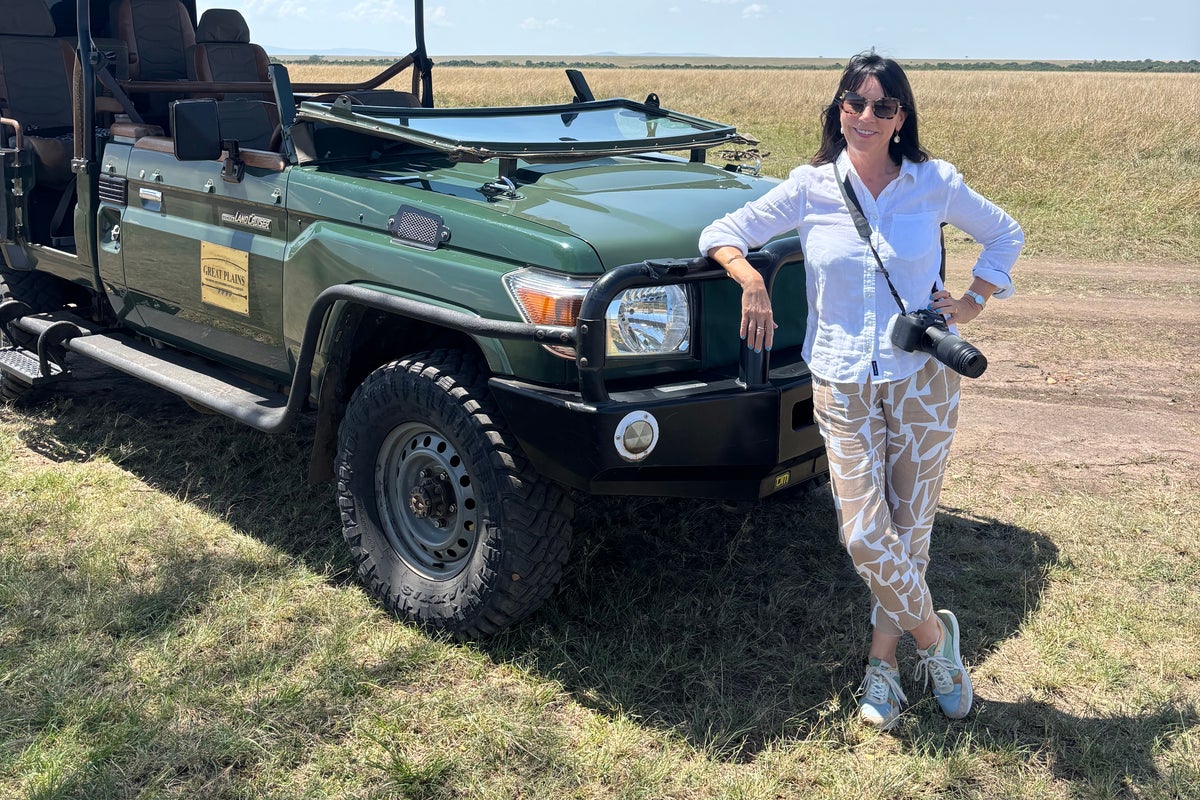
In the Maasai Mara National Reserve, a female leopard is on route to the river, trailed by her playful four-month-old cub, intent on perfecting his crouch and pounce technique on everything from butterflies to his mother. Behind them, the remains of an impala swings from an acacia tree. “She’s had a good night of hunting and feasting but now they need to drink,” Francis Siamon, my Great Plains Conservation guide, explains. This is an extraordinary wildlife encounter, not only because it’s rare to see a leopard with cub so active by day, but also as there is only one other vehicle close by. We stay for an hour, enthralled by the rare company of these normally elusive cats, plus other interlopers: a mob of banded mongoose that stand on hind legs with noses aquiver, and a warthog in a hurry, a trail of young replicas hot on her heels.
Later, it’s a different story when, from a distance, we count eighteen safari vehicles in pursuit of an animal, which Francis says is most likely to be a cheetah. It’s small irony that this is a hunter being hunted, not with guns but zoom lenses. There’s no pleasure to the scene, only discomfort in the realisation that the traffic is impeding the cat’s success in scoring a meal. However, it’s during the annual migration, from July to August, when up to 200 safari vehicles crowd the river crossings, that the cheetah, a hunter by day, suffers the most.