
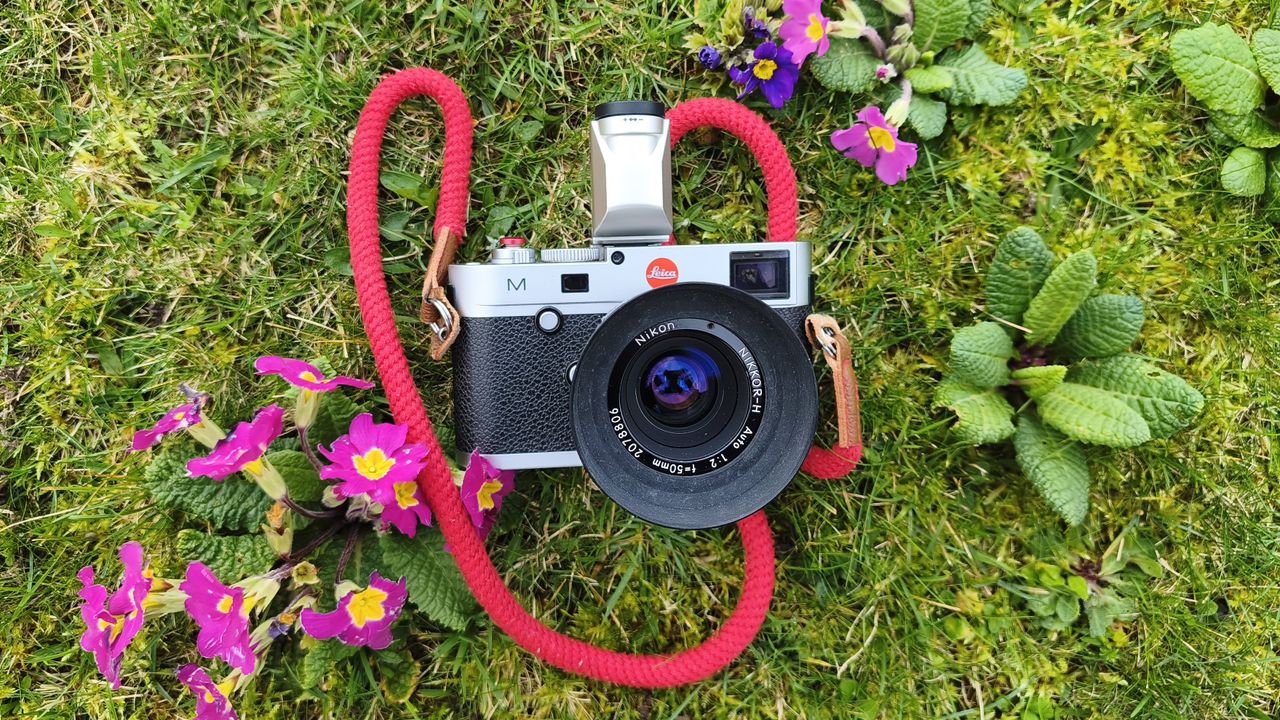
There’s something quietly rebellious about selling a 14-year-old Leica… only to replace it with another 14-year-old Leica. In a world obsessed with spec sheets, stacked sensors, and firmware updates that promise to change your life, I found myself doubling down on something far simpler. I swapped my beloved Leica M-E Typ 220 for the Leica M240. On paper, it sounds like a lateral move. In reality, it feels like I’ve finally found my perfect digital M.
My Leica M-E Typ 220 was, and still is, a beautiful camera. That 18-megapixel full-frame CCD sensor has a rendering that borders on mythical. The colors have a Kodachrome-like warmth that feels almost filmic straight out of the camera.

Reds glow. Blues deepen. Skin tones feel alive. It never chased dynamic range charts or high ISO bragging rights. Instead, it gave you character - that unmistakable CCD bite that made every frame feel intentional. Shooting it felt like loading a roll of slide film and trusting your instincts.

But as much as I adored the M-E, I started craving just a little more flexibility. Not more megapixels for the sake of it. Not more frames per second. Just more usability without sacrificing soul. Enter the Leica M240.
The Leica M240 keeps everything I love about the digital M formula and gently nudges it into the modern era. Its 24-megapixel CMOS sensor is, to my eye, the sweet spot. It gives you just enough resolution to crop with confidence, print large, and retain beautiful detail - without tipping into the clinical hyper-clarity of today’s 40- and 60-megapixel monsters. Files are robust but forgiving. They have depth. They breathe. And unlike the CCD, the CMOS sensor gives me better high-ISO performance when the light drops, and I refuse to.
What truly changed everything for me, though, was one feature I once dismissed entirely: Live View. For years, I was a purist. Rangefinder patch, frame lines, done. The idea of using an EVF on a Leica felt like betrayal. I even kept my distance from the dedicated Leica EVF systems in the past. But with the M240, Live View isn’t a gimmick — it’s a quiet revolution.

Live View means I can mount my glorious 1960s Nikon 50mm f/2 Non-AI lens, a piece of glass that is, frankly, a chef’s kiss, and critically focus with precision. It means my Leica 135mm f/2.8 Elmarit-M becomes not just usable, but enjoyable.
With the EVF attached via the hot shoe, I have the best of both worlds: the purity of the optical rangefinder with its bright frame lines, and the clinical accuracy of magnified focusing when I need it. It’s no longer either/or. It’s a choice.
And here’s the thing: the M240 feels right in the hand. Its design is, to me, flawless. Slightly thicker than earlier Ms, yes, but reassuringly solid. The shutter sound has that muted Leica thud. The brass top plate wears in beautifully. And the battery? It lasts a lifetime between charges. In a world where mirrorless cameras seem to chew through batteries before lunchtime, the M240 just keeps going. Day after day. Shoot after shoot.

There’s a strange irony in declaring a 14-year-old digital camera “perfect” in 2026. But perfection isn’t about being the newest. It’s about being enough. The M240 gives me 24 megapixels - the sweet spot. It gives me CMOS flexibility without losing Leica character.
It gives me Live View and EVF adaptability without taking away the magic of the rangefinder. It lets me shoot vintage Nikon glass one moment and classic Leica M lenses the next.

So yes, I replaced my 14-year-old Leica with another 14-year-old Leica. And I’ve never been happier. In a time where cameras are becoming ever more complex, the Leica M240 reminds me that photography is about feel, intuition, and connection. For my needs, it isn’t outdated. It isn’t compromised. It’s perfect.
Check out the best Leica cameras being sold new today