
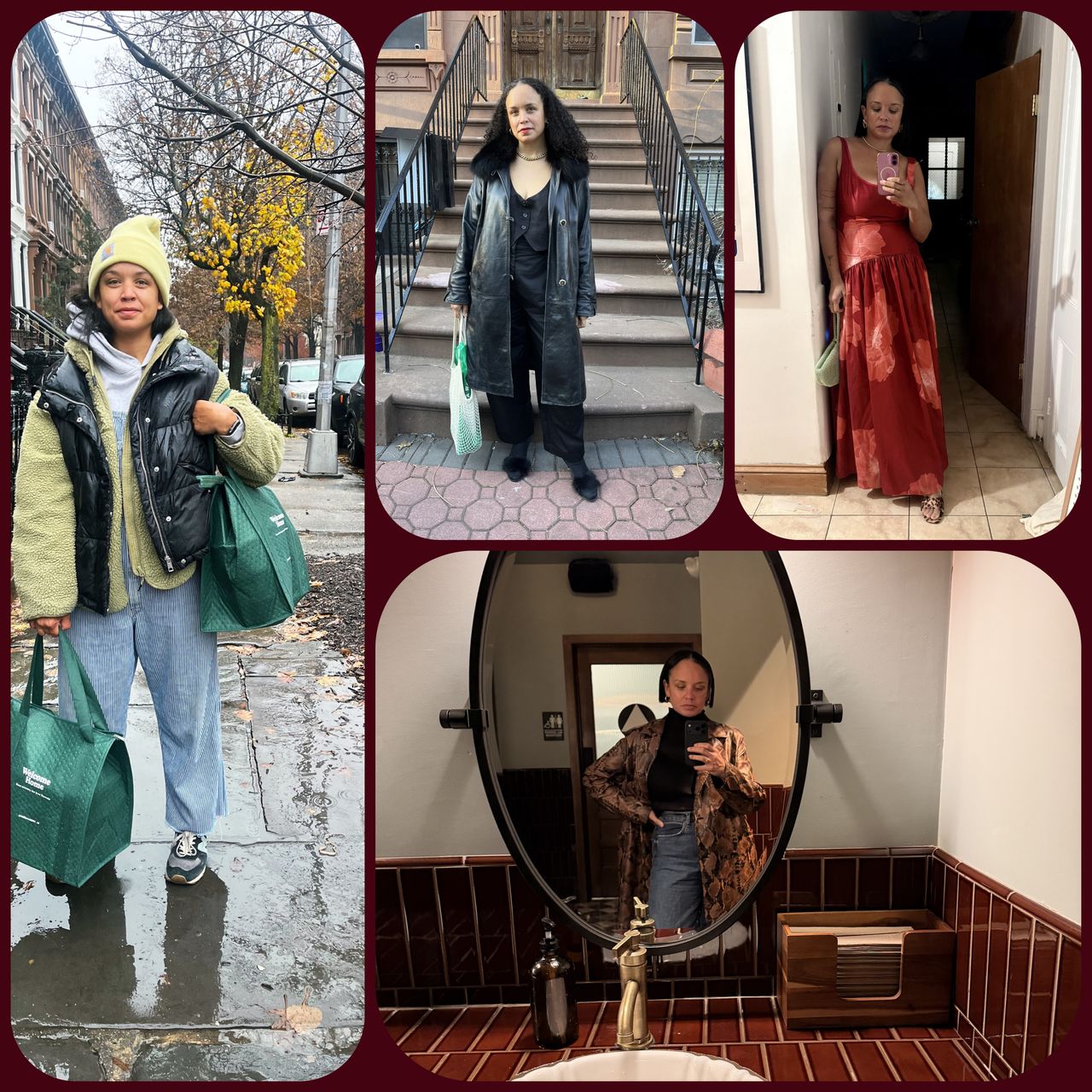
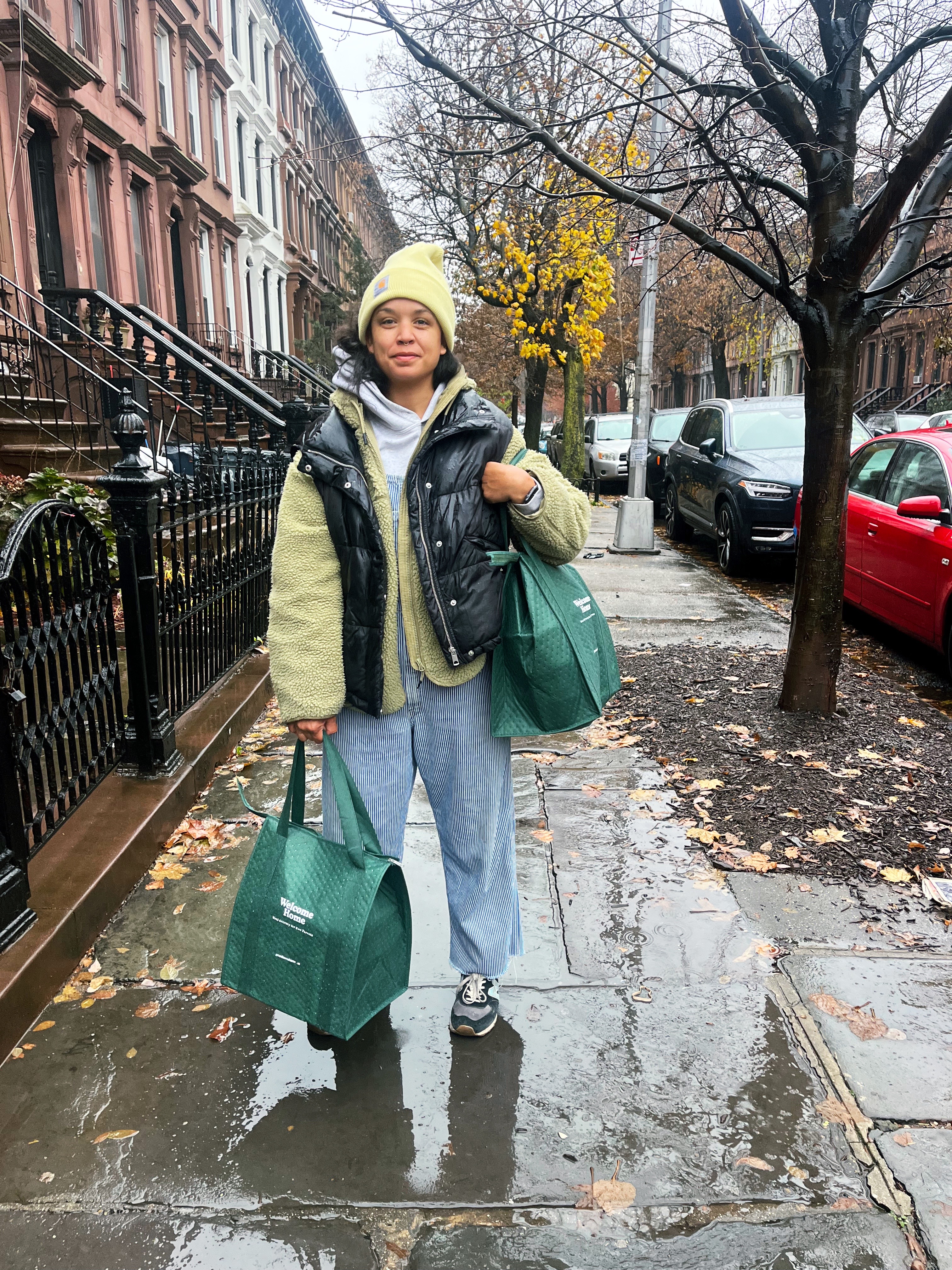
Before I launched my business, I still thought of myself as a “hot mom”—a phrase I used less as a statement of appearance than as a reminder that I was still a person with taste, humor, desire, and a life outside my children. I became a mom in 2016, and now I have two sons, Rye and Lennon, but even in those early years, I held tightly to the parts of myself that existed beyond them. I loved getting dressed for the small, daily rhythms of my life—walking my kids to school, meeting a friend for a drink, heading out for date night. My style was simple but playful, mixing colors and patterns with a tomboy edge. In those clothes, I felt confident, strong, and fully like myself.
In 2023, I launched Welcome Home, a meal delivery service for new parents rooted in the idea that food is medicine—that the postpartum period is one of the most physically and emotionally demanding transitions in a person’s life, and that nourishment should be treated as essential care. The idea came from my own experience: after my first son, I felt terrible because I wasn’t eating well. During my second pregnancy, I became focused on postpartum nutrition because I wanted to feel strong and energized. I was surprised a business offering this kind of support didn’t already exist, so I started building it.
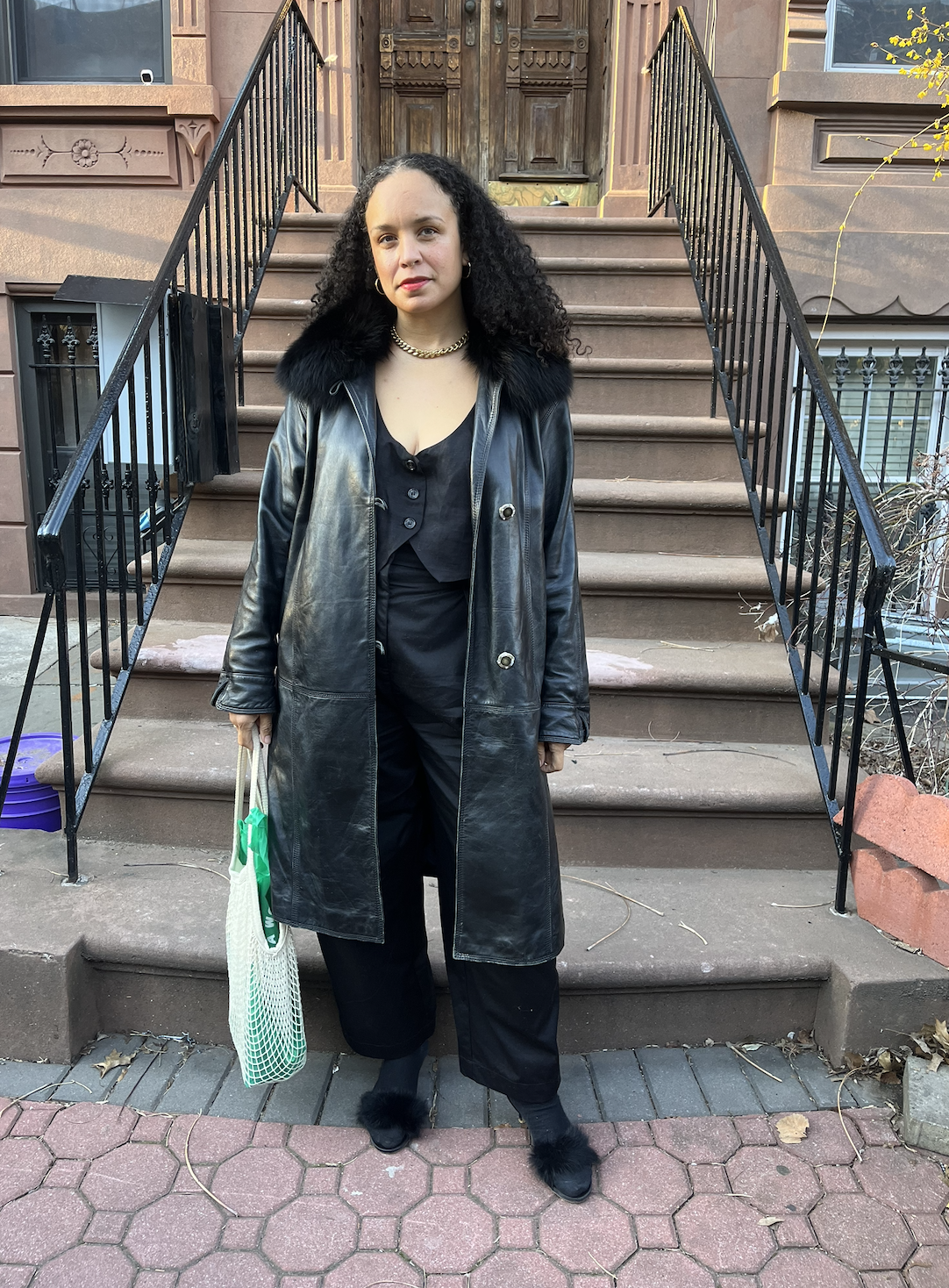
For the first year, Welcome Home was my night job, something I worked on after long days at my corporate role. I was ride-or-die for that company and had built a huge part of my identity around it, even if it meant putting my own happiness on the back burner. So when I was unexpectedly let go, it felt like the ground disappeared beneath me. At the exact moment I lost that structure, Welcome Home began to take off. What should have felt like an opportunity instead felt like being thrown into something I wasn’t ready for.
I went full-time on the business in 2024, but instead of feeling empowered, I sank into a depression. My life became very small, very quickly. It was just Welcome Home or my family—nothing else existed. Before this, I had a big, active life. I saw friends constantly, went out to eat—my favorite thing in the world—and felt connected to something beyond my day-to-day responsibilities.
I wasn’t trying to disappear from other people. I was hiding from myself.
My days swung between bursts of energy—emailing potential partners, developing recipes, talking to doulas—and total paralysis. Some days, I couldn’t get off the couch. I would just lie there, terrified that orders wouldn’t come in, that I had made a mistake, that everything would fall apart.
Somewhere in that stretch, I stopped getting dressed.
It wasn’t a decision at first. But soon, I was wearing sweatpants every day. There’s a certain kind of tired you can feel in your clothes, and mine felt heavy, permanent. I wasn’t trying to disappear from other people.
I was hiding from myself.
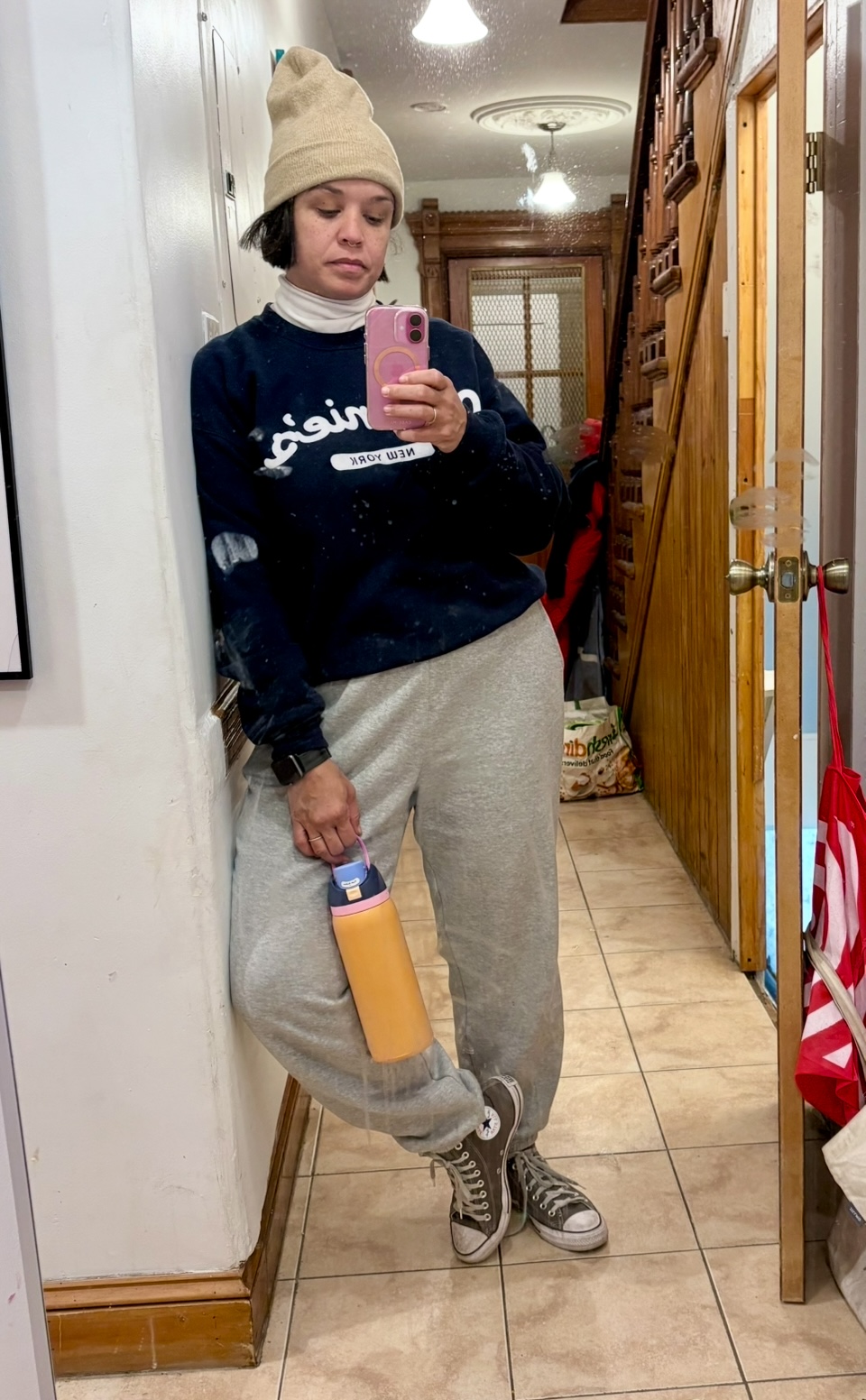
That phase lasted for a year.
The breaking point came on a night when I had plans to meet my friends—my “Clean Plate Club,” a group bonded by our love of food. I stood in my closet and just… couldn’t do it. It was winter, and nothing I tried worked. Everything felt wrong. I looked exhausted, and worse, I didn’t recognize myself.
I sat there and cried. I almost canceled. But I went anyway, because I needed those women.
At dinner, I told them the truth: I didn’t feel like myself anymore. I didn’t even have basics that made me feel good. They didn’t try to fix me. They just listened. Then they said something simple: dressing basic is fine—you just need the right pieces. One of them suggested I try renting clothes, just to experiment again without the pressure of buying a whole new identity.
When that first box arrived, it wasn’t a fix. It was frustrating. My body had changed, and the clothes didn’t fit the way I expected. But it forced me to try—to actually look at myself again. Over the next couple of months, something shifted.
I stopped trying to go back to who I used to be and started learning how to dress the person I was now.
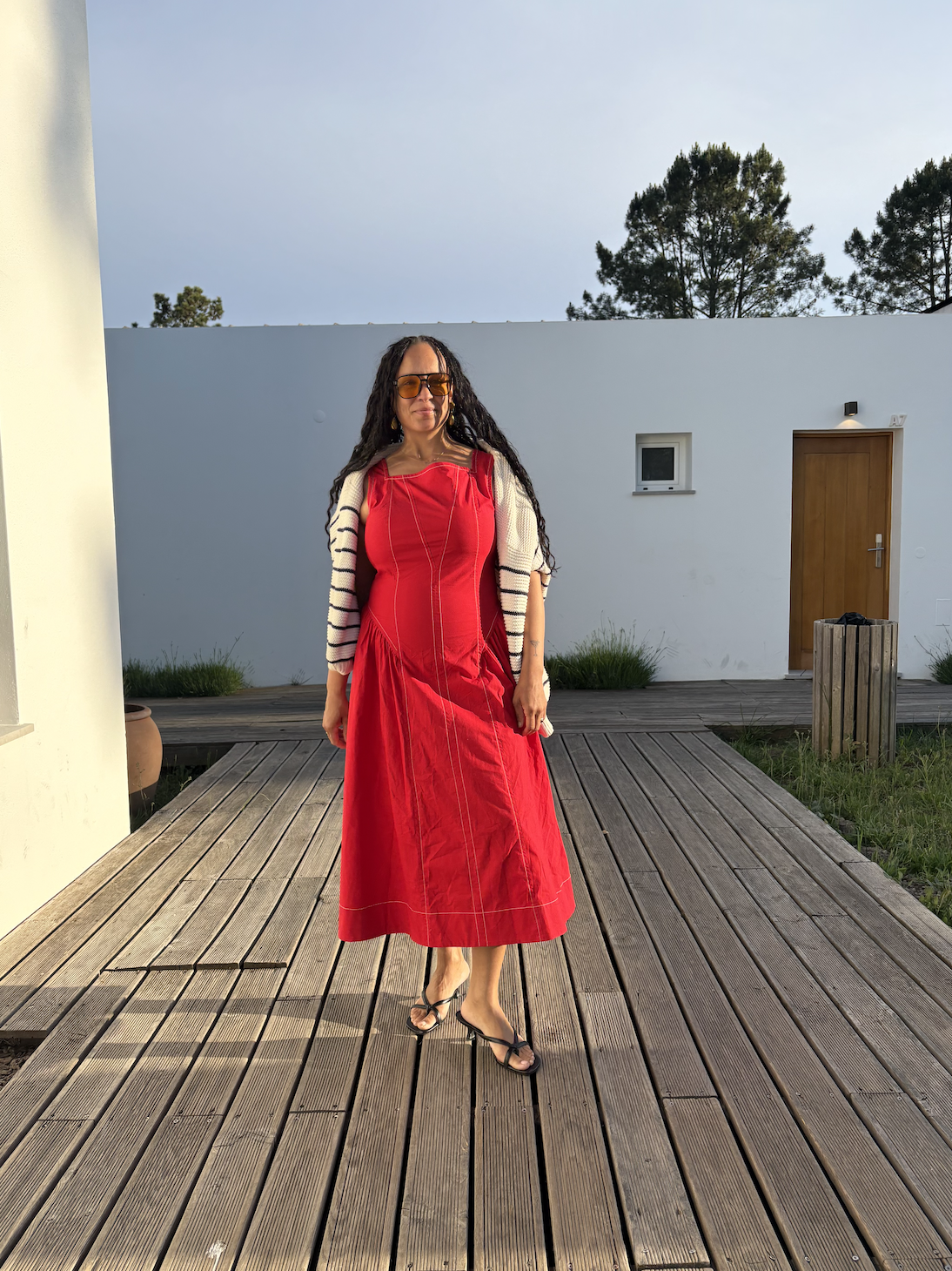
I gravitated toward statement pieces—patterned pants, interesting textures—paired with simple basics. It felt like a version of my old style, but looser, more forgiving. And then there was the dress: a high-neck, seamed midi in a perfect, vibrant red. I wore it to a wedding welcome party in Portugal, and when I looked in the mirror, something clicked.
The color made me pop. The fit honored my body instead of fighting it.
I stopped trying to go back to who I used to be.
Getting out of my sweats didn’t fix everything, but it changed how I moved through the world. I started seeing friends again. I left the house without a reason. I felt less stuck inside the narrow version of my life I had built around work and survival.
It also changed how I showed up as a founder. For a long time, I felt like I was just a woman in sweatpants trying to run a company. Getting dressed didn’t make me more qualified, but it made me feel visible again—and that changed how I carried myself.
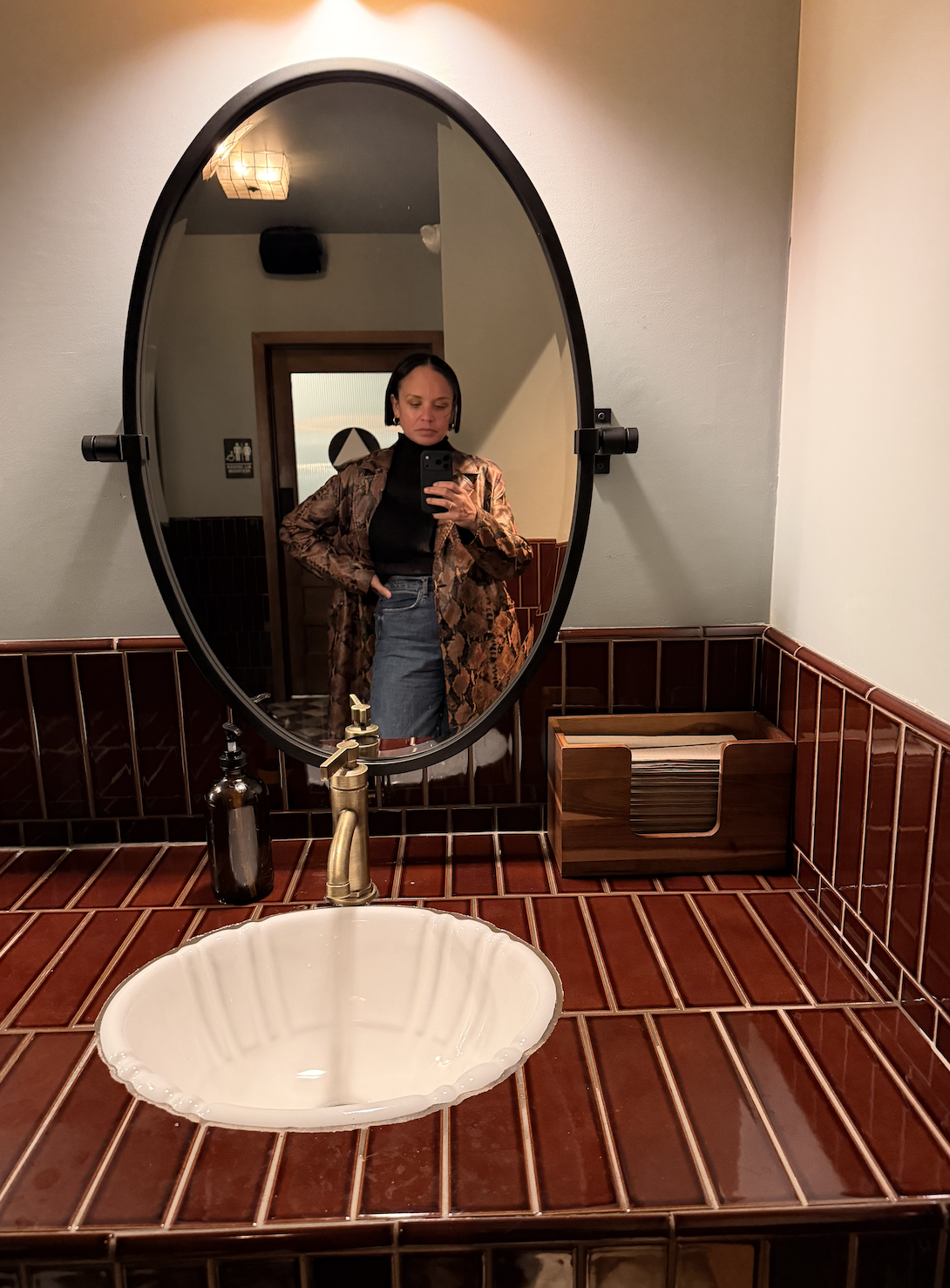
I still love my sweats. They’re part of my life as a mom and a business owner. But now I know the difference between dressing for comfort and dressing to disappear. I’m not trying to get back to who I was before. I’m dressing for the woman I am now: still healing, still building, and finally willing to be seen.
For a long time, I thought I had lost myself. Now I think I was just waiting for a version of me I recognized to come back. She didn’t. Someone stronger did.