
Get all your news in one place.
100’s of premium titles.
One app.
Start reading
TechRadar
TechRadar
Alex Whitelock

I tested the Canon EOS R6 Mark III — it's a near-perfect hybrid camera, with one major drawback

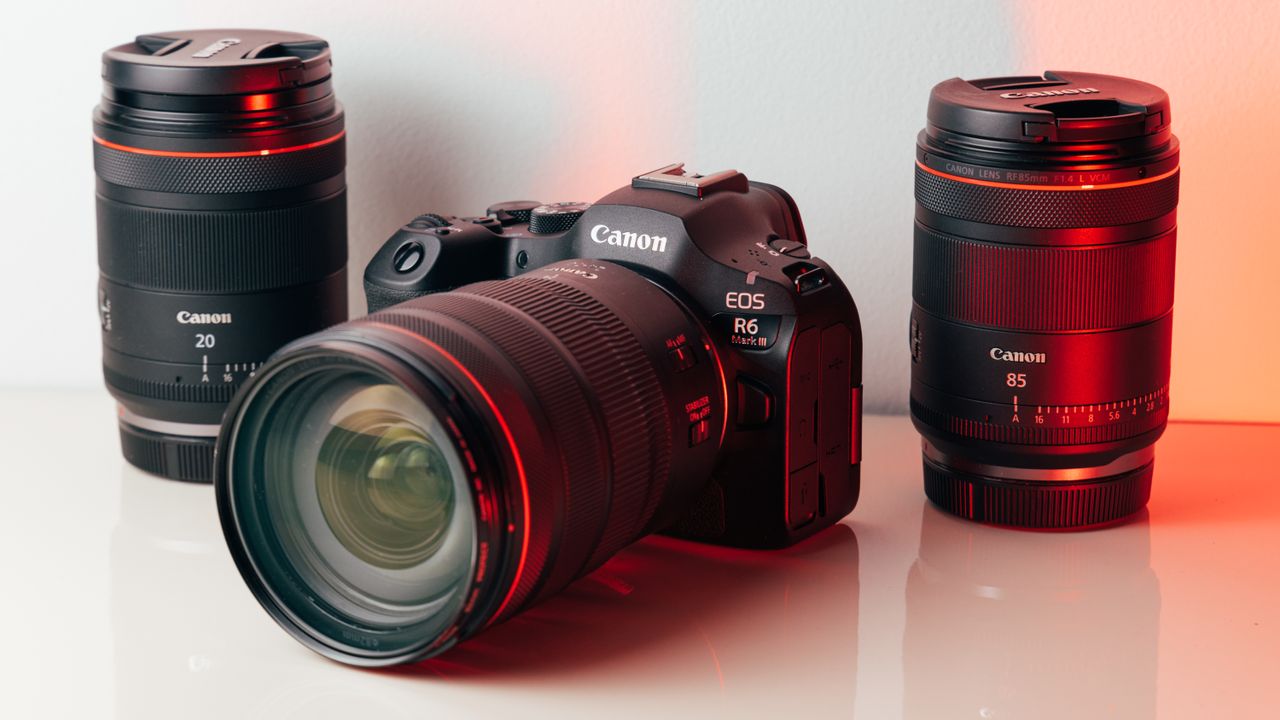
Canon EOS R6 Mark III.

Canon EOS R6 Mark III: two-minute review

The Canon R6 Mark III is the brand's latest enthusiast-level hybrid camera, and successor to one of Canon's most popular models. It's perhaps the clearest expression of a 'hybrid' Canon camera yet within its price range, with a fresh 33MP sensor that not only offers a significant bump in resolution (from 24MP), but a host of new video features such as 7K open-gate.

Outwardly, you could be mistaken in thinking that the Mark III offers a relatively iterative upgrade versus the previous generation. The overall design of the camera is essentially identical. Under the hood, however, subtle tweaks and improvements provide an upgrade that's bigger than the sum of its parts.

Everything is just a little bit better with the Mark III. You get a nice bump in resolution, a massively expanded video tool-kit, and useful autofocus features from the higher-end bodies like Priority People Detect. Even minor annoyances like video white balance have been smoothed out. Overall, it's an incredibly refined and well-designed camera that simply just works without any fuss. That's high praise, indeed.

(Image credit: Future / Alex Whitelock)

In real-world testing, the R6 Mark III is also a stunning stills and video camera, capable of producing superb results in both fields. In a field where competitors are eager to champion stacked BSI sensors, the Mark III proves that you need neither to achieve great performance. Images are detailed with great dynamic range and flexibility, and you still get an impressive 40fps burst rate, despite the significant jump in resolution.

Perhaps the biggest stumbling block for the R6 III isn’t necessarily the camera itself, but the increasingly competitive field it sits within. Rival brands are not only producing exceptional cameras currently, but they do so on democratized and open lens mounts.

For example, the Nikon Z6 III undercuts the R6 on price, the Panasonic S1 II features more powerful video tools, and the Sony A7 V falls back on its vast lens ecosystem. In comparison, the R6 III looks like the jack of trades - a safe, if somewhat unexciting pick in the best mirrorless cameras landscape.

Those already faithful to the Canon RF-Mount will be overjoyed with this camera, however. As previously stated, there's a refined assuredness to the R6 Mark III that makes it a reliable hybrid workhorse. Regardless of whether you're a professional wedding photographer, amateur videographer, or even a serious beginner, it's hard not to recommend the R6 Mark III because of its compelling mix of usability, image quality, and value. Yes, it's pricier than the Mark II, but considering the new sensor (and inflation), you definitely get a good amount of camera for the money here.

Canon EOS R6 Mark III specs

Canon EOS R6 Mark III specs

Type:

Mirrorless camera

Sensor:

Full-frame (36x24mm) FSI CMOS

LCD:

3-inch, fully-articulated, 1.62M dots

Memory:

1x UHS-II SD, 1x CFexpress Type B

Resolution:

32.5-megapixels

Video:

Up to 7K30p (open gate)

ISO range:

ISO 50-102,400

Mechanical Shutter speeds:

30-1/8000sec

Electronic Shutter speeds:

30-1/16000sec

Viewfinder:

3.69M dot, OLED EVF, 0.76x

Processor:

DIGIC X

Connectivity:

WiFi, Bluetooth, USB-C, HDMI, audio, mic

Weight:

609g

Canon EOS R6 Mark III: Price and availability

  • Announced November 6th, 2025
  • Body only price of $2,799 / £2,799.99 / AU$4199.95
  • Kit options available, including RF 24-105mm f4 L IS

The R6 Mark III retails for $2,799 / £2,799.99 / AU$4199.95, which makes it pricier than the previous iteration by a few hundred dollars / pounds. Interestingly, the EOS R6 II isn’t being discontinued (at least, immediately), and instead will be available for a list price of 1,979 / £1,918 / AU$3,099.

The Mark III is essentially slotting in the market between its two major competitors - the Sony A7 V for $2900 / £2800 and the Nikon Z6 III for $2700 / £2500. Of the three, however, it’s worth noting that the Z6 III has been on the market for the longest time and tends to be particularly partial to price cuts. You’ll likely have to wait a while to find an R6 Mark III or Sony A7 V for anywhere near as cheap as Nikon's alternative.

  • Price score: 4/5

Canon EOS R6 Mark III: Design

  • New CF-Express Type B card slot
  • 3.69M dot 120Hz OLED EVF
  • 3.0-inch 1.62M dot panel articulating rear display

What can I say about the design of the R6 Mark III? Well, it’s typical Canon, in the most refined and best manner possible. If you’re familiar with the Mark II, the design is essentially identical, with only a few minor tweaks to the buttons surrounding the shutter, a new tally light, and revisions to the mode dial.

Is it boring? Well, it’s certainly sensible. All of the camera’s main functions are laid out in a purposeful and meticulous manner. The thumb, for example, naturally rests next to the back-button focus, an AF joystick, and an autofocus mode quick select. On the top, you have the typical three-way on-off switch, top-mounted dial, and extremely useful M-Fn quick dial menu that are again extremely easy to operate.

All of the above, of course, are fully mappable with the camera’s extensive customization options. A total of nine buttons are fully mapable, so you have plenty of options here for both video and photo applications.

The camera is made of a sturdy polymer outer shell with environmental weather sealing (Image credit: Future / Alex Whitelock)
The R6 Mark III has a protective shutter to keep the sensor clean when no lens is mounted. (Image credit: Future / Alex Whitelock)
The camera retains the classic Canon button control layout (Image credit: Future / Alex Whitelock)

If you’re already a Canon shooter, no doubt you’ll be right at home here. My only minor criticism is that I wish Canon would add a second ring/middle finger button on the front of the body next to the grip. It’s something that’s featured on the higher-end Canon bodies, but it’s conspicuously missing from the R6 and R5 line. With such expansive customization features, it would be a fantastic addition to the body in my opinion.

In the hand, the R6 Mark III is sturdy and solid, with a generous grip that pairs well with popular lenses like the 24-70mm f/2.8. As part of the review process, Canon also sent me the EOS R8, and in comparison to the lower-end model, the R6 Mark III is much better suited to the chunkier RF glass. Unlike the feather-weight R8, the R6 Mark III balances well with fast primes like the 20mm f/1.4 and 85mm f/1.4 - both of which are noticeably front-heavy on the entry-level model.

The Canon R6 Mark III next to the Mark II (Image credit: Future / Alex Whitelock)
The cameras are almost identical, with the only changes being to button graphics, the mode dial, and the addition of a tally light. (Image credit: Future / Alex Whitelock)

In terms of viewfinder and display, you get a 3.69M dot 120Hz OLED and 3-inch 1.62M dot panel respectively; both of which are holdovers from the previous model. The R6's displays are bright, relatively wide, and easy to use. No complaints here, although it's worth noting that both the Nikon Z6 III and Sony A7 V do have a slight edge over the R6. In the case of the Nikon, you get a higher-res 5.76M dot EVF, while the Sony A7 V features a 2.1M dot rear display that both articulates and tilts - a handy feature for both stills and video.

For ports, one of the main changes from the second-generation model is that the Mark III now features one CFexpress Type B slot and one UHS-II SD instead of two of the latter. Upgrading to a CFexpress card will incur a slight cost, but you’re going to need it if you want to record Raw video internally or make full use of the uncapped 40fps burst rate. Videographers will also be pleased to note that the Mark III now features a full-size HDMI port rather than the MicroHDMI on the previous iteration.

The R6 Mark III now features a CF-Express Type B card slot (Image credit: Future / Alex Whitelock)
Support for full-size HDMI (Image credit: Future / Alex Whitelock)
Fully articulating 3-inch rear display (Image credit: Future / Alex Whitelock)

The R6 Mark III now utilizes the newer LP-E6P battery from the R5 Mark II. The older LP-E6NH batteries are still technically supported, but you'll need to use the newer iteration to fully unlock all the R6 Mark III's features. In this case, smartphone connectivity and the full array of 6K open-gate video modes.

Note that the R6 Mark III's battery is rated for 270 shots with the viewfinder and 510 with the rear screen. On paper, that's significantly lower than the Sony Alpha A7 V's rating of 630 / 750 shots respectively. I wouldn't say battery life is particularly poor, however. In real-world testing, I found the battery life to be far better than the ratings would suggest, with more than enough juice for a full day of stills photography. Videographers may want to pack a second battery just in case, though.

  • Design score: 5/5

Canon EOS R6 Mark III: Performance and features

  • Reliable autofocus for stills and video
  • Registered People Priority mode
  • 7K footage at 30p ‘open-gate’

The R6 Mark III is interesting in that it lacks a few of the high-end features from the R5 II like the ability to control the focus point with your eye, in-camera 'AI' upscaling, and Action Priority modes. What it does offer, however, is rock-solid performance for a vast range of both photo and stills applications.

As the ‘enthusiast’ level body in the range, the R6 has a lot of ground to cover, but it essentially achieves the mark on all counts. Using the camera, is again, a very refined experience in terms of operation and ease-of-use.

For example, the R6’s autofocus performance is accurate and reliable even with fully automated operation. A simple press of the ‘set’ button will engage subject tracking, which is easily one of the ‘stickiest’ I’ve ever used on a camera. Even without the advanced bells and whistles of the R5, the R6 Mark III is exceptional at both subject tracking and detection.

There were only a few rare occasions when the autofocus missed the mark. For example, a case in a relatively dimly-lit room where the camera failed to focus on my parents’ cat’s eyes. This subject, with his black coat, is notoriously difficult to photograph. Even specifically engaging the R6 MIII’s animal detection mode gave me a few examples where the camera focused on his ears or whiskers rather than his eyes.

Another extreme example was a moving human target in a low-light situation. Even with a high-contrast backlit scene the camera slightly missed the mark when shooting with a 20mm prime fully wide open at f/1.4.

The R6 Mark III slightly forward-focused in this extreme low-light scene at f/1.4. (Image credit: Future / Alex Whitelock)
The camera ever-so-slightly missed focus on the cat's eye in this scene at f/2.8, instead focusing on the ear. (Image credit: Future / Alex Whitelock)
The camera still maintained an impressive hit rate, however. This is the next frame in the series and it's in focus. (Image credit: Future / Alex Whitelock)

Are these fair use cases? Well, certainly they are extreme situations where any camera would be tested. By most accounts, the R6 Mark III’s autofocus is still one of the best I’ve ever used on any camera.

We’re reaching a point now where all major camera brands have excellent out-of-the-box autofocus performance on reasonably priced bodies, but Canon does still have a few unique tricks. The Registered People Priority mode, for example, is the closest thing to a 'killer-app' I've seen on an enthusiast-level camera.

As a brief overview, this feature allows you to map autofocus tracking to specific faces, with the idea that the camera will prioritize them even in crowded scenarios. If you have a reference shot like a group headshot, then the camera detects and allows you to pick a specific face via the RPP mode.

During my testing, I didn't have a scenario where I could really stress-test this feature with large groups. In small groups of two to three people, however, the tracking was reliable. Overall, the Registered People Priority mode definitely has the potential to be a useful feature for certain scenarios, like event or wedding photography.

Canon EOS R6 Mark III video modes

Aspect / Mode

Dimensions

Frame rates

3:2 / 7K RAW

6960 x 4640

30, 25, 24, 23.98

3:2 / 7K Compressed

6912 x 4608

30, 25, 24, 23.98

1.89:1 / 7K

6960 x 3672

60, 50, 48, 30, 25, 24, 23.98

1.89:1 / DCI 4K

4096 x 2160

120, 100, 60, 50, 48, 30, 25, 24, 23.98

1.89:1 / DCI 2K

2048 x 1080

180, 150, 120, 100, 60, 50, 48, 30, 25, 24, 23.98

16:9 / UHD 4K

3840 x 2160

120, 100, 60, 50, 48, 30, 25, 24, 23.98

16:9 / Full HD

1920 x 1080

180, 150, 120, 100, 60, 50, 48, 30, 25, 24, 23.98

In terms of video, the R6 Mark III features an impressive array of recording options. There's not only the option for oversampled 4K up to 120p, but 7K footage at 30p ‘open-gate’ on the camera’s native 3:2 aspect ratio. For maximum post-production flexibility, there’s the option to shoot in Canon’s proprietary Cinema Raw format or the brand’s Clog 2 or Clog 3 profiles.

If all these features look familiar, it’s because the R6 Mark III shares the same sensor and bones as the Canon EOS C50. Unlike its video-centric sibling, however, the R6 doesn’t feature an in-built fan, so you will face restricted recording times for the heavier open-gate and 7K capture modes. That's also a key advantage of the rival Panasonic S1 II, alongside support for 120p at 4K.

One other upgrade for the Mark III is the camera’s overall burst-rate performance. While the camera lacks the Action Priority autofocus mode from the higher-end Canon bodies, it manages to retain the 12fps mechanical / 40fps e-shutter burst rates from the previous model despite the significant jump in resolution. You’ve still got the helpful inclusion of pre-burst capture here, but unlike the Mark II, the III doesn’t feature a standalone “Raw Burst mode” to enable it. It’s instead now integrated into the standard drive mode menu.

  • Performance score: 5/5

Canon EOS R6 Mark III: Image quality

  • 33MP resolution (up from 24MP)
  • Pleasing, warm colors
  • Sharp video with flexible profiles

The Canon R6 Mark III is somewhat unusual in its peer group in that its sensor is neither back-side-illuminated nor ‘stacked’ like rivals from Sony or Nikon. It's an interesting distinction because rivals have long trumpeted the various advantages of these additions in a world where sensor development has seemingly slowed in recent years.

On paper, a stacked sensor does enable faster readout speeds, whereas a back-side-illuminated sensor should, in theory, give you cleaner images at high ISO. Recent testing has even proven that the Sony A7 V and Panasonic S1 II have slightly better ISO invariance than the Canon R6 Mark III thanks to dual-gain readouts.

So, does the Mark III lag behind the competition in terms of image quality? I'd have a hard time believing so. Based on real-world testing, I've found the camera to produce consistently excellent stills.

Out in the wild, I imagine the differences between all of these cameras is likely to be so minimal that you'd almost certainly not notice outside of incredibly niche use cases. It certainly shouldn't be the main deciding factor behind these cameras; ergonomics, video features, and available lenses are all much more important.

Original shot, RAW, shot with the RF 24-70mm f/2.8 (Image credit: Future / Alex Whitelock)
Same scene, shadows lifted to taste in Adobe Lightroom (Image credit: Future / Alex Whitelock)
Another RAW example taken with the same 24-70mm f/2.8 lens (Image credit: Future / Alex Whitelock)
Same scene, shadows lifted to taste in Adobe Lightroom (Image credit: Future / Alex Whitelock)

In terms of dynamic range, for example, you have heaps to work with here. Despite the significant increase in resolution from the previous iteration, the R6 Mark III produces lovely, clean RAW files (and even JPEGs) with ample headroom.

On several test shots, I was able to salvage significant details from a scene without much color cast or noise. Zooming in, noise is certainly still present, but it's relatively well controlled and very much in line with other modern full-frame bodies.

In low light the R6 Mark III handles exceptionally well, too. I shot a few hundred images in a local indoor amusement park that features a host of strobe and fluorescent lighting. It's the kind of environment that not only tests autofocus to the extreme, but often results in strange colors that are a nightmare to post-process.

When I pull up the files from the R6 Mark III, colors are well captured, even at ISO 10,000 and over. The first example in the gallery below was shot at that ISO, and the colors are absolutely spot-on for the scene, despite there being noise present in some of the shadows. Again, the R6 Mark III is an extremely capable stills camera in real-world testing.

RAW sample shot, ISO 10,000, taken with RF 20mm f/1.4 (Image credit: Future / Alex Whitelock)
RAW sample shot, ISO 1,250, taken with RF 20mm f/1.4 (Image credit: Future / Alex Whitelock)
RAW sample shot, ISO 320, taken with RF 20mm f/1.4 (Image credit: Future / Alex Whitelock)
RAW sample shot, ISO 640, taken with RF 20mm f/1.4 (Image credit: Future / Alex Whitelock)
RAW sample shot, ISO 200, taken with RF 20mm f/1.4 (Image credit: Future / Alex Whitelock)
RAW sample shot, ISO 1,600, taken with RF 20mm f/1.4 (Image credit: Future / Alex Whitelock)

Briefly touching on resolution; the upgrade from 24MP to 33MP does give you a nice bump in cropping potential without resulting in massive file sizes. Arguably, 24MP is still more than enough for most use cases, but 33MP is definitely a 'nice to have'. I certainly appreciated the little bit extra when cropping all the sample images on this page from the camera's native 3:2 to a web-friendly 16:9 format.

Colors are gorgeous, too. Even with RAW files, the images have a pleasing warmth to them without being overbearing. Skin tones look great straight from the camera, and in all cases, the files were great to work on in Adobe Lightroom.

In the gallery below, you can see a selection of RAW files. The opening shots are tweaked in Lightroom to my own tastes, whereas the following portrait shots show you both RAW files and a few of the camera's built-in JPEG profiles.

RAW edited to taste in Lightroom, taken with RF 24-70mm f/2.8 (Image credit: Future / Alex Whitelock)
An example of a RAW file from a studio scene, taken with the RF 24-70mm f/2.8 (Image credit: Future / Alex Whitelock)
An example of a RAW file, next to the camera's 'Vivid' and 'Warm' JPEG profiles (Image credit: Future / Alex Whitelock)
Examples of the camera's black-and-white, 'Vivid', and 'Warm' JPEG profiles (Image credit: Future / Alex Whitelock)

For video, you have a flexible set-up thanks to the R6 Mark III's myriad record modes and support for Clog2 and Clog3 formats. Of the two, the former gets you a flatter image with the most dynamic range possible for color grading, while the latter offers a more saturated and clean image for quick and easy editing. In either case, you can upload your own LUTs to the camera, and white balance can also be set in video mode, which was a common annoyance with the previous model.

As you'd imagine with a body that shares the same sensor as the Canon EOS C50, the R6 Mark III captures excellent footage. In my testing, I mostly used Canon's proprietary Canon 709 standard color profile (non-flattened), and the 4K footage in particular was fantastic. Colors were rich but true-to-life, the image was detailed, and there was plenty of dynamic range.

For an easy video workflow, there is very little to fault the R6 Mark III on. Even if you're a video-heavy hybrid shooter, don't overlook the Mark III in favor of the C50. You get a great video toolkit here with the added benefit of image stabilization and a mechanical shutter for stills.

  • Image quality score: 4.5/5

Canon EOS R6 Mark III: testing scorecard

Canon EOS R6 Mark III

Attributes

Notes

Rating

Price

The R6 Mark III is well priced considering the level of performance. That said, it is pricier than the previous iteration, and it sits within a competitive field.

4/5

Design

The R6 Mark III is almost identical to the previous iteration. It's a super design, however, with fantastic ergonomics and customization.

5/5

Performance

Autofocus is superb for both stills and video. IBIS works admirably. Registered People Priority is a genuinely useful feature.

5/5

Image quality

Great straight-out-of-camera files for both stills and video. Flexible RAWs, and a huge array of video formats for both casual and professional use.

4.5/5

Should I buy the Canon EOS R6 Mark III?

Buy it if...

Don't buy it if...

Also consider

How I tested the Canon EOS R6 Mark III

  • I tested a full production model
  • I used several lenses, including the RF 24-105mm f/4 kit lens
  • Samples were shot in a diverse range of environments, including low light
  • Subject detection was tested using real-world situations

Canon loaned me the R6 Mark III alongside the R8, R6 Mark II, and several lenses for an extensive three-week period. In that time, I was fully able to test the camera in a range of scenarios for both stills and video.

As an overview, the lenses used include the RF 20mm f/1.4, the RF 85mm f/1.4, the RF 24-70mm f/2.8L, and the RF 24-105mm f/4 - the latter of which is available as a kit lens for the R6 III. All of the above image samples on this page were taken with these lenses in various scenarios, including both mid-day and difficult low-light environments.

  • First reviewed December 2025
Sign up to read this article
Read news from 100’s of titles, curated specifically for you.
Already a member? Sign in here
Related Stories
Top stories on inkl right now
Our Picks
Fourteen days free
Download the app
One app. One membership.
100+ trusted global sources.


