
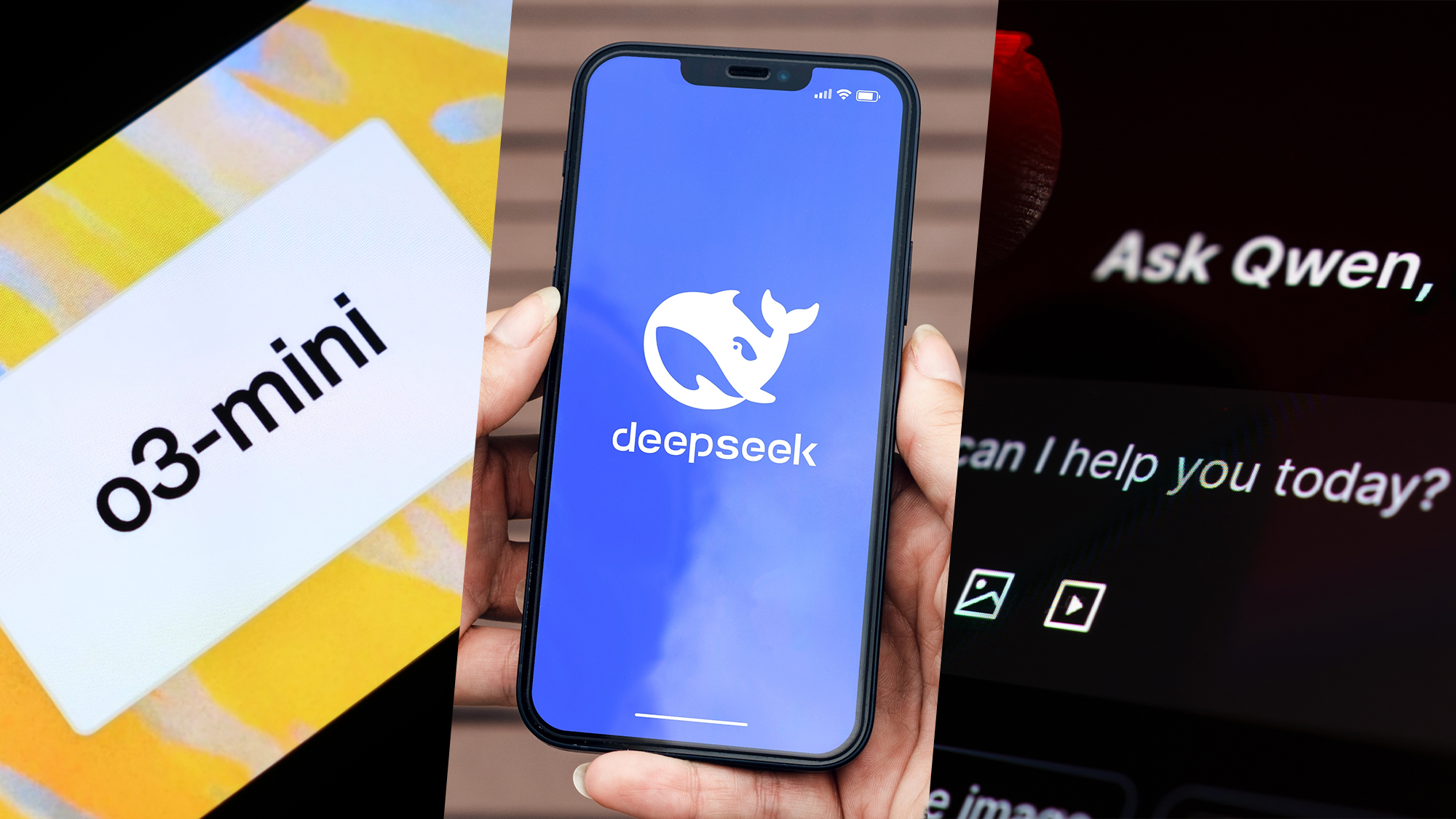
DeepSeek’s R1 model has won over users with its speed, reasoning capabilities, and free access. The model excels in several key areas such as logic inference and reasoning, making it adept at understanding and processing complex information.
DeepSeek has proven to be particularly strong in mathematical reasoning and coding tasks, effectively solving complex problems and generating code snippets. With superior multilingual capabilities and high inference efficiency, the model has shown versatility in a wide range of applications.
OpenAI’s o3-mini model, now available within the free tier of ChatGPT, is a compact, yet powerful AI model designed to excel in advanced reasoning, coding proficiency, and mathematical problem-solving, scoring 96.7% on the American Invitational Mathematics Examination (AIME), surpassing its predecessor, o1.
Yet, since Alibaba’s Qwen 2.5 launched, it has been a top competitor of both DeepSeek and ChatGPT. Also free for users and also excelling at coding proficiency, multilingual understanding, mathematical reasoning, and extended content processing with efficiency and speed, this chatbot is proving to hold its own within the competitive AI space.
So how do these chatbots compare? I put them through a series of the same prompts to test them on everything from advanced reasoning and coding proficiency to problem-solving capabilities. Here’s what happened when these free tier models faced off, including the overall winner.










