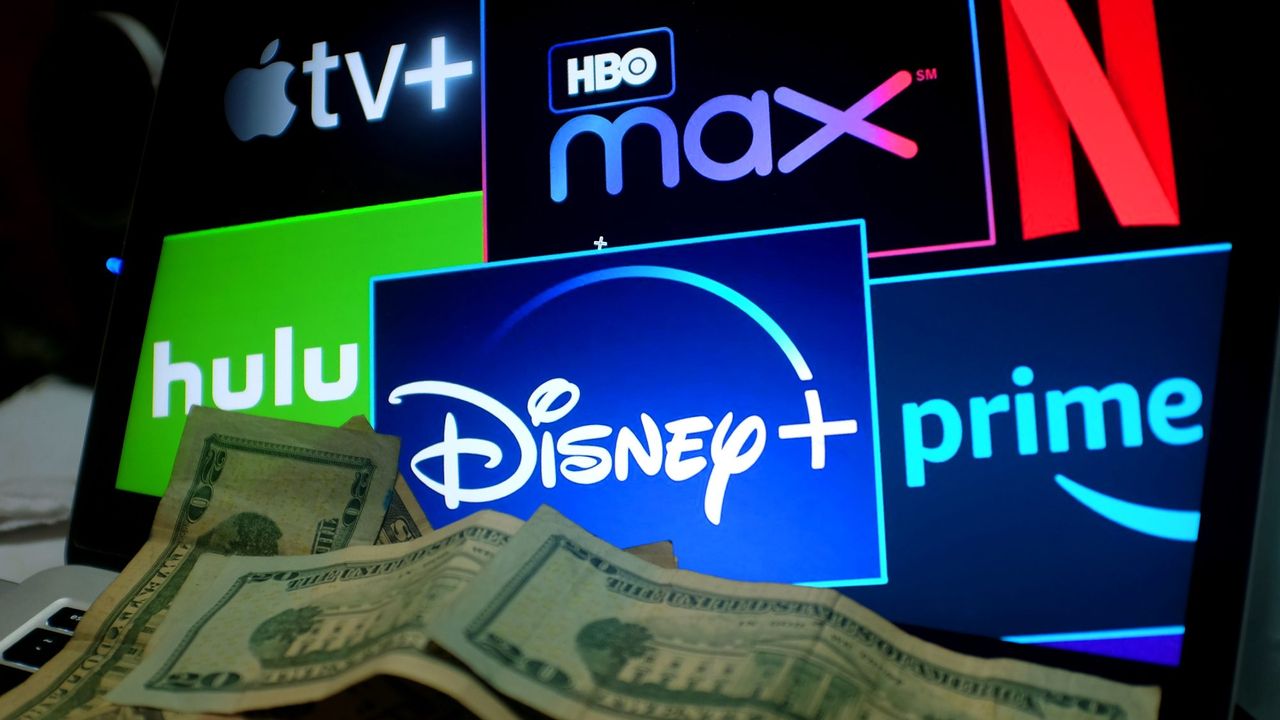
Long gone are the days of streaming being the cheaper alternative than cable. I used to think that subscription hopping each month was too much trouble for the money you save, but with streaming prices creeping higher and higher these days, I'm now a convert.
Recently, I decided to cull some of my monthly subscription services as an experiment to see if I was really getting my money's worth. I had my eye on Disney's mega-bundle with Hulu and HBO Max, advertised as a savings of more than 40% when bundled together, but though I was intrigued, I wasn't convinced.

Could limiting my household to just three major streaming platforms really be enough variety to satisfy everyone's tastes? And would the savings actually be significant?
To find out, I decided to go all in. I canceled every standalone streaming subscription I was paying for and switched exclusively to the Disney+, Hulu, and HBO Max Bundle with ads for $19.99 per month.
After 30 days, I had my answer. Here's exactly how much money I saved and what I missed most after cutting the cord on my other services.
My 30-day savings report
Before making the switch, I was subscribed to five different services, mostly on their ad-supported tiers because I'm not forking over more money than I need to and I actually don't mind the ad breaks. The regular interruptions keep me from binging things endlessly. With the exception of Netflix, which I did shell out $19.99 a month for the standard option, because its ads are particularly obnoxious.
Beyond that, I had the Disney+ basic plan for $11.99 a month, Peacock for $7.99, HBO Max for $10.99, Paramount+ added another $8.99 a month, and Apple TV at $12.99. All told, I was paying $72 a month for streaming services — which works out to over $860 a year. Wow, it's wild to lay it all out like that and realize I lose nearly a grand each year to streaming.
By consolidating with the trio bundle and cutting the other platforms, I saved $52 in just one month. Over a full year, that puts an extra $624 back into my pocket.
The sheer volume of programming between Hulu, HBO Max, and Disney+ left my watchlist plenty full in the meantime. Hulu has a healthy library of comedy shows I've watched a million already but still like to put on in the background, like "Abbott Elementary" and "It's Always Sunny in Philadelphia," while HBO Max is home to everything from heavy-hitting blockbusters to indie animated films. Since Disney and Hulu have integrated so seamlessly, browsing through the apps felt seamless. I rarely found myself scrolling aimlessly to find something to watch; if anything, my watchlist only grew.
What I lost (and what I didn't miss)
Netflix and Apple TV were the hardest ones to let go. I’m a chronic re-watcher, and my biggest concern was losing access to comfort shows like "Bad Sisters" or Netflix's vast library of documentaries.
I thought I would experience severe FOMO without Netflix. When really, unless a massive cultural phenomenon drops a new season, the Netflix homepage has felt increasingly cluttered with content I skip past anyway. Meanwhile, Apple TV has such a sparse calendar of releases that I plan to just re-subscribe when a new season of "Severance" or one of its other must-watch shows drops.
What started as a 30-day budgeting challenge has turned into a long-term switch. I expected culling my list of subscriptions to feel like a compromise, but in practice, it felt more like clearing out unnecessary noise I hardly missed while keeping an extra $52 in my bank account every month. If you're considering cutting down on your streaming subscriptions, I'd encourage you to take a closer look at how much you actually use the platforms you pay for. The potential savings might be more than you think.