Get all your news in one place.
100's of premium titles.
One app.
Start reading
Digital Camera World
Mike Harris

“I started screaming because I know what shelling looks like” –dolphin photographed performing extremely rare behavior

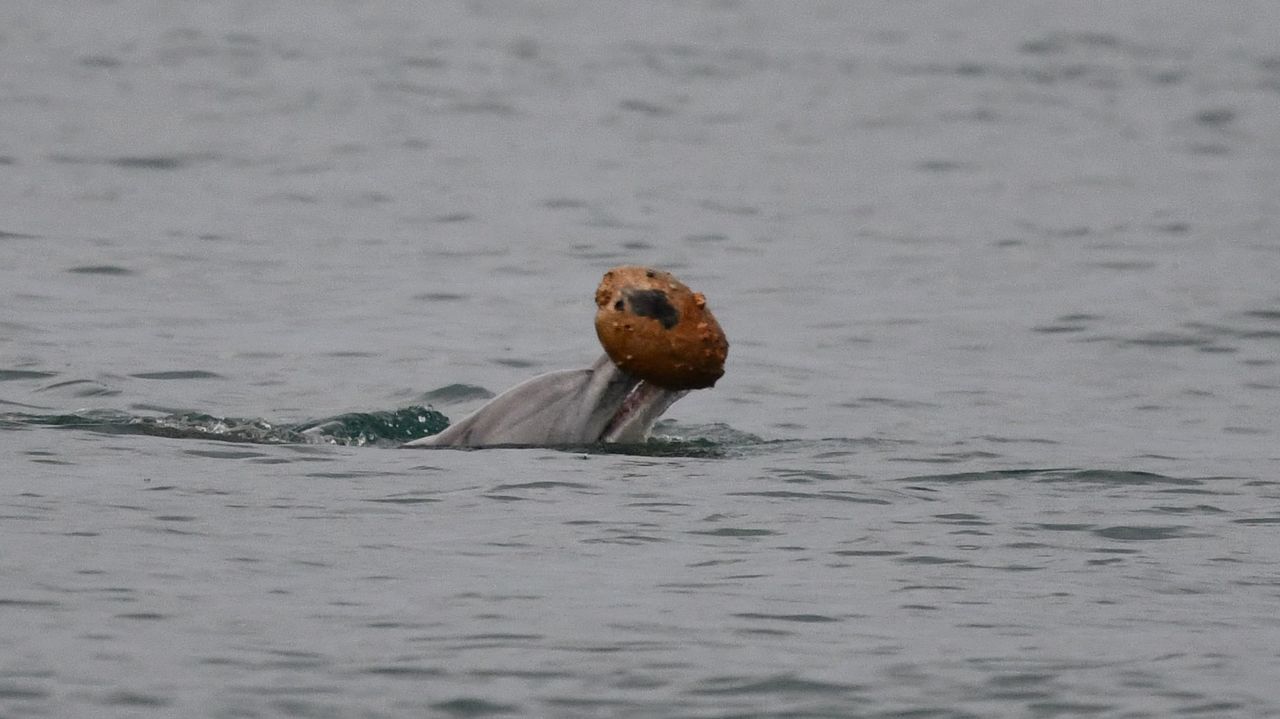
Dolphin engaged in shelling behavior.

In a world where many creatives are facing an increasingly uncertain future, it’s nice to be reminded that – in many cases – traditional photography is still as vital as ever.

And while scientific research might not be the first thing that comes to mind, I am constantly reporting on the craft’s role in documenting rare wildlife encounters.

A recent interaction between researchers from the University of the Sunshine Coast and bottlenose dolphins is a prime example.

The encounter happened at Queensland Australia’s Great Sandy Marine Park, between July and October 2025, where a research team led by Dr Alexis Levengood captured imagery of a behavior known as 'shelling'.

The behavior is so rare that it's only been published once before, but this is the first time it's been officially recorded on the east coast of Australia.

(Image credit: University of the Sunshine Coast / Dr Alexis Levengood)

According to Dr Levengood, “we spotted a dolphin raising something large out of the water. I started screaming because I know what shelling looks like”.

The animal behavioralist and marine mammal expert explained that the dolphins use 'shelling' to hunt for fish; the shell becomes an implement in which to trap prey. The mammals then shake the makeshift tool on the surface until their prize slides into their jaws.

I'm no marine life expert, but I am an avid wildlife lover and I certainly had no idea that dolphins did this.

To make matters even more interesting, the researchers observed both an adult female and its calf engaging in the behavior, leading them to deduce that the juvenile had learned from its mother.

You can see the remarkable behavior being exhibited in the footage below:

“Our footage provides the first potential evidence of maternal social transmission – a process by which offspring learn behaviour by observing the actions of its mother,” said Dr Levengood. “It challenges the belief that dolphins learn this tool use from their peers.”

In a world of hobbyist and professional photographers aiming to capture the very best photos possible, it can be easy to forget that imaging is also used purely for surveillance, observation and documentation.

It’s not about capturing an attractive image, it’s about clearly capturing the moment for posterity.

If you’re a wildlife enthusiast first and a photographer second, and are looking for a camera to complement your bird or wildlife-watching setup, I’d buy this monster $1000 all-in-one bridge camera.

You might also like...

Take a look at the best cameras for wildlife photography and the best wildlife photography lenses. Plus, stay up to date via the latest camera news.

Sign up to read this article
Read news from 100's of titles, curated specifically for you.
Already a member? Sign in here
Related Stories
Top stories on inkl right now
One subscription that gives you access to news from hundreds of sites
Already a member? Sign in here
Our Picks
Fourteen days free
Download the app
One app. One membership.
100+ trusted global sources.