Get all your news in one place.
100's of premium titles.
One app.
Start reading
Cycling News
Cycling News
Sport
Tom Wieckowski

I rode the Trouée d'Arenberg two years ago, and I still can't get over how rough it is

Paris-Roubaix cobblestones at the forest of Arenberg.

I rode the Trouée d'Arenberg two years ago, whilst taking part in the Paris-Roubaix challenge, the amateurs' chance to experience the brutality of Paris-Roubaix. The Arenberg was the first sector of pavé we covered, and it left a lasting impression on me. I could not believe how rough that stretch of road was, and I have been fascinated by it ever since.

The Arenberg, or to give it its official name, the Drève des Boules d'Hérin (the ‘ball avenue’ of nearby town Hérin) was first included in the race in 1968 after being suggested by legendary French cyclist and former miner Jean Stablinski. The Arenberg uses ancient cobblestones and was originally laid in the late 18th century.
The Trench, as it is sometimes simply referred to, is just over 2km long, arrow straight, sloping downwards at first, then levelling and rising slightly toward the end. To step onto the cobblestones is to enter the Saint-Amand-Wallers forest the road runs through, traffic noise fades, birdsong takes over in spring when Roubaix is run, and the air is thick with the energy of countless Roubaix race weekends.

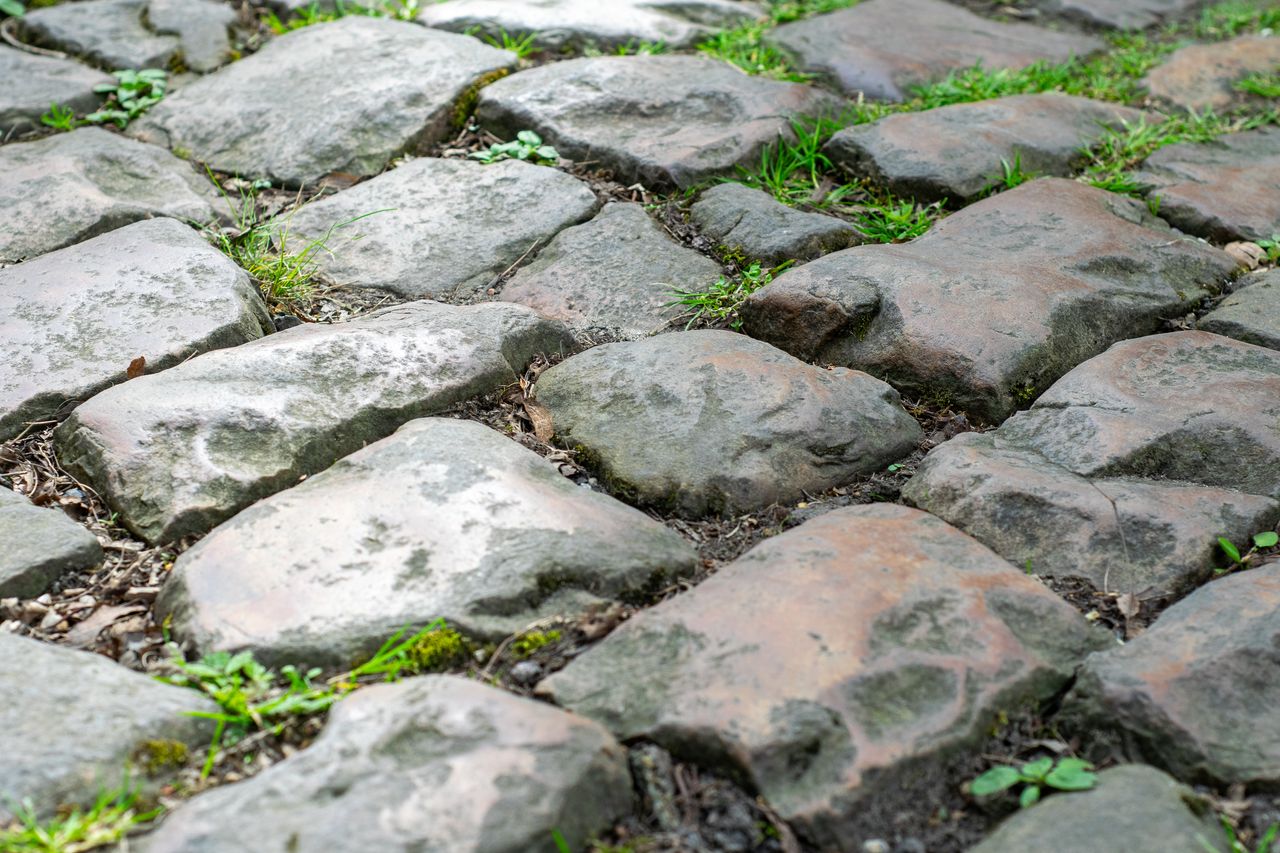
I’ve ridden the Arenberg once, and I’ve walked the length of it, and I just stare at the stones. The angles they sit at, the profiles, the gaps between them, and how a bike's tyres will travel over them. If you haven’t been there in person, you can’t understand how rough it is when you watch footage of Roubaix on TV. There are gaps between some of the stones you can place a cycling water bottle or your fist into. The edges of some cast their own shadow in the sunshine.

I watched pro riders recon Arenberg on Thursday, and they were moving at a pace, but I could still see how rough it was for them, how the bikes moved underneath them and the way they were holding their handlebars. If you think the front of the race is impressive to watch on TV, let me tell you: the lead group is absolutely flying over the cobbles at Arenberg. It’s one of the most impressive moments of the pro cycling year for me, especially when you see how rough parts of it really are.

These are the kind of gaps you can find in parts of the Arenberg cobbles (Image credit: Tom Wieckowski )

I rode the Arenberg in 2024 on 28mm tyres and inner tubes, and luckily had no problems, but it wasn’t the fastest setup I could have used. A part of me wanted to experience the route on a more traditional road bike, and I got around without any mechanicals, but as some of our CN Labs tyre testing has shown since, massive amounts of watts can be saved by using bigger tyres at lower pressures.

I thought I would be faster on Arenberg. I felt like I was crawling. The roughness of the stones hit me straight away, and I was trying to unweight the front of my bike to avoid smashing my front wheel and pinching my front tube, which was already as low as I dared run it without bottoming out on the rim. Pro teams riding tubeless setups are still trying to combat this, given the severity of the stones at Roubaix; Lidl-Trek's new TPU tube safety system is evidence of this.

I also didn’t have the power to ride the stones faster, which may have given me an easier time. They say speed helps unlock the Arenberg, and I would like to ride it again, ideally on 32mm tubeless tyres and with more pace to see how much quicker I could go and to really understand how to ride that piece of road.

Hitting it with speed surely helps; momentum would carry you forward, and simply help you cover ground faster and ‘float’ over the stones a bit more. Spinning a lighter gear seems to just buck you around on cobbles, and the need to push a big gear has probably been quoted for decades by riders for a reason.

Modern road bikes are very capable now, and a 30, 32 or even 35mm tyre at the right pressure helps massively; there is a tipping point, though. Watch a gravel bike with 40mm-plus tyres go over the stones, or even a mountain bike, and the spectacle fades; the roughness is clearly filtered out, and the challenge is not quite the same. The Arenberg loses some of its teeth when you are overbiked for it.

I think speed is the key to the Arenberg. Moving as fast as you can with the right setup will help you get from the start to the finish as quickly as possible. Let the speed drop, and you start to feel every hit, and get bogged down amongst the stones.

For the racers on Sunday, it may well be a case of hold the wheel in front, ride as hard as you can and pray you don't flat. Perhaps that's the way it has always been for the elite men's race, which does battle with the Arenberg.

Bike technology has come a long way since the introduction of the Arenberg in the 1960s, but it is, without a doubt, a section of road that still commands a great deal of respect.

Get unlimited access to our unrivalled 2026 Spring Classics coverage with a Cyclingnews subscription. We'll bring you breaking news, reports, and analysis from some of the biggest races on the calendar, including Milan-San Remo, Paris-Roubaix and the Tour of Flanders. Find out more.

Sign up to read this article
Read news from 100's of titles, curated specifically for you.
Already a member? Sign in here
Related Stories
Top stories on inkl right now
One subscription that gives you access to news from hundreds of sites
Already a member? Sign in here
Our Picks
Fourteen days free
Download the app
One app. One membership.
100+ trusted global sources.