
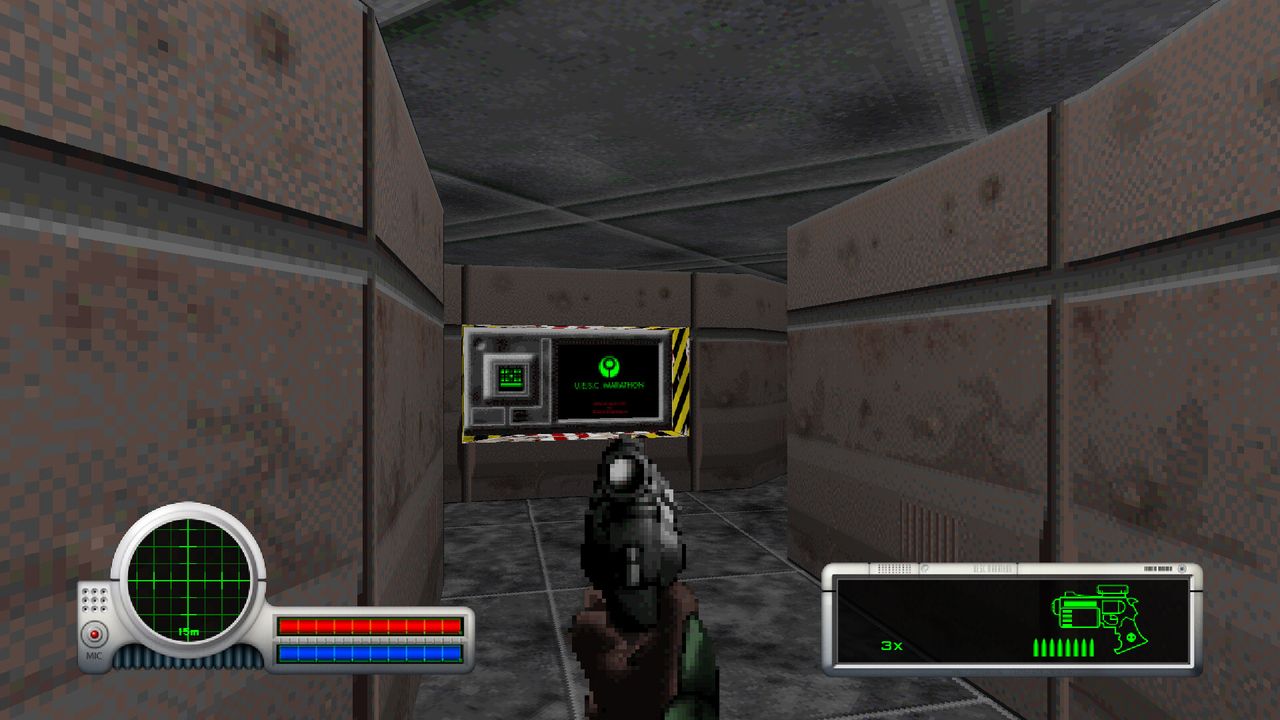
For two weeks, my life has consisted of nothing but Marathon – both the single-player sci-fi FPS from 1994, and this year’s multiplayer reboot. Despite sharing the same name, classic and modern Marathon are fundamentally different games. They represent two divergent philosophies on how to create an immersive experience using narrative, world-building, and weighty themes to keep players invested, and when that experience should stop.
Like other classic boomer shooters (Doom, Quake, Wolfenstein 3D), 1994’s Marathon is defined by its lightning-fast action, diverse weaponry, and non-linear levels. One of my favorite aspects of classic Marathon is how it uses tight level design and lighting to hide enemies either in darkness or behind corners. While the game never becomes a full-on horror experience, it leaves me constantly on my toes, especially when I’m low on health and haven’t saved in a while.












