Get all your news in one place.
100's of premium titles.
One app.
Start reading
Digital Camera World
Hillary K. Grigonis

I photographed the Northern Lights and a Perseid meteor in the same frame – and I used one of the cheapest lenses in my bag

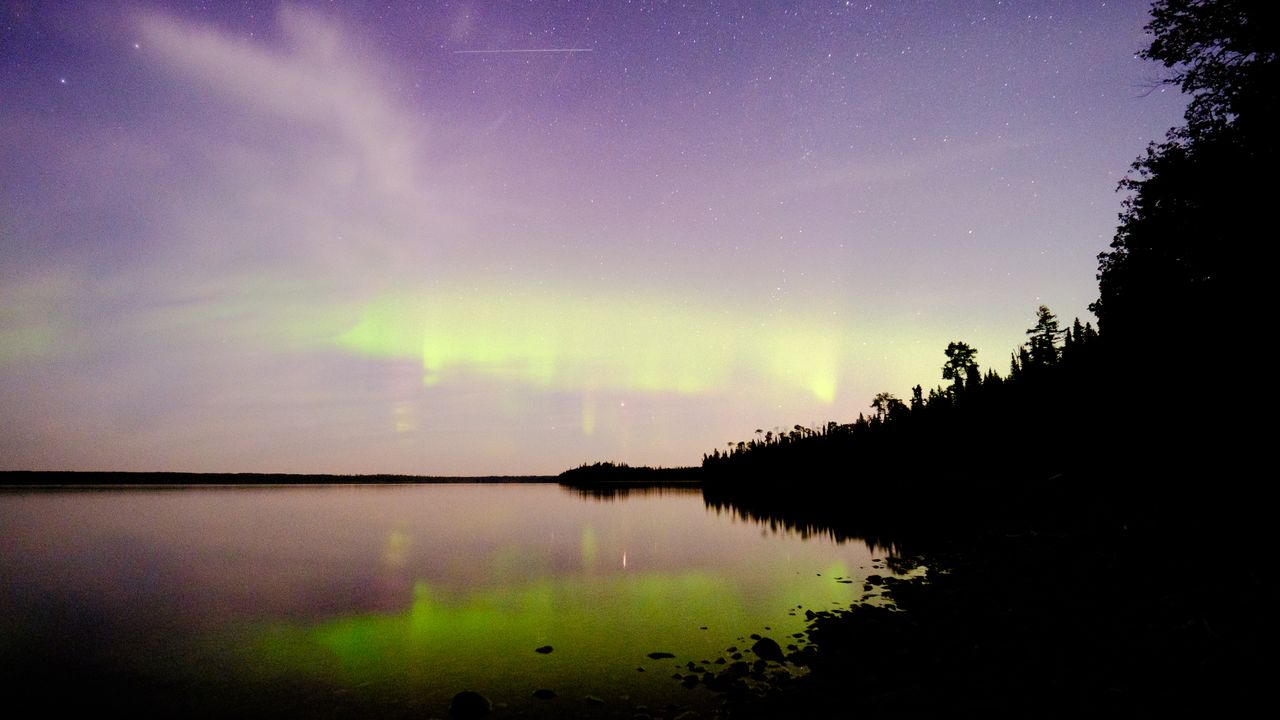
The northern lights reflected over a lake with a Perseid meteor in the frame.

Astrophotography to me has always seemed like a mix between planning, technique – and sheer luck. I was photographing the Northern Lights a few days ago when I managed to capture another astrophotography phenomenon in the same frame: a Perseid meteor.

Gear Used:
While photographing the Northern Lights requires ideal conditions and the lights are often short-lived, that’s not entirely true for the Perseids. The meteors still need clear skies and low light pollution, but they're hardly a one-night-only show. While the Perseid meteors peak August 12-13, the meteor shower stretches from July 17 through August 24, leaving plenty of room to re-plan if clouds get in the way.

I took this photo on August 2, a full ten days before the peak of the meteor shower would heighten my chances of catching one – or several – in the same frame.

Click the bottom left corner to view a larger version (Image credit: Hillary K. Grigonis)

The challenging part about photographing the Perseids is that if I wait until I see one streak across the sky, I’ve already missed my shot. Catching the meteors on camera typically involves a long exposure time and taking multiple shots.

But trying to get the Northern Lights and a meteor in the same shot proved even trickier. The Northern Lights were close to the horizon, not overhead. I still wanted the lights reflected off the lake to be in the shot, so the sky only takes up part of the frame.

I managed to catch a meteor on the upper edge of the frame by digging out the widest lens that I have in my bag: The Venus Optics Laowa 9mm f/2.8 Zero-D, which, on my Fujifilm X-T4, is a 13.5mm lens in full-frame equivalent.

To view a larger version, click the bottom left corner (Image credit: Hillary K. Grigonis)

The 9mm is a recent addition to my camera bag that I added to my wish list specifically for astrophotography. The lens is one of the most affordable lenses in my bag (excluding the PolarPro LightLeak and a vintage film lens I picked up at a garage sale).

One of the reasons that the 9mm sits more on the affordable side is that it’s a manual-focus-only lens. I usually prefer autofocus lenses, but autofocus doesn’t work on the stars (at least, not for most cameras), so I knew I wouldn’t miss it too much.

I didn’t manage to catch the Perseid meteors until after the Northern Lights seemed to slow down a bit from the pillars that I spotted just after sunset. But I was ecstatic to catch multiple night sky phenomena in one shot, without stacking multiple images together.

The Perseids peak August 12-13 and continue through August 24. Read more on how to plan and what camera settings to use in this guide on how to photograph the Perseids.

You may also like

Browse the best lenses for astrophotography, or learn what other astro events to photograph in August.

Sign up to read this article
Read news from 100's of titles, curated specifically for you.
Already a member? Sign in here
Related Stories
Top stories on inkl right now
One subscription that gives you access to news from hundreds of sites
Already a member? Sign in here
Our Picks
Fourteen days free
Download the app
One app. One membership.
100+ trusted global sources.