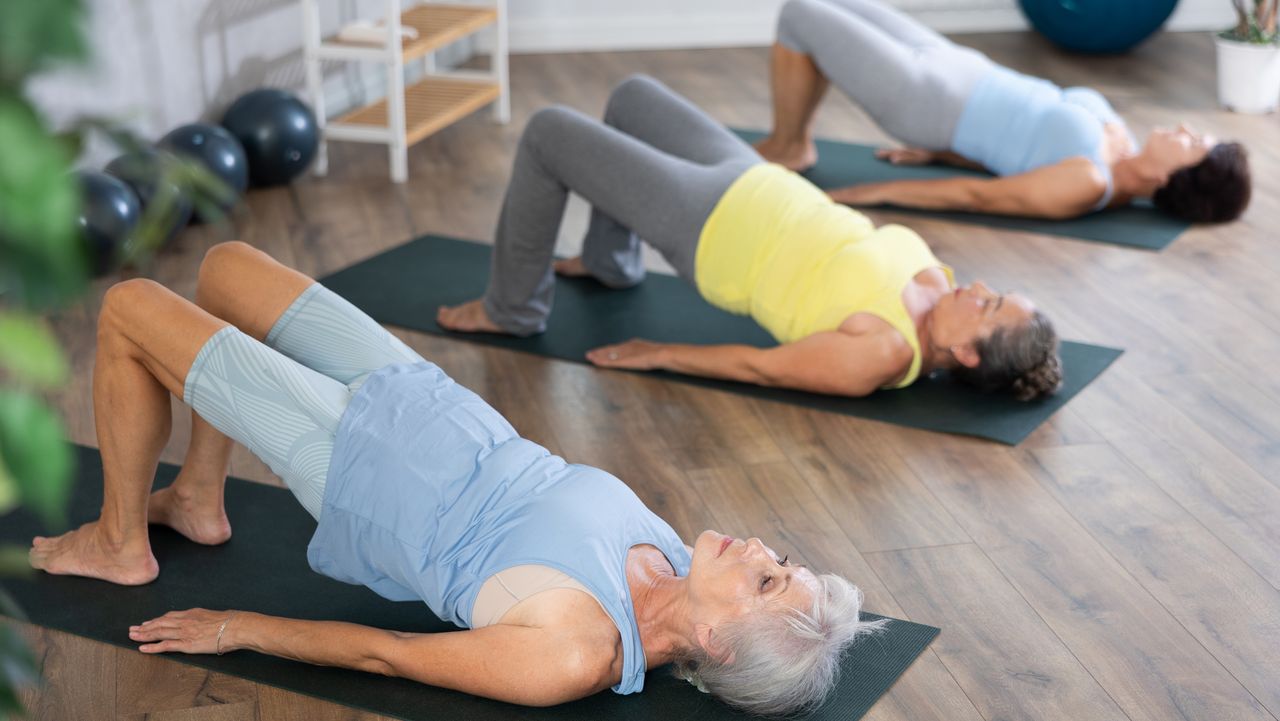
In Pilates, the core is often referred to as the powerhouse of the body, and it's an idea that goes right back to the method’s founder, Joseph Pilates. He developed Pilates in the early 1900s, teaching that strong, controlled movement should always start from the centre, where strength, stability, and balance are built.
One of the reasons Pilates has stood the test of time is how adaptable it is. It can be made challenging or supportive depending on what you need, which makes it a smart choice for building core strength, improving posture, and supporting balance as we get older.

If the thought of joining a gym leaves you cold, or you're bored with generic ab workouts that never quite hit the deeper core muscles, Pilates offers something different. All you need is one of the best yoga mats, a bit of space, and a willingness to slow things down and move with intention.
To help you get started, Pilates instructor and Vice President of Fitness at BODYBAR Pilates has created a five-move routine designed to strengthen the core and support better posture. Here's what it involves...
1. Modified Plank

- Place hands directly under your shoulders.
- Step feet back into a plank position; lower knees to the floor if needed.
- Engage the abdominals and glutes to create a long line from head to knees.
- Imagine pulling the floor apart with your hands to activate the upper back.
- Hold for 20-30 seconds, breathing steadily.
- Modification: Perform on knees or elevate hands on a chair or bench to reduce wrist and shoulder strain.
2. Bird Dog
- Start on all fours with hands under shoulders and knees under hips.
- Engage your abdominals to stabilize the spine.
- Extend the opposite arm and leg, reaching fingertip to heel.
- Keep hips and shoulders level - avoid arching the back.
- Return to start and switch sides.
- Perform 6–8 controlled reps per side.
- Modification: Lift only the arm or the leg if balance is limited.
3. Bridging

- Start on all fours with hands under shoulders and knees under hips.
- Engage your abdominals to stabilize the spine.
- Extend the opposite arm and leg, reaching fingertip to heel.
- Keep hips and shoulders level - avoid arching the back.
- Return to the start and switch sides.
- Perform 6–8 controlled reps per side.
- Modification: Reduce range of motion and lift hips only a few inches if needed.
4. Bow & Arrow (Half Roll‑Back)
- Sit on the mat with knees bent and feet lightly resting on the floor.
- Sit tall, then gently round the spine and lean back halfway.
- Rotate the torso to one side, bending the elbow as if drawing a bow.
- Return to the center and repeat on the other side.
- Perform 6–8 slow reps per side.
- Modification: Sit more upright and limit the lean‑back depth.
5. Mermaid Stretch (Z‑Sit or Seated Option)
- Sit in a Z‑sit position or on a chair if floor seating is uncomfortable.
- Lengthen the spine and extend arms out to a T‑shape.
- Place one hand down and sweep the opposite arm overhead into a side bend.
- Return to center and switch sides.
- Continue flowing side to side for 30–45 seconds.
- Modification: Perform seated in a chair with feet flat on the floor.
If anything causes pain, particularly in the lower back or hips, stop and reset your form or choose an easier option. Pilates is about building strength in a way that supports your body, not pushing through discomfort.

Follow Tom's Guide on Google News and add us as a preferred source to get our up-to-date news, analysis, and reviews in your feeds.
More from Tom's Guide
- 'The core responds beautifully to intentional and low-load training at any age' — a personal trainer shares a 5-move workout to build core muscle after 65
- You don't need the gym to build strength later in life — trainer reveals a 6-move workout to improve balance, flexibility and core strength after 70
- A yoga teacher swears by this hip mobility move for tight hips — I’ve seen the benefits firsthand