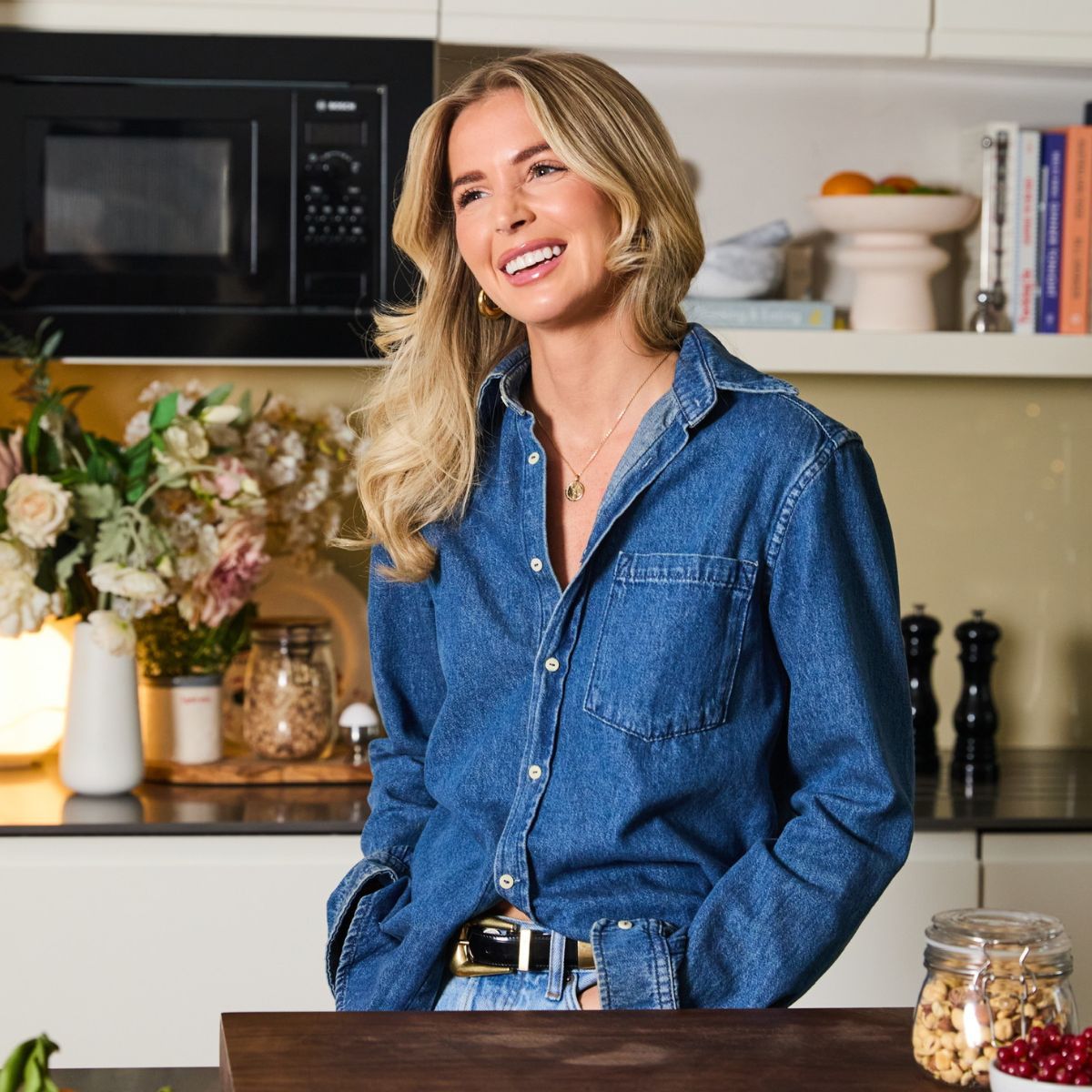
When you think back to my younger years and my relationship with food and health, it was really normal. I didn’t grow up in a dieting household. My mum never commented on weight or bodies, and food was just food. But that changed when I entered the modelling industry. It felt like a wild west of “health” information. Suddenly, things that were totally normal to me were demonised. I slipped into an eating disorder and started pulling away from the parts of life I loved: eating with my family, going out for meals, and being present. I’d always been sporty. I ran competitively, cross country. Movement used to be about passion and performance. But it shifted into the idea that my body was a maths equation. “Health” became restriction and unhappiness, which is the opposite of what health should be. I was lucky to have an amazing CBT therapist, and that period really shaped everything that came next. Meeting that therapist was a defining moment in my life, and it set me on the path to becoming a leading voice in nutrition. I was academically quite science-minded. I did the IB, higher-level chemistry and biology, and I’d always been fascinated by the human body. But I realised I didn’t actually understand the science behind what everyone in that industry was claiming. I wanted to know what’s real, what’s noise, and what genuinely helps someone feel better. So I left modelling, went to university, and studied nutrition. It came from a very personal place. I wanted to build a version of “health” that creates more happiness and freedom, not less. My approach to health, wellness, and nutrition now, and what I share with my followers day in, day out, is that health should be approachable and accessible, not elite or pressured. We all eat, so we’re all exposed to nutrition every day. I’m very pro-evidence, but I’m also realistic. We don’t all need to eat the same, move the same, or look the same. For me, the goal is to open the field up, not gatekeep it, so people can build a version of health that works in real life. I always come back to the fact that we don’t eat nutrients, we eat food. So the advice has to translate to something you can actually put on a plate. I love the geeky science side, but I’m careful with messaging because nutrition research is complicated. Humans are not lab rats, and there are so many variables. And I think we underestimate personal feedback. No one lives in your body but you. If you tune into how you feel, energy, digestion, mood, and sleep, you often already know what’s serving you and what isn’t. Evidence gives us direction, and your lived experience helps you apply it. I'm lucky to have learnt a lot about what it means to be truly well over the course of my career - which is why I've shared the five wellness lessons I wish I'd known sooner, below. Keep scrolling for more - and remember, healthy living should feel so good.













