Get all your news in one place.
100's of premium titles.
One app.
Start reading
Tom’s Guide
Tom’s Guide
Technology
Amanda Caswell

I let Google AI help me transform my garden this year — 5 tips that actually worked

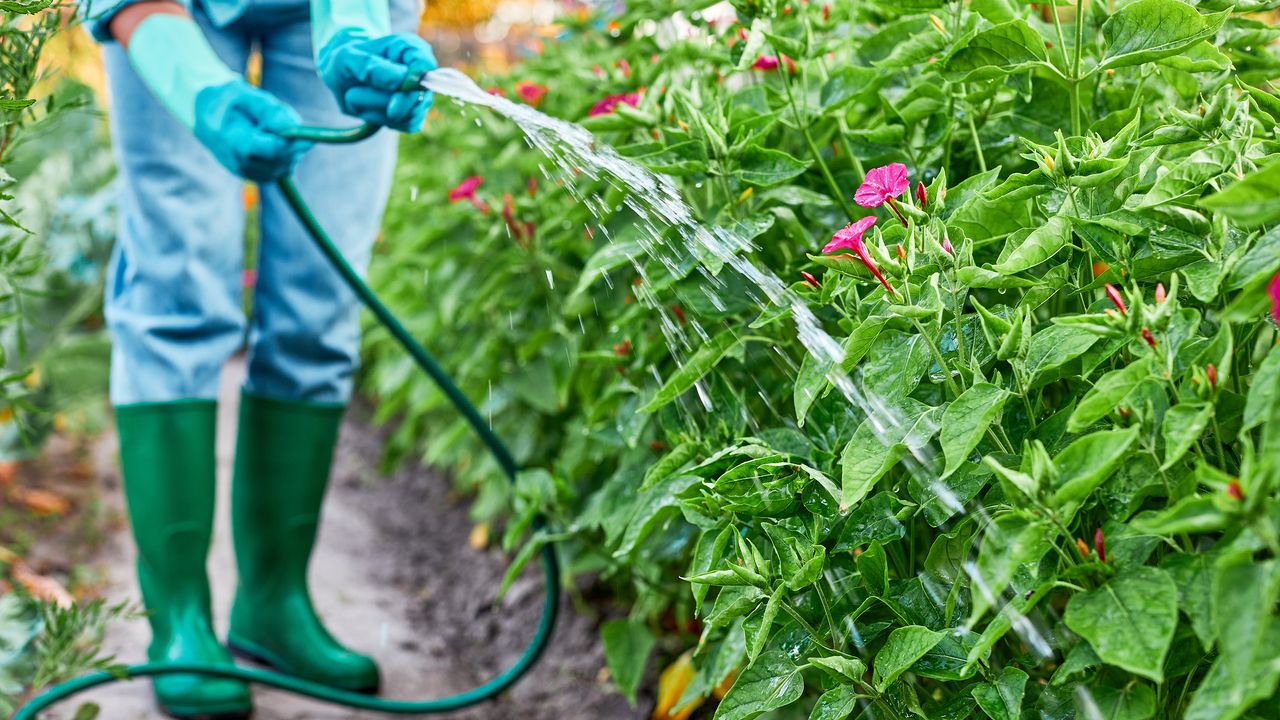
A gardener watering flowers in the rain.

I've always loved the idea of gardening, but it always seemed like the kind of hobby that was better suited for someone who knew what they were doing. After all, you need to understand sunlight, soil, planting zones, watering schedules and why your tomato plant suddenly looked personally offended. That wasn't something I knew how to do.

Apparently, I’m not alone. According to Trends data shared with me directly from Google, gardening is having a very modern moment. Search interest in “mini garden” is at an all-time high, “mini greenhouse” rose 180% over the past month and “apartment patio garden” jumped 250%. But there is a massive gap between loving the aesthetic of a wildflower patio and actually keeping one alive.

For me, that’s where Google’s new search tools started to feel like a cheat code for this type of thing. Instead of piecing together advice from dozens of conflicting gardening blogs, I’ve spent the spring using AI Mode, Canvas and Search Live to build a gardening plan that actually fits my space, my schedule and my very real tendency to forget what I’m supposed to be doing next. Here's how to try it yourself.

1. Using Search Live when my hands were covered in dirt

A post shared by Amanda Caswell (@amandacaswell_ai)

A photo posted by on

Every beginner eventually hits the same moment: something looks wrong, and you have no idea what happened.

I decided to test Search Live as a real-time troubleshooting tool. Instead of trying to type out a query while my hands were covered in potting soil, I pointed my phone's camera at a struggling plant and used my voice.

The prompt I used: “My plant has yellowing leaves near the bottom, but the top still looks green. What are the most likely causes, and what should I check first?”

Search Live immediately helped narrow the possibilities, suggesting I check my watering habits, drainage and signs of nutrient deficiency. I also used it to help with our rose bush next to the house.

A quick warning here, while AI is incredibly helpful for basic troubleshooting, it should not replace expert guidance for anything involving toxic plants, pesticides or pets. If the answer involves chemical treatments or safety concerns, double-check with a local nursery or expert.

2. Pushing Canvas to build a real management plan

The way I see it, the biggest problem with beginner gardening is that the advice can feel endless. I've gotten advice from everyone from my mom and my neighbors to blogs that say "plant this in the spring but move this in the summer" or "start seeds indoors and watch for pests." It feels like a lot and, frankly, overwhelmed me at first.

However, ever since I swapped my physical paper planner for an AI-assisted task system a couple of months ago, I’ve realized the value of making AI do the organizational heavy lifting. So, I turned to Google's Canvas tool. Instead of giving me a static text dump of advice, Canvas acts as an interactive workspace.

I asked it to build a full annual garden management plan.

The prompt I used: “I’m brand new to gardening and I live in New Jersey. I want a beginner-friendly garden with herbs, flowers, and a few vegetables. Please create an annual garden plan with a monthly task list, planting chart, supply list and seasonal strategy.”

Canvas generated a structured, interactive roadmap. The advantage here isn't that the AI magically knows everything about gardening, it’s that it organizes the chaos into a functional dashboard. Having a distinct breakdown of what I need to do this month makes the whole project feel infinitely more achievable.

3. Use AI Mode to visualize your garden

(Image credit: Google)

One of the hardest parts of starting a garden is figuring out what your space can actually support. A sunny backyard, a shaded patio, a balcony, a stoop and a New York City fire escape are all very different environments. What works in one space may fail immediately in another.

The smartest way to figure out your space is by feeding a photo of it directly into AI Mode. I took a photo of my backyard space, uploaded it and asked the AI to help me place a mini greenhouse based on the lighting.

The prompt I used: “Here is a photo of my backyard. I want to add a mini greenhouse for herbs. Where is the best place to put it based on likely sun exposure, foot traffic and available space?”

I added practical details about when the space gets afternoon sun and heavy wind. This is where AI genuinely proves its worth for beginners. Instead of starting with an abstract list of plants, I started with the physical constraints of my actual home.

AI Mode works best when you treat it like a conversation, so I followed up by asking: “What would work better in partial shade?” and “What if I only want low-maintenance plants?”

4. Testing AI Mode for gardening ideas

Chaos gardening sounds both freeing and slightly terrifying. Instead of planting in neat rows, you scatter a mix of seeds and let the garden grow in a natural, wild-looking way.

According to Google’s data, Gladiolus was the top-trending “chaos flower” searched in the past month, followed by ranunculus. But you can’t just throw seeds into a pot and expect a wildflower meadow to appear. I needed a strategy.

The prompt I used: “I want to start a chaos garden in a container on my patio. I have partial shade and limited space. What seed mix should I use and what’s the best strategy for success?”

Because I included the space, light conditions and desired look, AI Mode successfully separated the answer into “best flowers,” “what to avoid,” and “what to expect month by month.” For anyone who wants the wildflower look without the guesswork, this is easily one of the most fun ways to use the tool.

5. Finding supplies before the project stalls

The least glamorous part of gardening is realizing you do not have the thing you need right when you need it. You finally decide to plant herbs, then realize you’re missing soil, or a trowel or a container with drainage holes.

Google’s Shopping filters in Search ("in stock nearby" and "get it today") were incredibly practical for this. A garden is much easier to start when you can secure all your basics in one quick trip down the road rather than waiting on three different online deliveries.

The unexpected bonus: Gardening for kids

(Image credit: Future)

Trying to find engaging, outdoor activities for my three kids that don't involve screens is a constant battle. Gardening fits the bill perfectly, it keeps their hands busy and makes a mess that feels vaguely educational. I asked AI to build a project for us.

The prompt I used: “I want to start a small gardening project with my kids this weekend. They are beginners and I need something low-cost, low-mess, and easy to maintain. Give me 5 ideas with supplies, steps, and what they’ll learn.”

It instantly turned a vague "we should do something outside" idea into a concrete weekend itinerary before anyone had a chance to lose interest.

The takeaway

Don't expect AI to make you a master gardener overnight. It will not magically fix bad soil, unpredictable weather or a plant that simply refuses to cooperate.

But it absolutely lowers the barrier to entry. Instead of asking a broad question like “How do I start gardening?” I found that treating AI like an interactive planner, giving it my exact space, sunlight, budget and goals was the difference between just thinking about a project and actually getting my hands dirty.

More from Tom's Guide

Sign up to read this article
Read news from 100's of titles, curated specifically for you.
Already a member? Sign in here
Related Stories
Top stories on inkl right now
One subscription that gives you access to news from hundreds of sites
Already a member? Sign in here
Our Picks
Fourteen days free
Download the app
One app. One membership.
100+ trusted global sources.