Get all your news in one place.
100's of premium titles.
One app.
Start reading
Tom’s Guide
Tom’s Guide
Technology
Jason England

I knew we weren't crazy! Samsung, SK Hynix and Micron just got sued — accused of using 'AI' to fix prices and screw your wallet in RAMpocalypse

RAM.

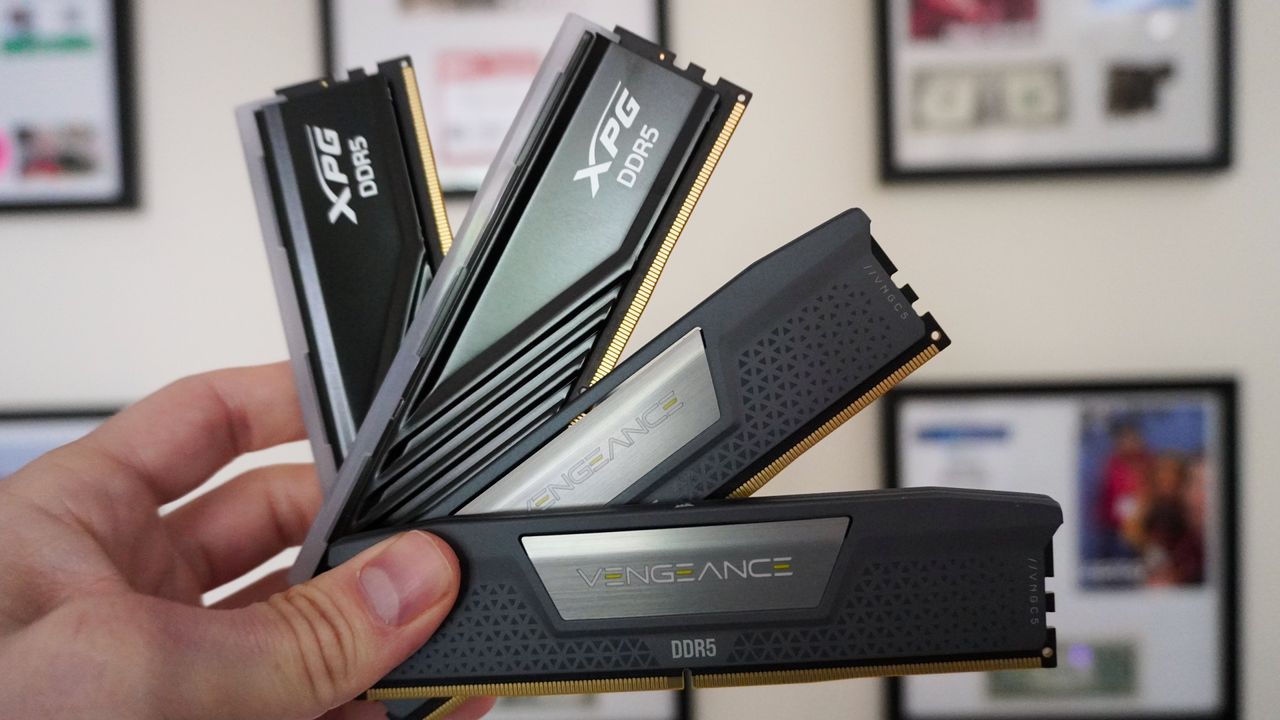
RAMageddon has hit us hard this year — doing everything from raising the prices of MacBooks and iPads, pricing the Steam Machine out of console contention, and ruining Prime Day (selling something at MSRP discounted from an inflated price is not a deal).

But the people are fighting back. A group of individuals and small businesses have launched a class action lawsuit against the big three memory makers (Samsung, SK Hynix and Micron), which accuses them of price fixing and market manipulation.

Basically, in the chaos of the AI data center boom, these plaintiffs are calling BS and want to take a look under the hood for any colluding under the Sherman Act. Let me get you caught up on what’s happening, and whether there’s a case here.

The reality of the RAMpocalypse

(Image credit: Future)

We’ve seen it play out in real-time throughout all of 2026 — last week most prominently when Apple products were hit hard with memory-related price spikes. And when companies like the Cupertino crew want memory, they go to the big three: Samsung, SK Hynix and Micron.

These are a tight oligopoly that control around 90% of the global DRAM market, and after OpenAI CEO Sam Altman signed a letter of intent to spend $1.4 trillion on memory (which was then quietly rolled back to way less), there’s been a scramble to snap up as much high-bandwidth memory (HBM) as possible.

That’s caused the cost of consumer RAM to surge by an astronomical 700%, but is this all because of AI? This case alleges no, and accuses them of price-fixing and market-manipulation — artificially creating shortages to gouge prices.

(Image credit: Future)

When the American people’s wallets are hit unnecessarily hard, the courts pay attention, and the plaintiffs have timed this lawsuit well to leverage the court of public opinion and economic reality. Times are hard for consumers, and when there’s a clear culprit (whether guilty or innocent) behind it, regulators take that much more seriously.

Plus, there is history here. Samsung and SK Hynix both pleaded guilty to a multi-year DRAM price-fixing operation back in 2005 after the dot-com bubble, which led to over $700 million in fines. This lawsuit leverages that historical pattern to argue that old habits die hard.

The AI alibi

(Image credit: Amazon)

It’s not going to be a cakewalk, though. This case faces a difficult task of proving deliberate collusion rather than simple market dynamics. And even though it all started with an IOU from Altman that never really played out fully, there’s no denying that the memory landscape has truly transformed due to AI.

Speaking of HBM, Samsung, SK Hynix and Micron have shifted around 80% of their manufacturing capacity away from standard consumer RAM to this high-margin HBM that feeds AI data centers and GPUs. As businesses, they are selling to the highest bidders with the deepest pockets.

This will probably be core to the counterargument — tech giants will say that the shortage is nor forced, but rather a business response to unprecedented demand. They also have their new manufacturing capacity to present as evidence too, such as SK Hynix’s new FAB in South Korea opening in 2027 or Micron’s new Idaho Fab mid-next year.

The vast majority of this extra capacity has already been bought up by multi-year deals signed by cloud hyperscalers like Microsoft, Google and Amazon, so experts predict the average Joe won’t see this relief trickle down until at least 2028.

It’s a very fine tightrope to walk, but this would be a strong counter if nothing else can be found to prove otherwise.

Could the people win?

(Image credit: Tom's Guide)

So, does this case hold weight? Absolutely — the financial pain to us all is real, and that market concentration around a big three is undeniable. A big three, which may I remind you, have a track record of anti-competitive behavior.

But all of this is hearsay at the moment. The case hangs on a “well, they’ve done it before” kind of energy, without a real smoking gun. If Bathaee Dunne LLP can uncover something like internal coordinated comms showing that they used the AI boom as a coordinated smokescreen to intentionally starve the consumer market and jack up prices, then we’re looking at the biggest antitrust tech trial of my lifetime.

However, if it’s just based on circumstantial market data, the tech giants have a decent cover behind the AI build-out. Time will tell, as things are just getting started.

More from Tom's Guide

Sign up to read this article
Read news from 100's of titles, curated specifically for you.
Already a member? Sign in here
Related Stories
Top stories on inkl right now
One subscription that gives you access to news from hundreds of sites
Already a member? Sign in here
Our Picks
Fourteen days free
Download the app
One app. One membership.
100+ trusted global sources.