Get all your news in one place.
100’s of premium titles.
One app.
Start reading
Tom’s Guide
Tom’s Guide
Technology
Erin Bashford

I just took a 'sweat test' from a hydration expert — here's what I learned

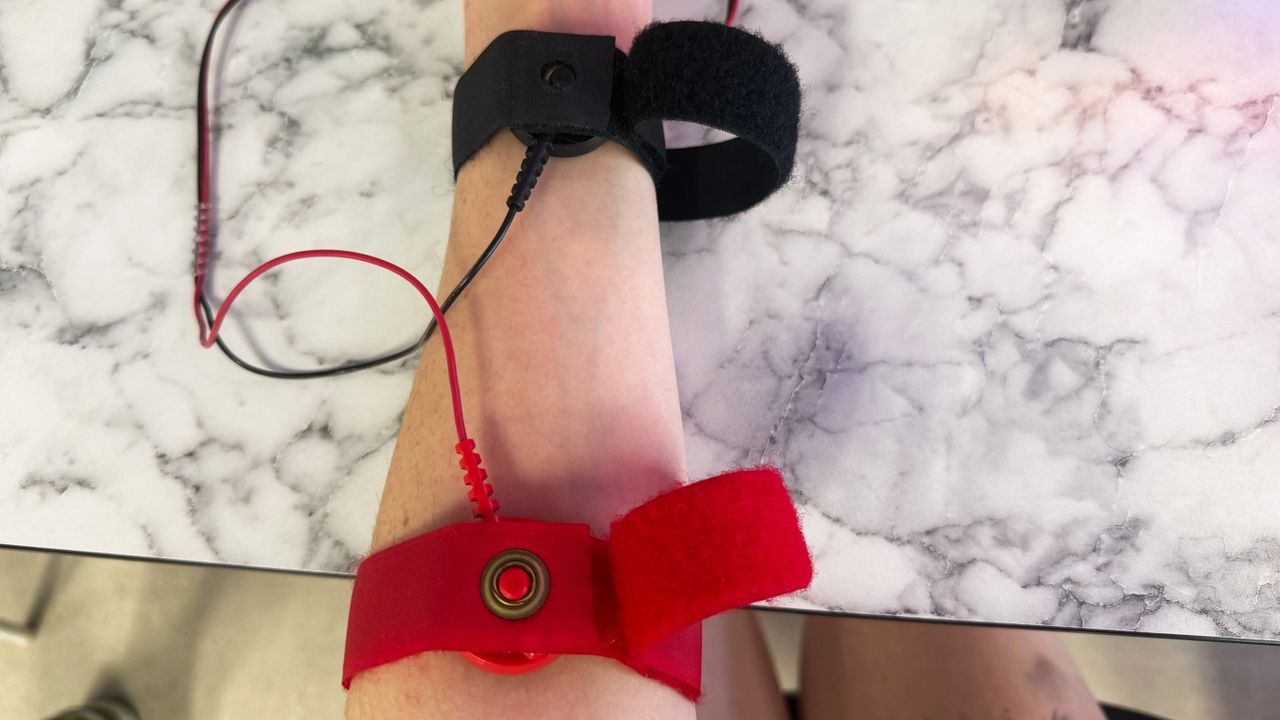
A photo of a sweat test being done, with two electrodes on a forearm.

I've spent the last couple of days on a fitness retreat with budget behemoth Amazfit, whose Whoop-dupe Helio Strap I love. But I've been at this fitness retreat for a different reason — testing the brand-new Active 3 Premium (full review incoming!).

After completing 5ks, challenging hikes, relaxing yoga sessions and strength training, I've been learning so much about my body and my fitness level.

But one thing I didn't expect to learn about? My sweat. Yes, my sweat. At the retreat, I had my sweat tested by an expert from Precision Hydration, and I had no idea sweat could be so interesting.

I learned that I sweat very little, but what I do sweat is very high in sodium — over 1,100mg per liter. The average sweat contains between 500-1000mg of sodium per liter, so this means I am a higher-sodium sweater than most. But what does a "sweat test" actually entail, and what are the tangible findings from said test?

Set the scene: The sweat test

The blue spiral inside the sticker is my dyed sweat! (Image credit: Erin Bashford)

So, the sweat test isn't a horrible experiment where you have to run on a treadmill until you're dripping with perspiration and red in the face. It's like a blood test, sans needles.

I only had to offer up my arm: Precision Hydration took care of the rest. They put two electrodes on my forearm and sent a small electric current through my skin to kick my sweat glands into action. Then, after about 10 minutes, the electrodes were swapped for a sweat-extracting sticker. As I sweat like the human equivalent of the Sahara, this part took about thirty minutes.

Once I'd sweated enough, the sticker was removed and my sweat analyzed. You heard it here first, folks, I'm a high-sodium sweater. I'm so high in salt that instant ramen and chips should be afraid of me.

So what do I need to do now?

(Image credit: Erin Bashford)

As I sweat out a lot of salt, I need to adequately fuel myself during workouts. This means I should be consuming electrolytes and salt drinks as I run, hike, practice yoga and everything in between. I was wondering why I get so many glute cramps while running — my high-sodium sweat could be the reason (or I could just have weak muscles...).

If you get a lot of cramps when you run, you might also be a high-sodium sweater. Cramping isn't definitely caused by low salt — the few studies in this area have been mostly inconclusive — but it's still a worthy theory.

If your post-workout skin tastes a little salty, you might also be a high-sodium sweater. The American College of Emergency Physicians' Sports Med department advises that you might feel tired or nauseous post-exercise if your sodium levels are low. In this case, it's best to stop reading this article and talk to a medical professional!

While learning about sweat is fun, it can't replace true medical care — please consult your doctor if you're concerned. I undertook this sweat test for curiosity's sake — it could be worth finding one in your local area if you're curious too!


Follow Tom's Guide on Google News and add us as a preferred source to get our up-to-date news, analysis, and reviews in your feeds.


More from Tom's Guide

Sign up to read this article
Read news from 100’s of titles, curated specifically for you.
Already a member? Sign in here
Related Stories
Top stories on inkl right now
One subscription that gives you access to news from hundreds of sites
Already a member? Sign in here
Our Picks
Fourteen days free
Download the app
One app. One membership.
100+ trusted global sources.