
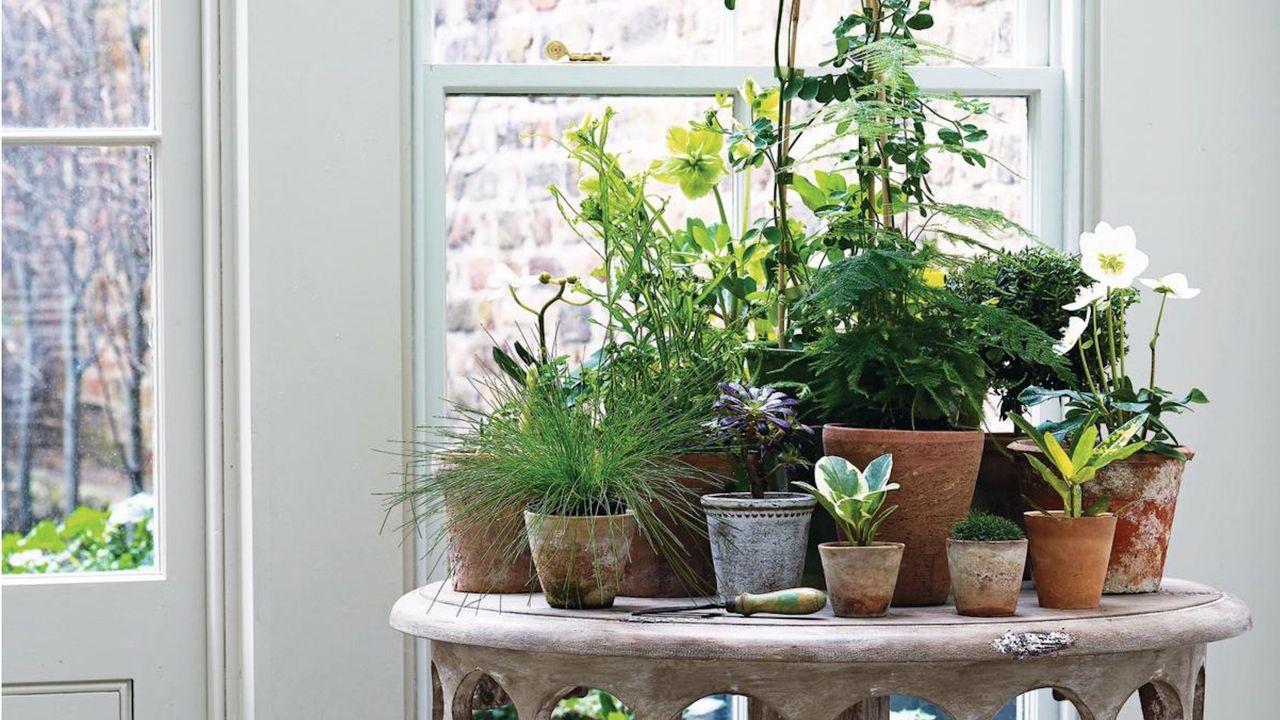
Spring is an important time for us houseplant owners. It's when all of our beloved indoor plants start putting their energy towards new growth. But, without a little routine maintenance and TLC, they won't get too far. That's why I prune houseplants in spring every year – and it always makes my plants fuller.
Pruning is an essential part of spring houseplant care. While it might seem scary to take sharp pruning shears (like these from Amazon) to your houseplants, removing damaged plant material and making strategic cuts can actually give them a boost and encourage bushier growth.

However, pruning houseplants in spring does require a careful approach. Making cuts in the wrong spot or removing too much of the plant can have the opposite effect, stunting growth and leading to their gradual decline. So, with some insights from plant experts, I've compiled everything you need to know to do it correctly.
Why Prune Houseplants in Spring?

'Pruning triggers the plant to push new growth from dormant nodes, and in spring the plant already has the rising light levels and warming temperatures conducive for this sort of response,' says Anup Mutalik, founder of Houseplants Nook.
In other words, pruning triggers houseplants to form new stems and leaves. This is especially true when you remove unproductive limbs, like brown stems and foliage, that no longer perform plant processes and drain the plant's energy.
Spring is a good time to do this because, as Anup notes, it's the time when temperature and light conditions are ideal. This means you can take advantage of the energy the houseplants are using this season to encourage abundant growth.
'When we prune in winter the cuts just sit there because plants don't have the energy needed to spur new growth,' says Anup. 'Spring pruning works because you're making a demand of the plant at exactly the moment it has the resources to meet it,' he explains.
It's also a good opportunity to shape your houseplant. For example by pruning in a way that encourages lateral growth (such as pruning a rubber plant's main stem), resulting in a bushier silhouette rather than just upright.
The milder spring conditions also allow for faster recovery, making it safer to prune your houseplants at this time. That's why it's a great time to correct leggy growth from adverse winter conditions, allowing your plants to come back better than ever during the warmer months.
With all of that being said, it is important to note this is a generalization, as every houseplant will be different – some won't need any pruning at all (such as succulents, which tend to need minimal pruning).
So, it's important to take into account the specific needs of your houseplants before picking up your pruning snips.
How to Prune Houseplants in Spring

How you prune houseplants in spring depends on what you're trying to achieve. In whatever case, Plantum plant expert Marina Prokaten urges to have the right tools to hand:
'Use clean, sharp pruning tools. This is the most vital step. Dull blades crush stems instead of cutting them, which invites decay,' Marina says.
'Always disinfect your scissors or pruning shears with rubbing alcohol between plants to ensure you aren’t spreading pests or diseases,' she adds.
These houseplant snips from Amazon are a good choice for softer stemmed houseplants, while you may want to use these Fiskars bypass pruning shears from Amazon for woodier plants.
As mentioned, every houseplant will be different. The following advice is general guidance on houseplant pruning, so make sure to also look into the needs of your specific plants – like how to prune a monstera and how to prune an orchid.
Pruning to Remove Damaged Stems
This is the main reason to prune houseplants in spring, especially of they're looking a little tired after adverse winter conditions.
You should look for any discolored foliage and snapped stems, as these will not turn green again. I like to wait as long as possible to remove this damaged plant material because the plant can still recycle nutrients from it until it turns fully brown.
'Removing dead parts of the plant prevents the plant from wasting nutrients on unproductive limbs and redirects energy to fresh foliage,' says Marina.
'While dead leaves can be removed year-round, major structural pruning should happen in spring. As daylight increases, houseplants enter a high-energy growth phase, allowing them to recover and fill out much faster than during the winter months,' she explains.
When removing damaged plant material, the general rule is to cut at the base of the leaf stem. Some houseplants naturally shed these leaves, such as a dragon tree, so you can also give it a gentle pull first to see if it comes away easily.
Pruning for Fuller Growth
If your houseplant has very upright growth or is trailing, such as a rubber plant or a pothos, you can use careful pruning techniques in spring to encourage lateral branches.
When doing this, it's important to identify leaf nodes, otherwise your efforts may be less than successful.
'This is the point where a leaf meets the stem or where you can see a small bump indicating dormant growth,' Anup explains.
'That node is where the new branch will emerge from, and cutting too far above it leaves a stub of dead stem that rots back toward the node and can introduce disease,' he explains.
Take care not to remove too much of the plant when doing this. You should always follow the one third pruning rule.
'Removing too many leaves starves the plant of its ability to produce energy through photosynthesis,' says Marina.
This can result in stunted growth and the gradual decline of the plant.
Make sure to save the cuttings you remove, too. There are so many easy houseplants to grow from cuttings, so you can double your collection by propagating the material you cut off.
For woodier plants, you may find a rooting hormone (like this rooting hormone powder on Amazon) makes this an easier process.
What to Shop
These bypass pruning shears are ideal for essential houseplant and garden pruning tasks. They cut up to 1" in diameter.
These blue ceramic houseplant planters have drainage holes and saucers to remove excess water and aid moisture management.
Use these pebble humidity trays to boost humidity levels for your moisture-loving houseplants. Simply place them on top and fill the tray with water.
There are lots of pruning mistakes to be aware of that apply to houseplants, including using dirty tools. If needed, you can sharpen your pruning shears in just a few steps.
If you love inspiring garden ideas, outdoor advice, and the latest news, why not sign up for our newsletter and get the latest features delivered straight to your inbox?