Get all your news in one place.
100's of premium titles.
One app.
Start reading
The National (Scotland)
National
[email protected] | Hamish Morrison

'I built a website to win Yes support. Here's why we need to be honest with voters'

A NEW website aims to provide “one place” where swing voters can find answers to key questions about Scottish independence, its founder has told The National.

Chartered accountant Scott Lamont said he created the NewScot website to help win people over to the independence cause.

The Edinburgh-based 28-year-old said: “We’re 12 years on now, there still isn’t one place where a typical person, a typical voter can go and see how it would work and how it would actually affect them on a personal level.”

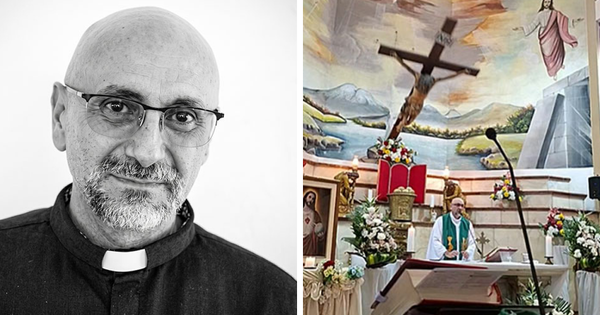
Scott Lamont, a chartered accountant and the designer of the NewScot website (Image: Supplied)

The project has taken him around six months work during his evenings and weekends between work as a tax adviser at one of the big four accountancy firms and covers what he thinks are all the questions undecided voters still have about independence.

NewScot features a “calculator” which tells users what independence would “mean for you”, allowing them to select their age, housing status, income, their area of work, their location and their family situation to calculate the potential benefits and drawbacks independence could have.

(Image: Jane Barlow/PA Wire)

It also highlights “the story closest to yours” which matches users with a profile of an individual in a similar scenario to them, showcasing how independence would affect them.

The site aims to provide solid answers to questions which have proven tricky for the independence movement in the past.

In a section addressing which currency an independent Scotland would use, the answer is given: “An independent Scotland will use the Scottish pound – a new currency, issued by a new Scottish central bank, managed in Scotland's interest.”

Lamont said: “I remember knowing loads of people who wanted to vote Yes but they just didn’t and it wasn’t necessarily that because they disagreed with the idea in principle but because when they went to sit down and think about it, the night before at the kitchen table, they would ask themselves all the typical questions: ‘What happens to my mortgage, my pension, my job?’

“I always had this belief that we just didn’t give straight enough, clear enough answers. And in that case, when someone has that question put to them, they’ll just play it safe.”

An SNP member, Lamont said that the site had been informed by his conversations with voters over the years.

“Speaking on the doorsteps to people and the conversations that I’ve had over the years, they care about how it affects them personally and not necessarily about the abstract constitutional debates,” he said.

“There’s always going to be an element of the electorate that is diehard Yes, diehard No, no matter what you say to them.

“It’s more about approaching that middle ground, where people do make their minds up based on things that are less ideological, less abstract. It’s based on their own personal situation, your typical swing voter.”

And Lamont said he wanted to be “open” with people about the risks of independence.

Screenshot of the modelling feature on Scott Lamont's NewScot website (Image: Scott Lamont/NewScot)

A “model” feature allows users to play around with different variables affecting the success of an independent Scotland – such as the predicted economic effects of gaining EU membership, offshore revenues and immigration – to measure outcomes.

The “platform case” estimates that Scotland would be “better than staying in the Union” by year four of independence, while the “pessimistic case” says Scotland wouldn’t be better off until 15 years had passed.

The “pessimistic case” involves Scotland not joining the EU until nine years after leaving the Union, reduced offshore income and a level of immigration 15,000 below that in the “platform case”.

“If you’re ever going to convince somebody, you need to be honest,” said Lamont.

“Now, obviously I’m an independence supporter so I think that independence is a good thing and it will be beneficial for Scotland but you need to be open about everything that comes with it because there’s obviously costs starting a new, independent state, there’s risks but the more honest you are, the more that you explain these to people, you help derisk it.”

He said that the assumptions made in the modelling are open to challenge and that these could be changed if needed.

Lamont said: “It’s all open to challenge, and I'm happy to update anything that's shown to need it. The whole point is to make the honest case.

“You won't persuade people by telling them everything will be perfect, any more than Unionists will by claiming it'll all be a disaster. And fundamentally, I believe the honest case is the strongest one, because it's in favour of independence.”

You can find out more and explore NewScot.Scot by clicking here.

Sign up to read this article
Read news from 100's of titles, curated specifically for you.
Already a member? Sign in here
Related Stories
Top stories on inkl right now
One subscription that gives you access to news from hundreds of sites
Already a member? Sign in here
Our Picks
Fourteen days free
Download the app
One app. One membership.
100+ trusted global sources.