Get all your news in one place.
100's of premium titles.
One app.
Start reading
Tom’s Guide
Tom’s Guide
Technology
Sam Hopes

I asked a Gymshark athlete which 3 ab exercises she actually swears by — here's what she said

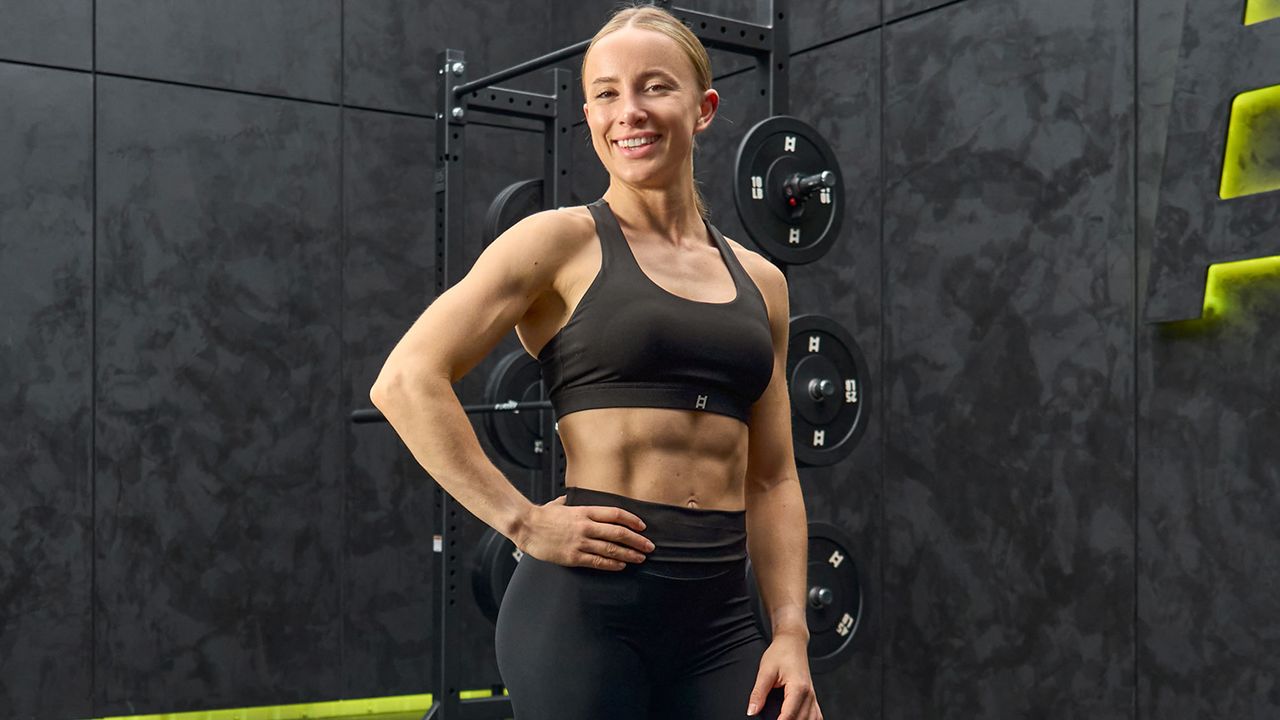
Abbie Dennison.

When a Gymshark athlete tells you there are three exercises you should try if you want to build a strong, stable core, you take note. Well, I do at least. That hybrid athlete is none other than Abbie Dennison, and we asked her a little bit about the reason she chose the moves below, plus some tips you can take on board for building strength and muscle in the gym.

Read on to find out more, plus which strength exercises she believes move the needle most in her own training regimen.

If you are currently working with pain, an injury, or any health condition, I advise speaking with a qualified medical professional before starting any new exercises or workout programs.

3 ab exercises recommended by a Gymshark athlete

A post shared by Tom's Guide Fitness (@tomsguidefitness)

A photo posted by on

The moves:

  • Alternating v-sits: Lie on your back with arms and legs extended. Engage your core and draw your navel in. Lift your shoulders away from the mat and bring opposite hand and foot to touch in the air. Drive up, reach and pause at the top, then lower onto the mat again and switch arm and leg.
  • ⁠Ankle taps: Lie on your back with your knees bent and feet planted. Peel your shoulder blades away from the mat and engage your core. Keep your neck neutral and maintain tension in your stomach. Tap your left hand to your left foot, then your right hand to your right foot.
  • Plank pull-throughs: Position a weight to your left side and start in a high plank position with your shoulders stacked directly over your wrists, core engaged and butt aligned with your shoulders. Use your right hand to pull the weight under your body to your right side. Repeat with your left hand over to the left.
(Image credit: Getty Images)

Why did you choose these ab exercises, and what benefits do they offer?

Denison says, "I like a mixture of movements that challenge my abs in slightly different ways rather than doing three variations of essentially the same exercise. These three give a combination of trunk flexion, oblique work and control and stability."

What is the importance of training your core versus training your abs?

"Your abs are only one part of your core," says Denison. "Your core includes all the muscles around your trunk that help stabilize your spine and pelvis and transfer force between your upper and lower body.

So while I do train my abs directly, having a strong core is more important to me from a performance perspective. And a lot of my core training also happens indirectly through heavy lifting and compound movements."

What exercises have moved the needle the most in your training?

"Heavy compound lifts! Things like squats, RDLs, barbell rows and pull-ups because you can load these up heavy and progressively overload them over time."

Do you prefer gym machines or free weights? Why?

"I prefer free weights, although both definitely have their place," Denison tells us. "I prefer free weights because they give you more freedom to move in a way that suits your body, rather than being fixed into the movement path of a machine."

This makes training with free weights slightly more functional than gym machine workouts, which can translate over to daily activities and sports.

(Image credit: Shutterstock)

As Denison mentions, these three moves tick the boxes for trunk flexion (v-sits), oblique work (ankle taps) and control and stability (pull-throughs), which means you work your core in multiple planes of motion, rather than repeating exercises like sit-ups and crunches that target the abs in similar patterns. This means you're able to build all-round core strength and target more muscle groups, which will improve how you move.

Your core as a whole (but namely the diaphragm, transverse abdominis and internal obliques) works hard during plank isometric muscle contraction. This means you're also improving control and stability during the pull-throughs and teaching your body to maintain tension.

Building a strong core will also help protect your lower back. As Denison mentions, various core muscles support your spine and pelvis and help you transfer force through your upper and lower body. A strong back is crucial for proper posture and alignment.

Finally, these exercises translate. You might not tap your ankles regularly or pull heavy weights under your body, but building deep core strength and stability (rather than just sculpting your abs and external obliques) translates as you need your core to safely drive movement like lifting heavy, climbing, or running.

Denison doesn't give sets, reps, or timings on this, but here's where I take over as a trainer. I recommend performing each for 45-50 seconds, taking a 10-15 second rest, then repeating for 5 rounds. These moves work well as a mini circuit, but try to keep the reps you achieve similar per round.

If you prefer to build them into an existing ab workout, try 3-4 sets of 10-12 reps per side. This workout can be repeated several times a week or built into a wider strength program.

But remember, while targeted ab workouts are great for strengthening your core, resistance training, lifting, sleep quality, plenty of daily movement and a high-protein diet will move the needle most, so try to take a holistic approach to your core training.

Follow Tom's Guide fitness on Instagram for more workouts, routines, tips, and tricks.

More from Tom's Guide

Sign up to read this article
Read news from 100's of titles, curated specifically for you.
Already a member? Sign in here
Related Stories
Top stories on inkl right now
One subscription that gives you access to news from hundreds of sites
Already a member? Sign in here
Our Picks
Fourteen days free
Download the app
One app. One membership.
100+ trusted global sources.