
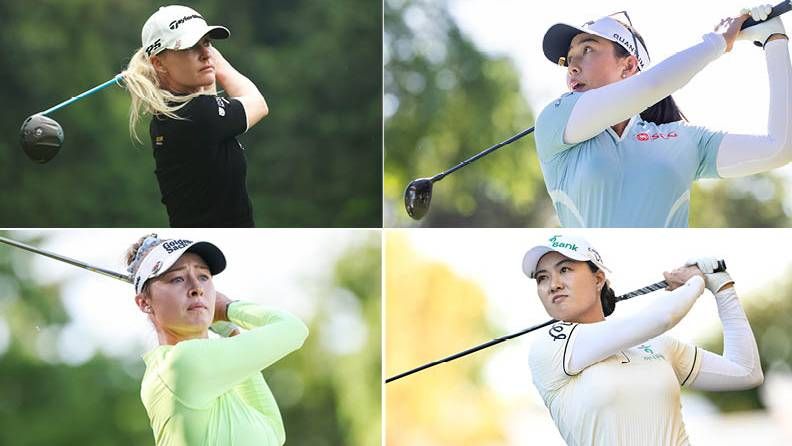
For many years I’ve felt that the amateurs who I play golf with have a total disconnect with the women’s professional game. They never talk about watching LPGA tournaments, there’s no excitement around the women’s Majors like we get from The Masters or The Open Championship in the men’s game. They seldom mention an impressive shot they’ve seen played by an LPGA Tour player, or an exciting climax to an event - any golf chat is always centred around the men’s game.
While some women can name one or two leading players, like home-grown talents Charley Hull and Georgia Hall, who have achieved incredible success in the last decade, when it comes to naming other LPGA tour stars the knowledge is shamefully lacking.

To be honest, it’s hardly surprising. TV coverage of women's golf is still a long way behind the men’s game. It’s easy to watch the PGA Tour every week as it’s broadcast in prime time viewing slots. Coverage of the LPGA Tour, in comparison, is often a scheduling after-thought, not getting airtime until late at night after the live tournament has finished, flowing onto our screens after the PGA Tour has concluded. Even the women’s Majors don’t get the same coverage as the equivalent in the men’s game.
As an interesting exercise, I asked 20 club golfers if they could name five LPGA Tour players. The results were startling. Some couldn’t even name one. Interestingly, the older generation were the most knowledgeable, but they were also out-dated with their grasp of the big names, citing LPGA stars from yesteryears like Dame Laura Davies and Annika Sorenstam, who no longer compete.

Out of all of the players I questioned, the younger generation had the better knowledge of the current top players. Perhaps because they are used to seeing these golfers as social influencers posting on TikTok and Instagram, rather than from their on-course prowess as tournament professionals.
But what of the players who choose to stay off socials entirely? Understandably they want recognition for their skills as a golfer not for the outfits worn at the functions they attend.
Sadly the pros who don't exist on those platforms tend to miss out on the sponsorship opportunities because their names just don’t get seen. It’s a catch-22, as we can't grow the game if the next generation doesn't have visible role models to follow. As the younger generation live their lives vicariously through social media it simply needs to be embraced.

Only one woman out of the 20 I questioned could name more than two LPGA Tour players, and her knowledge came from attending the last Solheim Cup clash between Europe and the USA. There’s no better way to familiarise yourself with the world’s best players than by supporting them live and there’s another opportunity in September when the Solheim Cup is played at Bernadus Golf in the Netherlands.
The women who failed to answer my question were embarrassed and ashamed that they didn’t know more LPGA players. When I questioned them on why they thought their knowledge was lacking, they said it was hard to find coverage of women’s golf to watch and it is less exciting to view on TV than the men’s game.
For these reasons they don’t feel very in touch with the women’s tour. It’s definitely true that there are fewer sensational stories that come out of the LPGA Tour. We need more of Netflix’s Full Swing treatment for stars like Nelly Korda and Charley Hull to attract the casual viewer.
The exercise of asking ordinary golfers who the big names in women’s golf are has highlighted a huge void in knowledge. One thing is certain, we need more consistent stories to capture attention, especially those with an emotional touch, rather than just simply event results to hook us in.







