Get all your news in one place.
100's of premium titles.
One app.
Start reading
InsideEVs
InsideEVs
Technology
Tim Levin

Hyundai CEO's Answer For The EV Slowdown: Building Thousands Of Robotaxis

The market for electric cars in America isn't growing as quickly as Hyundai, or indeed most car companies, anticipated just a few years ago. Thank softer-than-expected consumer demand and the destruction of pro-EV policies for that. But the South Korean automaker's CEO thinks he has found another potentially huge and growing customer base for all of those EVs it can build: robotaxi companies.

As the EV tax credit and fuel-economy regulations fell away over the last year and change, automakers from Ford to Honda scaled back their EV ambitious and took enormous write downs. While rivals "decided to write down their assets, we decided to make the most out of our assets," Hyundai Motor Company CEO José Muñoz told reporters in San Jose on Thursday.

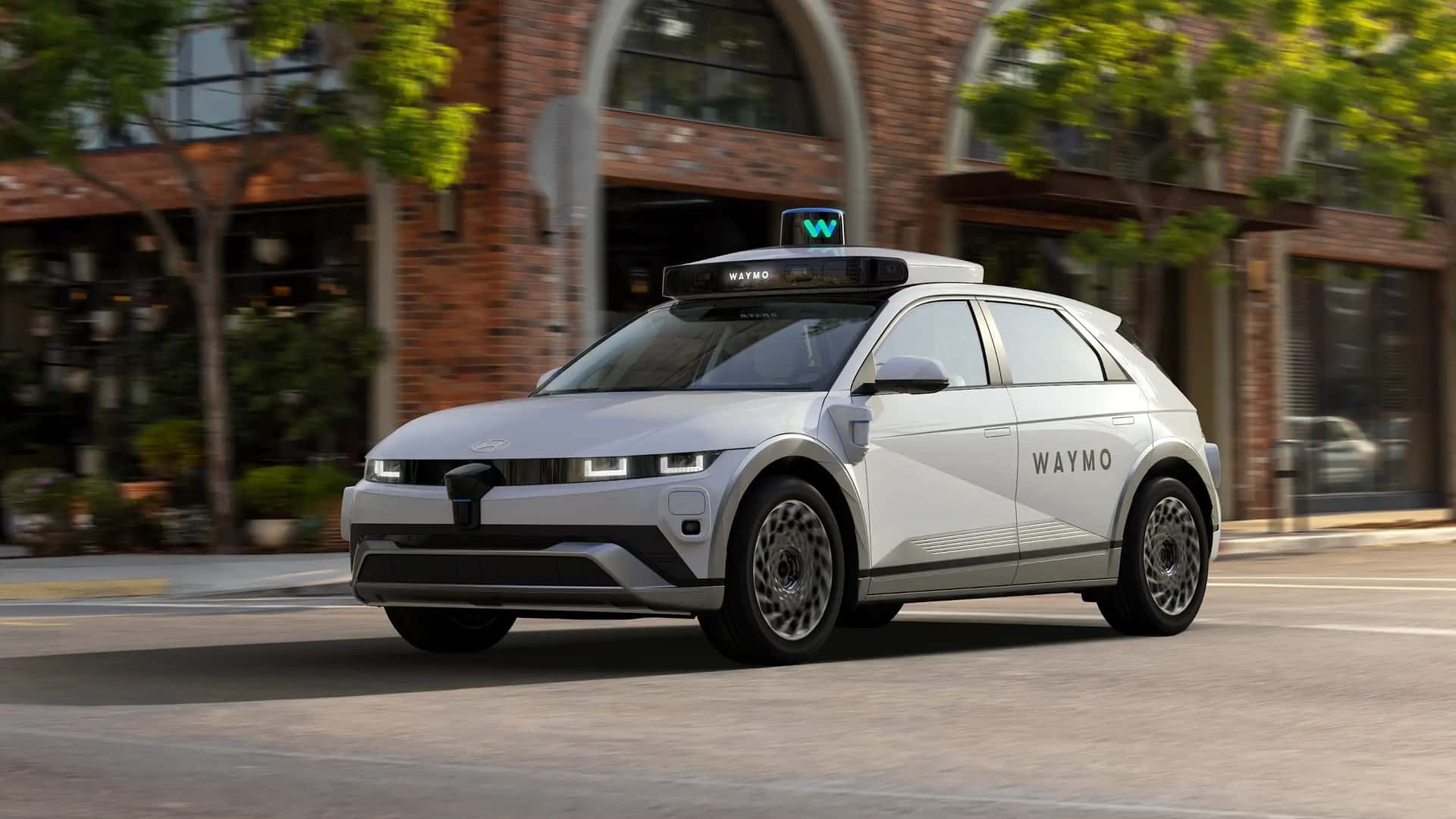
That meant adjusting capacity at the Hyundai Motor Group plant in Savannah, Georgia, to make more hybrids and fewer EVs, he said. "The other thing we've done is to look for new business opportunities within the EV, and the number one biggest opportunity is robotaxis," he said. Hyundai inked a deal to build vehicles for Waymo in 2024, and it also manufactures Ioniq 5s for its own autonomous-vehicle arm, Motional.

Muñoz told reporters on Thursday that the company's robotaxi-manufacturing business is profitable. And, on stage at an recruitment event in San Jose, he said Hyundai will make "tens of thousands" of Ioniq 5 robotaxis for Waymo at its Georgia plant. "So it's becoming a business unit on itself," he added.

Hyundai plans to deliver the first Ioniq 5 robotaxis not destined solely for testing to Waymo in the fourth quarter. The vehicles will use Waymo's sixth-generation autonomous-driving hardware, just like the firm's Zeekr vans. The difference is that the Ioniq 5s come equipped with all the bells and whistles from the factory, whereas Waymo outfits Zeekrs with sensors itself at a factory in Arizona.

When the two companies announced their partnership in 2024, they noted that Hyundai would provide a "significant volume" of vehicles but did not specify how many. Today, Waymo's fleet includes some 4,000 vehicles across 14 U.S. cities.

Robotaxis are becoming an increasingly important source of EV volume, especially during a sluggish period for sales. That can be especially crucial to automotive startups still trying to turn a profit.

Rivian recently struck a deal with Uber to provide up to 50,000 R2 crossovers. Lucid will sell at least 35,000 Gravity SUVs and midsize vehicles through its tie-up with Uber and Nuro. This week, Lucid announced a partnership with European shared mobility platform Bolt to supply at least 25,000 midsize vehicles for autonomous operation. Stellantis, too, will provide EVs to Uber for a robotaxi program.

Muñoz said he sees "a significant opportunity to scale up" its robotaxi business, and he suggested that the company may not stop with Waymo. There's "a lot of interest" from other customers, he said.

Contact the author: [email protected]

Sign up to read this article
Read news from 100's of titles, curated specifically for you.
Already a member? Sign in here
Related Stories
Top stories on inkl right now
One subscription that gives you access to news from hundreds of sites
Already a member? Sign in here
Our Picks
Fourteen days free
Download the app
One app. One membership.
100+ trusted global sources.