Get all your news in one place.
100's of premium titles.
One app.
Start reading
The Conversation
The Conversation
Environment
Alistair Rieu-Clarke, Professor of Law, Northumbria University, Newcastle

Hundreds of rivers and lakes cross international borders – countries need to commit to sharing the water

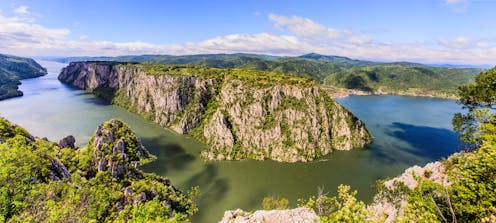
The Daube in Serbia, country six of ten. Mita Stock Images

The Danube River starts in Germany and eventually flows into the Black Sea some 2,850 kilometres and ten countries later. If Germany were to dam or pollute the river, it could potentially affect nine other countries – and four of their capitals.

The Danube may be the world’s most multinational river, but it’s only one of an estimated 310 rivers and lakes shared between two or more countries, along with 468 underground water sources known as aquifers. I recently went to New York to a major UN conference – the first dedicated to water in decades – to try and help strengthen political commitment over these “transboundary” bodies of water.

Sign up to read this article
Read news from 100's of titles, curated specifically for you.
Already a member? Sign in here
Related Stories
Top stories on inkl right now
One subscription that gives you access to news from hundreds of sites
Already a member? Sign in here
Our Picks
Fourteen days free
Download the app
One app. One membership.
100+ trusted global sources.