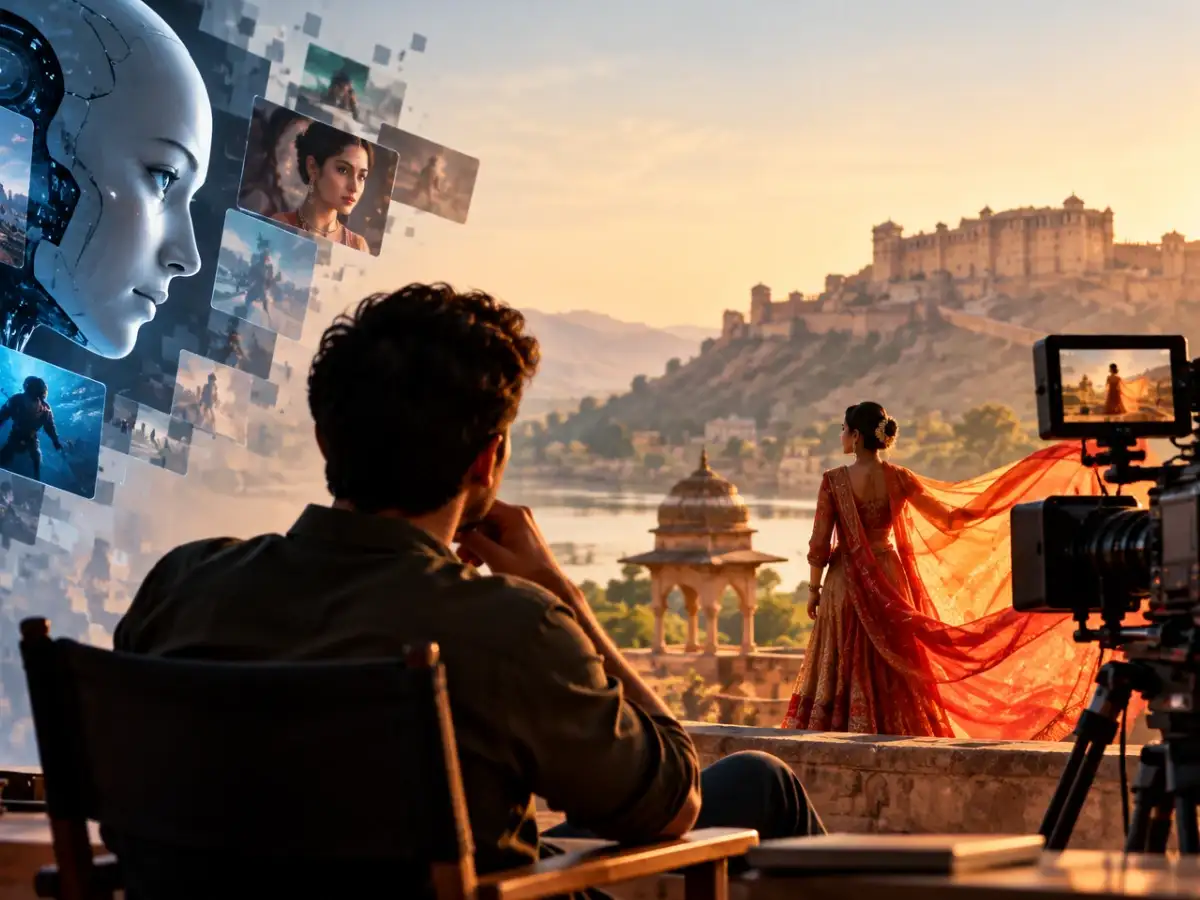
AI content is increasingly becoming part of our daily lives, ranging from social media photo posts to micro-dramas or even hours-long web series on epics. However, India's Minister of Tourism & Culture, Gajendra Singh Shekhawat, has another view of the future, where he prioritises the need for authentic content that has a human connection.
The world will start moving towards content with little AI involvement in the next two to three years, Shekhawat said at the FICCI FRAMES 2026 event. The minister, addressing industry leaders and stakeholders, said the world will move towards content with fewer filters and human-only content.

“Therefore, as we embrace the opportunity before us during this period of change, we must also work with equal determination to ensure that this opportunity does not diminish our creativity,” he said.
It is not only relevant but imperative in today’s times, Shekhawat said.
Shekhawat's comments come at a time when global content is seeing rapid use of AI, and the distinction between real, human-made content and AI-generated content has almost faded. AI's rapid development and accessibility have also put AI tools in the hands of almost everyone looking to use the tech's new wonder kid, with many also monetising AI-generated content. In fact, companies have also launched AI web series and micro-dramas.
The minister said that in the era of infinite content, the challenge is not a shortage of content but originality and human connection.
"It is the trust which is invaluable and we need to work to protect the trust on priority,” he added.
Also Read: Pocket FM launches AI fiction-writing platform to help creators build long-form stories
The minister said that while it is time to seize the opportunity, one must also work with equal determination to ensure that this opportunity does not diminish creativity.
Various studies have shown that increasing dependence on generative AI deters human cognitive effort, memory power and critical thinking.
However, AI has helped reduce workflows and costs for several productions and is seen as a helpful tool to enhance content created by humans.
The minister said the creative economy can generate great opportunities in various subsectors, including AVGC, XR, gaming, virtual production and artificial intelligence, which are new languages of storytelling.
“They can bring ancient cities to life, can reveal the complete story of an object in a museum and offer a new way for the younger generation to engage with culture and cultural practices,” he said.
As for India, the minister said the country not only has content but also has context, along with diversity and a tradition of storytelling.
“India is the largest center of creativity for the world. Today, it is the time to advance India’s culture, economy, employment, global standing and tourism, together. This is our creative capital,” he said.
India should not remain just a content consumer but must become a world leader in content creation and creativity, Shekhawat said.
India should also move beyond the scale of its audience and create original Indian intellectual property, while content creation must also connect the India seen on screen with the experience of travelling through the real country, thereby boosting the tourism ecosystem and local prosperity.