
Get all your news in one place.
100's of premium titles.
One app.
Start reading
The Conversation
The Conversation
Environment
Shermin de Silva, Assistant Professor of Ecology, Behavior and Evolution, University of California, San Diego

Human activities in Asia have reduced elephant habitat by nearly two-thirds since 1700, dividing what remains into ever-smaller patches

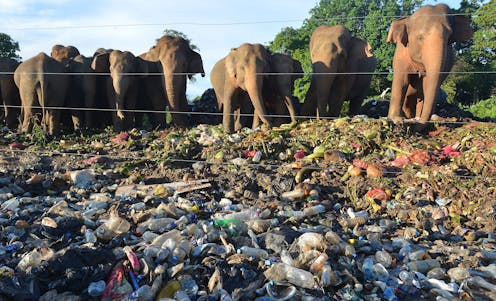
Habitat loss has driven Asian elephants, like these foraging at a garbage dump in Sri Lanka, into human areas. Lakruwan Wanniarachchi/AFP via Getty Images

Despite their iconic status and long association with humans, Asian elephants are one of the most endangered large mammals. Believed to number between 45,000 and 50,000 individuals worldwide, they are at risk throughout Asia due to human activities such as deforestation, mining, dam building and road construction, which have damaged numerous ecosystems.

My colleagues and I wanted to know when human actions started to fragment wildlife habitats and populations to the degree seen today. We quantified these impacts by considering them through the needs of this species.

Sign up to read this article
Read news from 100's of titles, curated specifically for you.
Already a member? Sign in here
Related Stories
Top stories on inkl right now
One subscription that gives you access to news from hundreds of sites
Already a member? Sign in here
Our Picks
Fourteen days free
Download the app
One app. One membership.
100+ trusted global sources.







