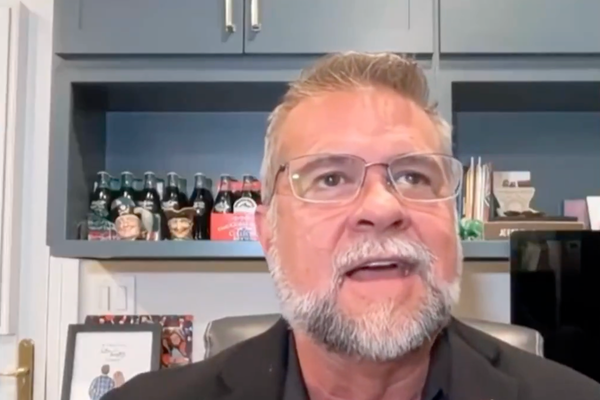
It turns out that Sir Mark Tucker, 67, retired as chair of HSBC in September to make way for an older man. Say hello to Brendan Nelson, 76, a former KPMG partner, who has been doing the job on an interim basis for a couple of months but was regarded as a rank outsider to get the gig permanently.
Just how permanent remains to be seen because the HSBC chief executive, Georges Elhedery, clearly unaware that Nelson had thrown his hat into the ring, appeared to rule him out when speaking at an FT conference only on Monday. He said Nelson didn’t wish to do a full term of six to nine years, a remark that didn’t feel controversial at the time. After all, while US presidents may go on into their 80s these days, chairs of globally important banks tend not to.

Nelson has been an HSBC non-executive director for two years, so should know the bank’s unique vibe by now. He’s also done time on the boards of BP and post-crisis Royal Bank of Scotland/NatWest during periods of boardroom rough and tumble. Those are not insignificant qualifications for the role, and when the balance sheet is as complex as HSBC’s, top-level audit experience helps.
Yet it’s easy to see why – likely length of tenure aside – Nelson wasn’t attracting much betting money. He may have advised banks at KPMG but he’s not a banker. He hasn’t chaired a FTSE 100 company. And he doesn’t bring much experience of walking geopolitical tight ropes.
HSBC is a UK-regulated bank that makes half its money in Hong Kong and mainland China and must constantly be alert to flare-ups between Washington, Beijing and London. Memories are fresh of how HSBC was accused by Mike Pompeo, when US secretary of state, of “a corporate kowtow” to the Chinese Communist party for its response in 2020 to Beijing’s move to end Hong Kong’s autonomy.
Maybe it was the political and Chinese considerations that led HSBC to interview podcaster (and former chancellor) George Osborne for the role. Come on, though, that would have been an extraordinary appointment: Osborne doesn’t have banking or boardroom expertise. Goldman Sachs’s Asia boss Kevin Sneader, a former management consultant, was reported to be another on the shortlist but clearly didn’t convince enough of the board either.
It is, admittedly, a hard post to fill. There simply aren’t many figures who tick all the boxes. HSBC, for most of its 160 years, shopped internally for its chairs but that approach led to a few exciting bust-ups. Tucker, former boss of the Prudential and Asian-focused insurer AIA, was the first external appointment in 2017 and fitted the bill as an experienced financial services executive and old China hand.
Yet the difficulty in finding candidates isn’t an excuse for an appointment process that, as names have come in and out of the frame, has appeared shambolic. Tucker probably didn’t help matters by hopping off a year earlier to go back to AIA, but succession-planning is meant to be a constant obsession for boards. The game is about maintaining a likely list of candidates just in case you need to move quickly.
In this case, Ann Godbehere, the non-executive leading the search, has produced an appointment that has everyone scratching their heads. Maybe Nelson will surprise us, stay for ages and prove the ideal pick. But this is the UK’s second-largest listed company, and the European bank most exposed to deteriorating US-China relations. The succession process is meant to be slicker.