
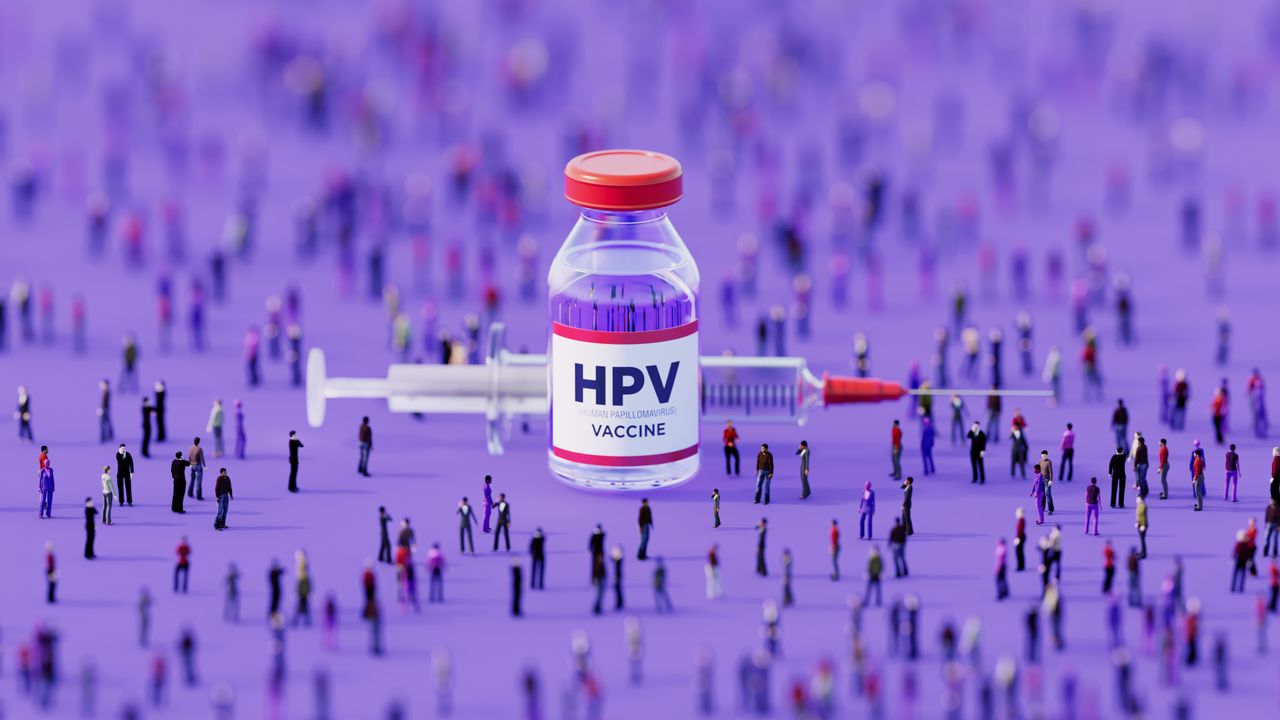
Human papillomavirus (HPV) vaccines can dramatically reduce the rate of infections that cause cervical cancer, even in people who haven't been vaccinated, a new long-term study reveals.
Most cases of cervical cancer are caused by high-risk HPV viruses, which can drive changes in cells that turn them cancerous. Two types of high-risk HPV are most likely to cause cervical cancer. After the introduction of HPV vaccines in the U.S., the shots reduced the amount of people testing positive for those cervical-cancer-causing viruses by a whopping 98.4% in vaccinated teens and young women in Cincinnati, the focus of the new study. Meanwhile, in unvaccinated people of the same age, the rates of infection still fell by 71.6% in the same time period.













