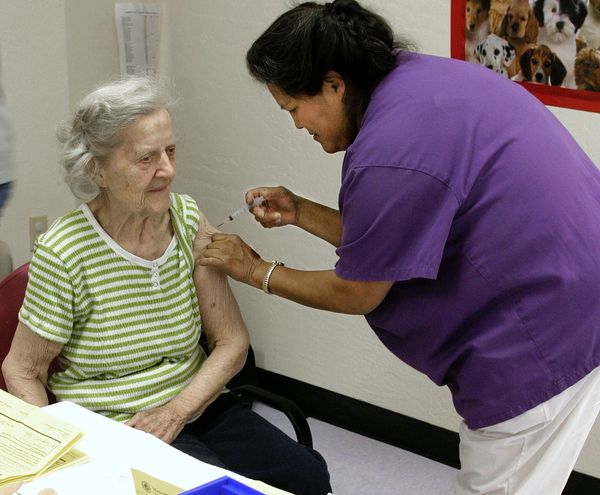
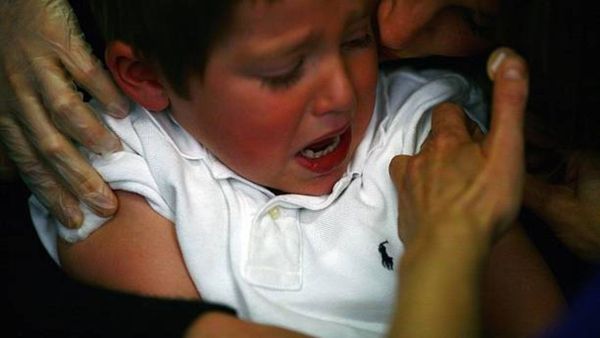
People vaccinated against human papillomavirus between the ages of nine and 26 were 68 percent less likely to be diagnosed with head or neck cancer than a comparison group vaccinated against other diseases, according to an analysis of 1.4 million medical records published this week in the International Journal of Infectious Diseases.
The age window in the finding is the same one pediatricians already discuss with parents, which is what makes this useful at a kitchen table rather than only in a conference session. Routine HPV vaccination is recommended at ages 11 to 12 and can start at age 9, with catch-up doses recommended through age 26.

The finding is an observational association drawn from health records, not a result of a randomized trial, and the study's first author explicitly states this. The number of cancers involved was also small, which widens uncertainty about the exact magnitude of the benefit while leaving the direction consistent with a substantial body of earlier work.
Sixty-Eight Percent Lower Odds in the Nine to 26 Window
The analysis drew on records from 66 U.S. health care organizations, covering people vaccinated between January 2011 and June 2024, as summarized by the Center for Infectious Disease Research and Policy. Half of the study population received the HPV vaccine between ages 9 and 45; the other half received vaccines for other diseases but not HPV.
Within the 9-26 age group, head and neck cancer diagnoses were 68% less common. Across the vaccinated group, cancers of the oropharynx specifically, the site where HPV-associated tumors concentrate, were 91 percent less common.
That anatomical specificity is part of why the result is biologically plausible rather than merely statistical. HPV causes about 70 percent of head and neck cancers, along with nearly all cervical cancers and more than 90 percent of anal cancers, according to CDC figures. HPV-related tumors develop in the oropharynx, which includes the tonsils, the base of the tongue, the back of the roof of the mouth, and the side and back walls of the throat. Head and neck cancers were once driven mainly by tobacco and alcohol; most are now attributed to HPV.
Small Case Counts Widen the Uncertainty
The limitation that belongs early, rather than being buried, is the absolute number of events. Across 1.4 million records, 40 head and neck cancers were diagnosed among vaccinated participants and 130 in the comparison group. Oropharyngeal cancers made up only a fraction of those.
Independent researchers noted that such small counts make it difficult to estimate the precise size of the risk reduction, even when the direction of the effect is clear. Taito Kitano, a researcher at Nara Prefecture General Medical Center in Japan who was not involved in the work, said a larger study with longer follow-up would be required to determine how many oropharyngeal cancers HPV vaccination actually prevents.
Follow-up duration is the second constraint. Participants were tracked for up to 13 years after vaccination, but head and neck cancers are typically diagnosed later in life, at an average age of 64, according to American Cancer Society statistics. Most people vaccinated as adolescents in this dataset have not yet reached the ages at which these cancers usually appear.
Ching-Nung Wu, the paper's first author and an otolaryngologist at Kaohsiung Chang Gung Memorial Hospital in Taiwan, told CIDRAP the figures should be read as "an observational association, not a precise causal estimate of vaccine effectiveness." He said confidence in the overall direction, rather than the exact magnitude, comes from consistency: the protective association held across cancer subsites and subgroups and persisted for 5 to 13 years after vaccination.
No Signal in Adults Vaccinated After 26
The study found no statistically significant reduction in head and neck cancers among people vaccinated between the ages of 27 and 45. Wu attributed this most likely to prior HPV exposure before immunization, which is the same mechanism that explains why the benefit of HPV vaccination declines with age at the first dose across other cancer types.
That result should not be read as evidence that vaccination after 26 is pointless. It is a null finding in a study with few cancer events and short follow-up. Current guidance already reflects the nuance: catch-up doses are recommended through age 26, while adults 27 through 45 are advised to discuss vaccination with a clinician based on individual circumstances.
The finding is consistent with earlier research. An analysis published in April found that men and boys vaccinated between nine and 26 were nearly 50 percent less likely to develop cancers of the head and neck, esophagus, anus, or penis, in work also summarized by CIDRAP. Mark Einstein, chair of obstetrics and gynecology and women's health at Montefiore Medical Center in New York, described the new result as a good trend worth following over time.
Practical Meaning for Parents and Adults Weighing Catch-Up Doses
Nothing in this study changes a vaccination schedule. The practical value is that it gives parents a second concrete reason for a shot often discussed only in terms of cervical cancer, and it identifies the age window where the evidence is strongest.
For families, the checkable items are simple. Confirm whether a child aged nine or older has begun or completed the HPV series, and ask a pediatrician about starting it if not. Adults under 27 who were never vaccinated can ask about catch-up doses. The vaccine is covered by most insurance plans as a recommended immunization and is free for eligible children through age 18 under the Vaccines for Children program.
Symptoms are the other half of this. A sore throat that does not resolve, a persistent neck lump, painful or difficult swallowing, one-sided ear pain, a mouth sore that has not healed in a few weeks, or a voice change lasting more than two or three weeks warrants examination. These complaints are far more often caused by something other than cancer, and they should be looked at rather than watched indefinitely.
The unresolved question is quantitative rather than directional. Establishing how much HPV vaccination reduces head and neck cancer will require larger cohorts followed into the decades when these cancers appear. No agency has changed guidance on the basis of this analysis.
Key Questions Answered
What did the study find? Among 1.4 million medical records, people vaccinated against HPV between ages nine and 26 were 68 percent less likely to be diagnosed with head or neck cancer, and vaccinated people were 91 percent less likely to have oropharyngeal cancer.
Does this prove the vaccine prevents throat cancer? No. The study's first author described the figures as an observational association rather than a precise causal estimate. The finding is consistent with earlier research but was not produced by a randomized trial.
How many cancers were actually counted? Forty among vaccinated participants and 130 in the comparison group. Those small numbers make the exact size of the risk reduction uncertain.
Was there a benefit for people vaccinated after 26? No statistically significant reduction was seen in the 27 to 45 group, most likely because many had already been exposed to HPV before vaccination.
Has any guidance changed? No. Routine vaccination remains recommended at ages 11 to 12, can begin at nine, with catch-up doses through 26 and individualized discussion for adults 27 through 45.
What symptoms should prompt a visit? A sore throat that does not resolve, a lasting neck lump, painful swallowing, one-sided ear pain, an unhealed mouth sore, or a voice change persisting beyond two to three weeks.
Is the vaccine covered? Most insurance plans cover HPV vaccination as a recommended immunization, and the Vaccines for Children program covers eligible children through age 18.