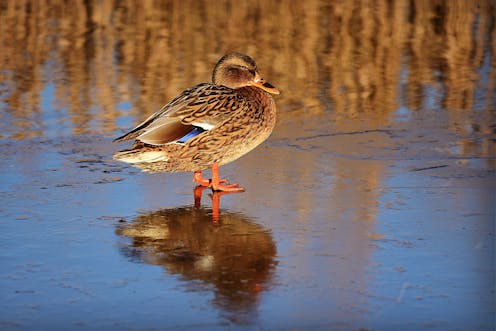
When filled with ice-skaters or a clumsy Bambi on a Christmas card, a frozen pond is a merry sight. But spare a thought for the living things trapped below. The aerial wizardry of dragonflies and summer sculling of pond skaters are long gone. As the cold grips and shadows lengthen over the pond, its inhabitants face a terrible enemy: ice.
But while the cold of winter is a threat to most wildlife, it can be endured. Many land-based creatures – particularly amphibians such as toads and newts, and other animals without spines known as invertebrates – have evolved the ability to cool their bodily fluids down to below zero. This allows them to sit out the lean months of winter without freezing.