
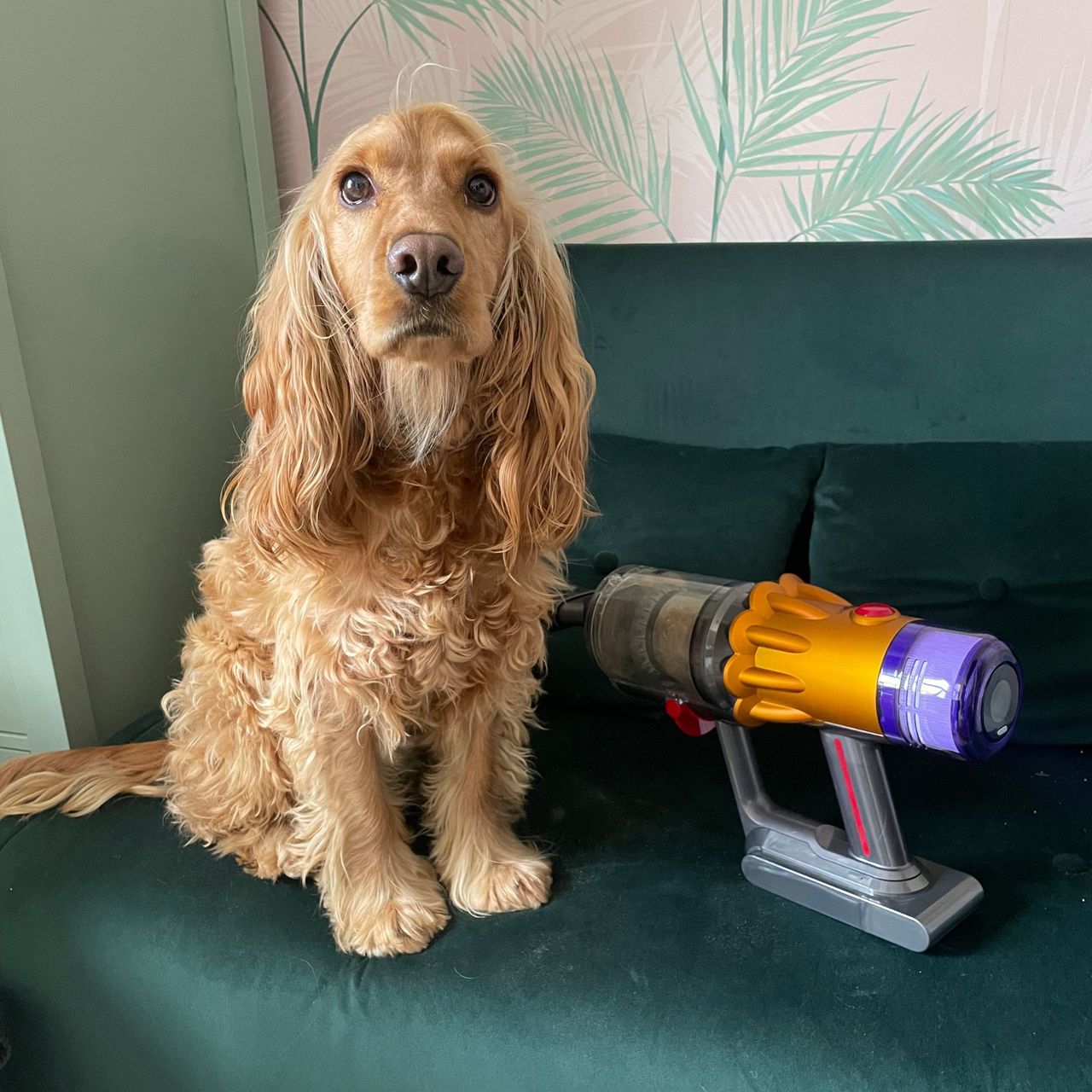
As Ideal Home’s Certified Expert in Vacuums, It's my job to recommend the best floorcare appliances to our readers, and I don't take that lightly. In fact, I take how we test pet vacuums very seriously - especially as I’m a dog mum myself.
In my eyes, the best vacuum cleaners for pet hair are a must-have for anyone with furry friends at home, and they make up a large portion of my best vacuum guide. But as someone who has spent over 400 hours testing vacuums of all shapes, sizes, and types, I also know there's a big difference between regular and pet vacuums. That’s why I've devised a rigorous testing process for my team of reviewers and me to follow.

To maintain validity across the board, every vacuum cleaner for pet hair is tested in a home with pets for over two weeks, and sometimes even longer. Its cleaning abilities and features are then assessed with a fine-tooth comb from people who know what it’s like to live with animals - and the cleaning concerns that come with it.
Our testing philosophy
At Ideal Home, we’re proud of how we test products, and we only ever publish honest, impartial reviews that highlight both the positives and the negatives of a product - and this is also the case with the best vacuums for pet hair, as I’m a pet parent myself.
I know firsthand that a pet vacuum needs to deal with the constant onslaught of hair, pet dander, and increased dust and mud that pets bring. That’s why every pet vacuum has to go through a rigorous testing process where we assess the following:
- Performance: Does the vacuum cleaner successfully tackle everyday dirt and pet hair? Does it perform as well on carpet as it does on hard flooring?
- Additional features: Does the pet vacuum come with specific tools and attachments designed for pet parents? Does it come with anti-allergen or anti-odour features?
- Ease of use: Is it easy to assemble and move around the house for quick clean-ups and deeper vacuuming?
- Care and maintenance: How messy is it to empty and clean, and is it easy to store?
- Price: Is it a worthy investment, or would it be cheaper to buy a non-pet vacuum?
Our testing criteria in detail
You can read a detailed run-through of how we test vacuum cleaners in our guide, but, in short, each vacuum will be put through its paces to assess the following:
- The eco-friendliness of the packaging and the unboxing process.
- The ease of assembly, how long it takes to assemble the vacuum and its overall weight.
- Whether the vacuum can stand up independently or needs to be propped up.
- How the vacuum is stored.
- If it’s one of the best cordless vacuum cleaners , how long the battery lasts, how long it takes to charge and how this compares to the manufacturer’s claims.
- If corded, how long the cord is and how this impacts the portability.
- How manoeuvrable the vacuum is, and how it copes with changes of direction, surfaces, stairs, and furniture.
- How well the vacuum picks up cereal, flour, and coffee grounds (to mimic mud) on multiple flooring types, including hard flooring and carpet.
- How noisy it is, taking into account nervous pets and those with sound sensitivities.
Testing pet hair pick-up
To test a pet hair vacuum’s pickup power, we sprinkle pet hair on two different types of flooring (hard flooring and carpet) and vacuum the area using the standard vacuum head and the machine’s auto mode to ensure consistency across the board. We then assess the following:
- How many forward and backward passes does it take to remove all visible traces of pet hair from the floor? Is the suction power consistent across all floor types?
- How well does it remove pet hair from upholstery, such as sofas, pet beds, and curtains?
- Does the floorhead agitate the carpet/rug fibres enough, or does it require an additional tool?
- Is the dust canister full of pet hair at the end of the cleaning session?
Testing pet hair dander pickup
Pet dander is the invisible, microscopic skin flakes shed by pets - and it can embed itself into your carpets and attach itself to anything in your home. For many people, this pet dander can trigger allergies and, in extreme cases, lead to breathing difficulties.
Ideally, a pet vacuum will offer features to aid the removal and capture of pet dander. So, when testing the best vacuums for pet hair, we also aim to test this. We do this by:
Inspecting the specifications and noting any specific features, such as anti-allergen seals and HEPA filters.
Assessing the emptying process to see how much dust or dander is released during this process. If possible, we aim to use an air purifier to monitor the air change during this time.
Questioning the bagged vs bagless vacuum cleaner debate for those who struggle with allergies.
Testing anti-hair wrap features
Clogged hoses and brush rolls wrapped with pet hair can drastically reduce the efficiency of your vacuum cleaner and may lead to a loss of suction in your vacuum cleaner - which is not what you want when you have a shedding cat or dog in your home.
To test the anti-hair wrap capabilities of the best vacuums for pet hair (if any), we:
- Visually inspect the brush roll after conducting the pet-hair pickup tests. If lots of hair is present, we will mark the pet vacuum down.
- If included, we will test any brush roll hair removal tools that may come with the vacuum cleaner.
- If included, we will test out any additional hair removal vacuum accessories to see if they aid or hinder the process.
Testing anti-odour features
From dog pee on the carpet to the slightly cheesy smell pets give off when they need a bath, it’s fair to say that animals can create a stink in your home. So, when we test the best vacuums for pet hair, we also like to test any available anti-odour features.
This is hard to quantify, and it is also difficult to recreate pet smells, so we do the following:
- Sprinkle strong, fresh coffee grounds that have a very obvious smell on both hard flooring and carpets.
- Vacuum the coffee up.
- Perform a sniff test to determine whether we can still smell the coffee.
If we can only smell the coffee when emptying the dust bin or vacuum bag, we know that the pet vacuum has done its job. If there are lingering odours even after vacuuming, we don’t score it as highly.
Sometimes, the vacuum cleaner may also come with anti-odour functions or capsules. This will always be tested as part of the review, and we’ll once again perform the sniff test to determine how well we believe it fared in a house with pets.
Value for money
Pet vacuums often have a higher price tag than non-pet models, so we always want to ensure you’re investing in a pet vacuum that is worth the extra cost. So, to determine value for money, we also question the following:
- Does the vacuum come with genuinely helpful pet features that set it apart from a non-pet model?
- How does it compare to similar models with similar features?
- Is it from a reputable brand known for pet vacuums, or are they new to the pet market?
- Will it aid everyday cleaning and specific pet messes simultaneously?
How we come to our star rating
A pet vacuum cleaner that offers impressive all-round cleaning, tackles pet hair extremely well, and is easy to use. The price reflects its capabilities, and it's difficult (or impossible) to find faults.
A well-rounded vacuum cleaner for pet hair that gets the job done well, but there are a few limitations that could hinder a perfect clean. It may also be more expensive than average, too.
We still recommend this pet vacuum cleaner, but it has some major drawbacks that you need to consider before buying. All of these kinks and niggles will be outlined in the review for you to make your own decision.