
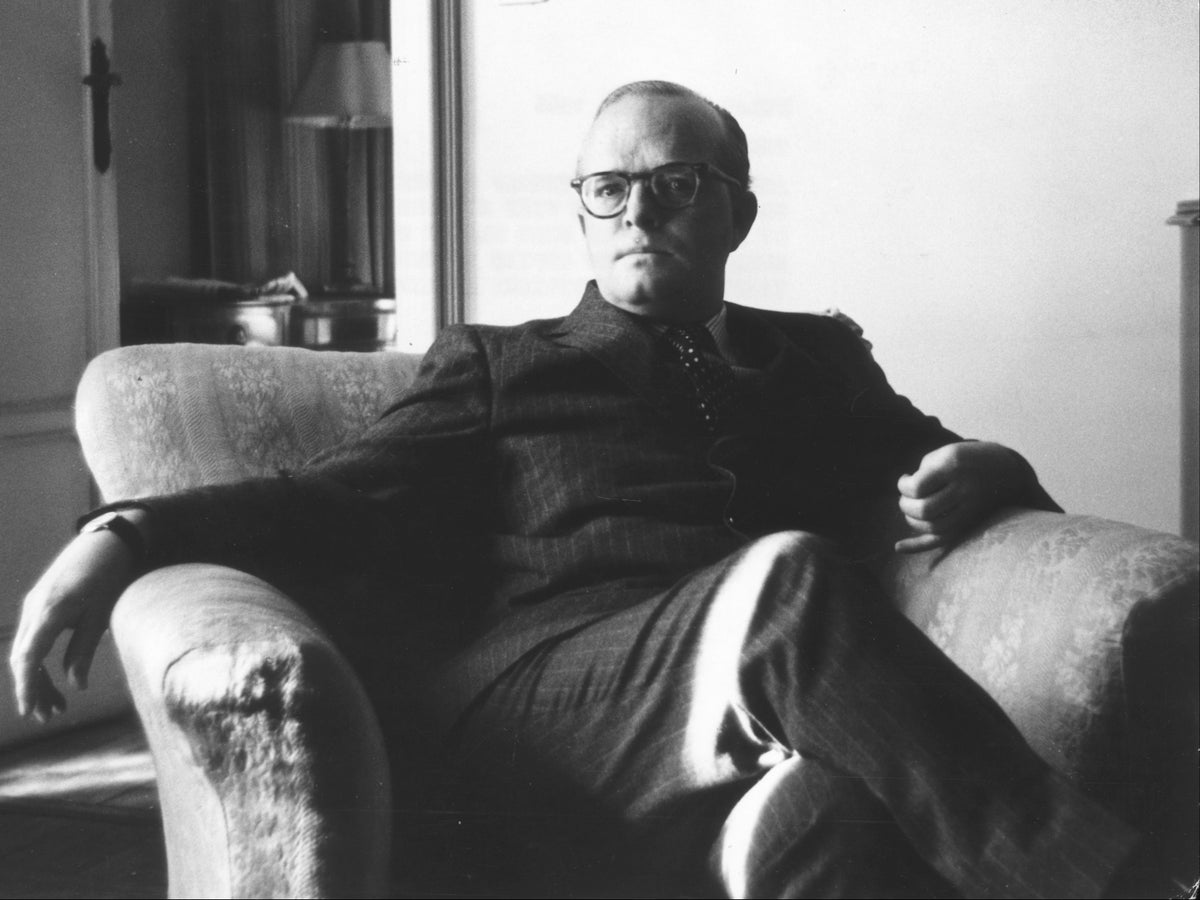
Truman Capote wanted to make waves. Not that he needed to make waves, necessarily: By the time his short story La Côte Basque, 1965 ran in Esquire in November 1975, Capote was already a literary superstar. In Cold Blood had been out for a decade; Breakfast at Tiffany’s for 17 years. Capote had two Edgar Awards. He owned an apartment with sprawling views on the U.N. Plaza – at the time “the place to live in Manhattan”, set designer Oliver Smith later told Vanity Fair – and a custom-built house in Sagaponack, Southampton. He was successful by more than one measure. But he hadn’t had a true professional win since his 1967 Emmy for A Christmas Memory, the adaptation of his 1956 short story of the same name. And the 1968 TV adaptation of the film noir Laura, for which he had written the teleplay, had just flopped.
Thus, Answered Prayers, a novel Capote had been working on since 1958, was brought back to the center of his life. Esquire published an excerpt as a short story titled La Côte Basque, 1965 in 1975. While Answered Prayers was never published in its finished form (the full manuscript was never located, and it’s unclear whether it was ever completed), much has been made of La Côte Basque, 1965. The short story was once described as “an atomic bomb that Truman Capote built all by himself” by Vanity Fair. It has come to mark one of the final turning points in Capote’s life – the beginning of a period that saw him struggle more acutely with drug and alcohol abuse, to the detriment of his writing and social life. (He died from liver disease complicated by phlebitis and multiple drug intoxication in 1984.)












