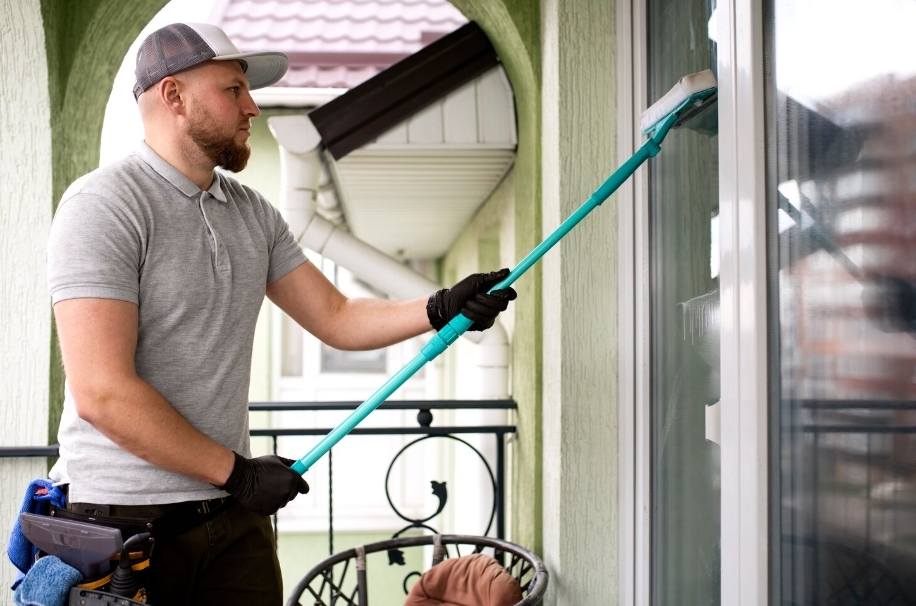
A truck with a pressure washer, a ladder, and a phone number is technically all it takes to look like an exterior cleaning business. That low barrier to entry is part of why the industry attracts a wider range of operators than most home services – from established, insured local companies to someone who bought a rig last month and is working door-to-door until the equipment pays for itself. Most homeowners can't tell the difference from a business card or a Facebook ad, which is exactly the gap a few bad actors count on.
The good news is that vetting an exterior cleaning contractor doesn't require special expertise. It requires asking a handful of specific questions before any money changes hands, and knowing which answers should end the conversation.
Why this category draws more risk than other home services
Exterior cleaning sits in an odd regulatory spot. Unlike electrical or plumbing work, it typically doesn't require a trade-specific license, which means the real protection for a homeowner comes from insurance and business legitimacy rather than a license number on a truck. It's also seasonal and often a one-time transaction rather than an ongoing relationship, which removes some of the natural accountability that keeps, say, a homeowner's regular landscaper honest year over year.
Massachusetts' Office of Consumer Affairs has been direct about the pattern that shows up most often with home exterior work: contractors who go door to door claiming to have "noticed damage" or to be "already in the area," who pressure homeowners into a same-day decision, and who ask for payment in cash or in full before any work begins.
The office runs a Home Improvement Contractor registration system and the public MA Contractor Hub. Homeowners can use these tools to check a business's registration status and complaint history before signing anything, even for a relatively small job.
The checklist worth running through
None of the following takes more than a few minutes, and a legitimate contractor won't hesitate on any of it:
1. Verify insurance directly with the carrier
Ask for a certificate of insurance sent straight from the insurance company or agent – not a screenshot or a PDF forwarded from the contractor's own phone. General liability coverage matters more for this trade than most homeowners assume, since it's one of the few home services that regularly involves both height and pressurized water near a home's electrical and structural components.
2. Get everything in writing before agreeing to anything
A scope of work, the surfaces involved, and the total price should all be on paper as a written, itemized estimate – not a number quoted over the phone that changes once the crew is standing in the driveway.
3. Test their knowledge of method
Ask what method they'd use on your specific siding, roof, or driveway, and expect a real answer. A contractor who understands the difference between pressure washing hard surfaces and soft washing painted wood, vinyl, or asphalt shingles will typically ask a few questions back about the property before answering. One who says "pressure washing" for everything, without asking what the surfaces actually are, is a meaningful red flag in itself.
4. Scrutinize the payment terms
No upfront payment, and no cash-only insistence. A modest deposit for a larger job is normal. Being asked to pay the entire amount in cash before a single surface has been touched is one of the more consistent patterns behind exterior cleaning complaints.
5. Read reviews for specificity, not just star count
Genuine reviews tend to mention a particular street, neighborhood, or crew member by name and describe what was actually done. A cluster of reviews posted within days of each other, using generic language and no specific details, is a common sign of manipulated ratings.
6. Be wary of anyone who showed up unsolicited
A knock on the door after a storm, offering to look at damage nobody asked about, is one of the most consistently flagged tactics in state consumer-protection guidance – not because every door-to-door contractor is dishonest, but because it's the approach scammers rely on most.
Running through all six takes less time than the first phone call with a new contractor usually does, and it's a faster way to sort a legitimate business from someone hoping a homeowner won't bother to check.
The question that tends to separate the two groups fastest
Of everything on that list, the surface-and-method question tends to do the most work in the least amount of time. It's specific enough that a scripted, generic answer stands out immediately, and it reflects something real about how the job should actually be done. A roof and a concrete driveway simply don't call for the same approach, and any contractor who's done the work seriously knows that without needing to think about it, share the experts at HiCleaners.net.
Why spring brings the heaviest wave of this
The seasonal timing isn't a coincidence. Door-to-door and storm-chasing solicitation tends to spike in spring and early summer in this region, right as pollen, winter grime, and the first heavy storms of the season make exterior cleaning genuinely necessary. That is exactly the window where a homeowner is primed to say yes quickly to whoever knocks first.
Slowing down by even a day to check registration status, request a written estimate, or call the insurance carrier directly costs very little and shuts down most of the tactics fraudulent operators rely on.
Established companies with a genuine local track record have often served residential and commercial properties across Massachusetts and Southern New Hampshire for years. They tend to meet these criteria without friction because insurance, written estimates, and surface-appropriate methods are already standard practice.
None of this requires a background in contracting. It requires treating exterior cleaning with the same basic diligence most homeowners already apply to bigger home projects. That means verifying insurance, getting a written estimate, expecting reasonable payment terms, and being cautious of anyone who shows up uninvited and demands an immediate answer.
The businesses worth hiring will make all of that easy. The ones to avoid usually reveal themselves the moment any of it is asked for.