The demand for luxurious home entertainment spaces has surged dramatically, with homeowners investing more than ever in creating cinematic experiences within their own walls. Yet for interior designers tasked with bringing these visions to life, a persistent challenge remains: how do you marry cutting-edge functionality with genuine elegance? Home theater seatings have evolved far beyond oversized recliners tucked into dark basements. Today's best home theater seatings must serve as statement pieces that harmonize with sophisticated interiors while delivering the tech-forward features modern clients expect. Among those features, integrated tablet holders have emerged as a defining element — one that can either elevate a design or disrupt it entirely, depending on how it's styled. This guide is crafted specifically for interior designers seeking refined, practical solutions that satisfy both aesthetic ambition and everyday usability. From exploring standout collections like the LumiChic Series to mastering the art of theater styling with swivel tray tables and built-in device holders, we'll walk through the strategies that transform a home theater from merely functional to undeniably elegant.
The Evolution of Best Home Theater Seatings: Blending Comfort with Elegance
A decade ago, home theater seating was largely an afterthought — bulky, utilitarian chairs selected primarily for cushion depth and reclining angles. The room itself was treated as a cave, hidden away from the rest of the home's carefully curated design. That era is decisively over. Today's homeowners view their theater rooms as extensions of their living spaces, demanding the same level of design intentionality they'd expect in a formal lounge or master suite. For interior designers, this shift represents both an opportunity and a responsibility. The seating you specify sets the visual tone for the entire room. Premium theater chairs now feature sculpted silhouettes, refined upholstery options ranging from top-grain leather to performance velvet, and architectural details like contrast stitching and brushed metal accents that read as deliberate design choices rather than functional compromises.
Elegance in theater seating isn't merely cosmetic — it fundamentally enhances the viewing experience. When a client settles into a chair that feels as considered as a designer sofa, the psychological shift is immediate: the space feels intentional, the experience feels elevated. This is precisely where integrated technology features like tablet holders become critical. Rather than cluttering armrests with aftermarket accessories or forcing viewers to balance devices on cushions, thoughtfully designed built-in tablet holders maintain clean sight lines while acknowledging how people actually use these spaces. They browse intermission content, control smart home systems, or follow along with second-screen experiences — all without disrupting the room's visual harmony.
Why Theater Styling is Crucial for Modern Living Spaces
Interior designers are increasingly fielding requests for multipurpose media rooms that serve double duty as entertaining lounges, family gathering spaces, and even remote work retreats. This convergence means theater seating must speak the same design language as the rest of the home. A chair that looks out of place when the lights come up fails the brief entirely. Stylish theater seatings now integrate seamlessly into transitional, contemporary, and even mid-century modern schemes through thoughtful proportions, customizable finishes, and restrained detailing. The balance between form and function has never been more critical — clients want seating that performs like a high-end recliner but presents like a curated furniture piece, and features like flush-mounted tablet holders and concealed mechanisms make that possible without aesthetic sacrifice.

Exploring the LumiChic Series: A Benchmark in Elegant Theater Styling
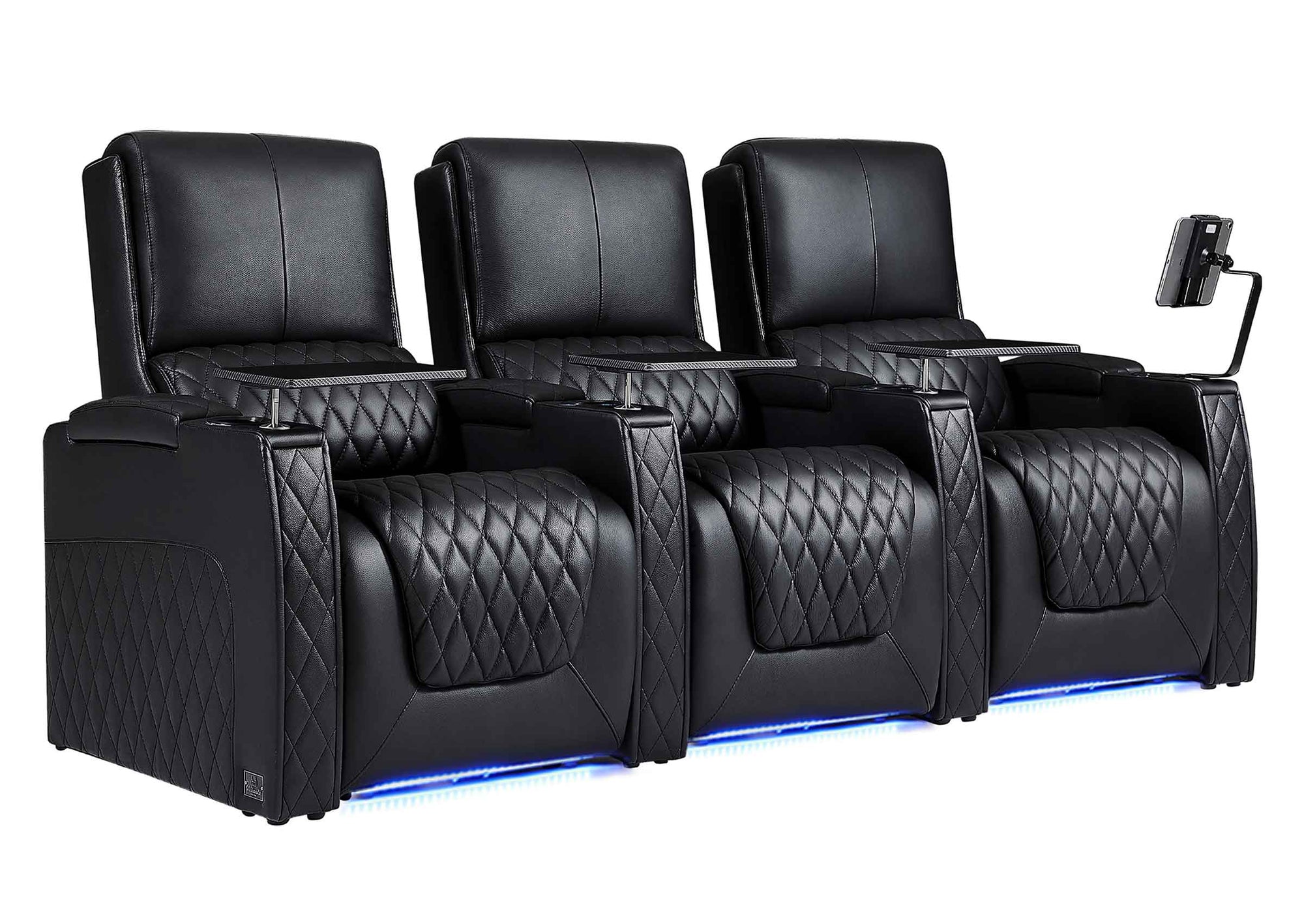
When discussing best home theater seatings that genuinely bridge the gap between luxury furniture and entertainment technology, the LumiChic Series from Weilianda stands as a compelling reference point. Designed with interior designers in mind, this collection embodies the principle that theater seating should contribute to a room's aesthetic narrative rather than detract from it. The silhouette is deliberately restrained — clean lines, a low-profile back, and gently tapered armrests that echo the proportions of high-end contemporary furniture. Upholstery options lean toward rich, tactile materials that photograph beautifully and age gracefully, making them viable choices for spaces where design longevity matters as much as immediate impact. What distinguishes the LumiChic Series from conventional theater recliners, however, is how it embeds advanced functionality within that refined exterior. Every technological element — from the motorized recline mechanism to the ambient LED lighting accents — has been engineered to remain visually subordinate to the chair's overall form. Nothing protrudes, nothing clashes, and nothing announces itself as an aftermarket addition. For designers curating cohesive interiors, this matters enormously. The seating becomes a canvas that supports the broader design vision rather than competing with it, whether the room leans toward warm minimalism, moody Art Deco revival, or relaxed coastal sophistication.
Key Features: From 3-Level Massage to Integrated Tablet Holders
The LumiChic Series integrates a 3-level massage system that operates silently beneath the upholstery surface, delivering targeted lumbar and seat relief without the visible bulk of traditional massage chairs. Clients can adjust intensity to suit casual movie nights or extended viewing sessions, and because the mechanism is fully concealed, the chair's exterior remains sleek and uninterrupted at every setting. The integrated tablet holder represents perhaps the most design-conscious feature in the collection. Rather than a clamp-style attachment or an exposed bracket, the holder is engineered into the armrest architecture itself, deploying smoothly when needed and folding flush when not in use. This approach preserves the armrest's sculptural quality while giving viewers instant access to streaming controls, smart home interfaces, or companion apps — all at a natural, ergonomic viewing angle that doesn't require hunching or reaching. Equally thoughtful is the swivel tray table, which extends from the armrest on a concealed pivot and locks into position for dining, working on a laptop, or setting down beverages during intermission. When retracted, it disappears entirely into the chair's profile. For interior designers, this trifecta of hidden functionality solves a recurring client demand: they want everything at their fingertips without any of it being visible when the room is at rest. The LumiChic Series delivers on that expectation with engineering precision that respects the design intent at every stage of use.
Mastering Styling with Tablet Holders and Swivel Tray Tables for Elegance
Incorporating tablet holders into a home theater design requires more than simply selecting seating that includes them — it demands a deliberate approach to how these elements interact with the room's broader visual language. The first step is establishing your design hierarchy: the seating should anchor the space, the screen commands focal attention, and every accessory feature, including tablet holders, should support rather than compete with those primary elements. Begin by assessing sight lines from every seat position. A well-integrated tablet holder should sit at a natural angle that allows the viewer to glance down without shifting posture, keeping the screen relationship intact. When specifying seating arrangements, consider staggered configurations or curved rows that create visual rhythm while ensuring each tablet holder deploys without interfering with adjacent seats. Spacing between chairs matters not just for comfort but for maintaining the clean, gallery-like presentation that distinguishes a professionally designed theater from a DIY setup.
Practical Applications: Integrating Tablet Holders in Design Schemes
Styling tablet holders for a sleek, cohesive look starts with material and finish coordination. If your theater seating features brushed nickel accents, ensure the tablet holder's hardware echoes that same metallic tone — visual consistency across small details creates the perception of bespoke craftsmanship. For leather-upholstered seats, select holders with leather-wrapped edges or soft-touch finishes that feel intentional rather than industrial. Placement strategy is equally important: position seating so that deployed tablet holders face away from the room's entry point, preserving the clean silhouette guests see upon entering. Color coordination extends beyond the chair itself. Consider how a tablet's screen glow interacts with your ambient lighting scheme during use — warm-toned LED strips along baseboards or beneath seats can counterbalance the cool light of a tablet display, maintaining the room's atmospheric warmth. Designers working within current trends toward tonal, monochromatic palettes will find that tablet holders finished in matte black or deep bronze disappear seamlessly into dark upholstery, while those in lighter spaces might opt for holders with brushed gold or satin nickel to complement lighter neutral schemes.
The Versatility of Swivel Tray Tables in Home Theaters
Swivel tray tables transform theater seating from single-purpose furniture into genuinely multifunctional pieces that justify their presence in rooms used beyond movie nights. For clients who entertain frequently, these tables become elegant surfaces for charcuterie boards, cocktail glasses, or dessert plates during watch parties — eliminating the need for standalone side tables that crowd floor space and disrupt traffic flow. When styling these features, specify tray table finishes that complement your room's secondary materials: if the space incorporates walnut millwork, a tray with a walnut veneer surface creates a through-line that grounds the seating within the architecture. For designers working with clients who use their theaters as remote work retreats, the swivel tray accommodates a laptop at a comfortable typing height while the chair's recline adjusts to support extended working postures. The key to maintaining elegance is ensuring these tables remain retracted as the default state. Instruct clients to treat the deployed position as active-use only, so the room always photographs and presents in its most refined configuration. This discipline, paired with the engineering of collections like the LumiChic Series where retracted trays vanish into the armrest profile, guarantees that functionality never undermines the space's visual composure.
For Interior Designers: Trends and Solutions in Home Theater Furniture
The home theater furniture landscape is shifting rapidly, and interior designers who stay ahead of emerging directions can offer clients spaces that feel both current and timeless. Several converging trends are reshaping how the best home theater seatings are specified, installed, and styled — and understanding these movements is essential for delivering results that exceed expectations while remaining functional for years to come.
Trends in Home Furniture Design for Elegant Theaters
Tonal layering has become one of the most influential directions in theater design, with designers building depth through closely related hues rather than relying on stark contrast. Deep charcoals paired with slate grays, or espresso browns layered against warm taupes, create immersive environments where seating blends into the room's envelope. Integrated tablet holders finished in matching dark tones disappear within these palettes, reinforcing the seamless aesthetic clients now demand. Material mixing is equally prominent — combining matte metals with natural textures like stone-effect wall panels and rich leather upholstery gives theaters a collected, layered quality that feels residential rather than commercial. Curved and organic forms are replacing rigid, boxy silhouettes, with theater chairs adopting softened edges and sculpted backs that echo the broader movement toward biomorphic design in luxury interiors. Collections like Weilianda's LumiChic Series reflect this shift through their low-profile, contoured forms that sit comfortably alongside curved sectionals and rounded accent furniture. Concealed technology continues to dominate, with clients expecting every functional element — from massage systems to device holders — to remain invisible at rest.
Practical Steps for Applying Stylish Furniture in Living Spaces
Begin every theater project with a thorough client consultation that goes beyond screen size and speaker placement. Ask how the room will be used on non-movie nights, who will use it most frequently, and what aesthetic references resonate — these answers directly inform seating selection and feature prioritization. During space planning, map out seating positions using actual chair dimensions with tablet holders and swivel trays fully deployed, ensuring no element encroaches on walkways or adjacent seats. Build a materials board that includes upholstery swatches alongside samples of the room's wall treatments, flooring, and millwork so that every hardware finish on the seating — including tablet holder mechanisms and tray surfaces — coordinates with the broader scheme. Specify ambient lighting independently from the main viewing setup, using dimmable LED channels that compensate for tablet screen glow during use. When presenting options to clients, show the seating in both its resting and active states so they understand how features like retractable trays and fold-flat holders preserve the room's presentation. Finally, create a brief usage guide for the client that outlines best practices: keeping trays retracted when not in use, adjusting tablet brightness to match room lighting, and maintaining upholstery with manufacturer-recommended care. This small step ensures the design intent you established on day one endures long after installation.
Achieving Timeless Elegance Through Integrated Theater Design
Styling the best home theater seatings with tablet holders for elegance is ultimately about respecting a single principle: technology should serve design, never override it. The most successful theater spaces emerge when every functional element — from massage systems to device holders to swivel tray tables — operates in quiet service of the room's aesthetic vision. Collections like the LumiChic Series demonstrate that this balance is not only achievable but increasingly expected by discerning clients who refuse to choose between sophistication and convenience. For interior designers, the path forward involves treating theater seating as you would any significant furniture specification: with attention to material coordination, spatial relationships, finish consistency, and long-term design resilience. Tablet holders become elegant details rather than technological intrusions when they're matched to the room's palette, deployed thoughtfully, and concealed by default. As home entertainment spaces continue merging with everyday living environments, the designers who master this integration will define the next era of residential luxury — spaces where every seat feels intentional, every feature feels invisible, and every evening feels like an event worth savoring.