
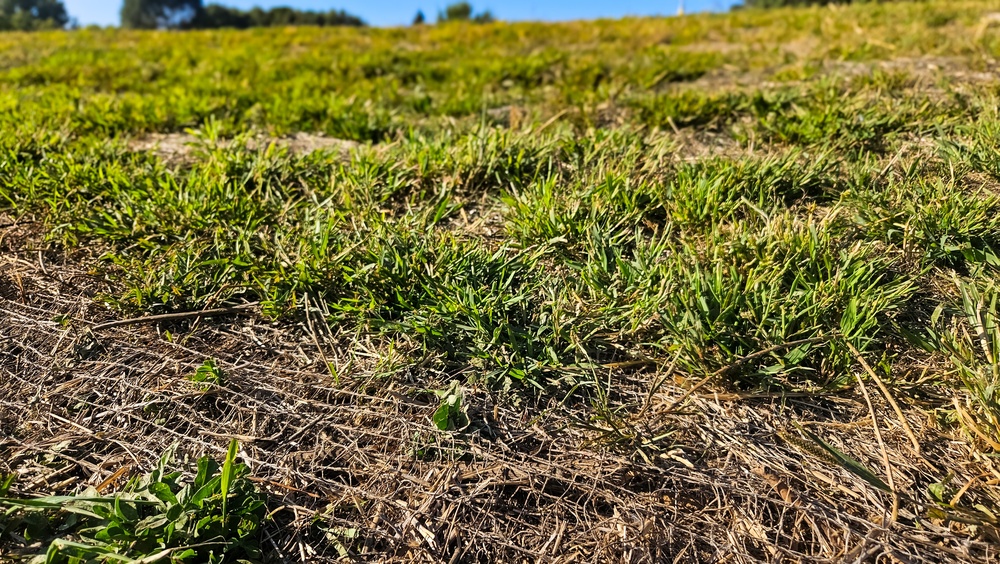
A lawn that looks thin after a long summer doesn’t necessarily need to be torn out and started over. If plenty of healthy turf remains, overseeding thin grass can fill bare patches, improve density, and help crowd out future weeds for considerably less money than installing new sod. Timing matters, though, because grass seedlings need enough favorable weather to germinate, develop roots, and become established before winter conditions shut down growth. Penn State says late summer to early fall is generally the best seeding period for cool-season lawns because weed competition is lower and seedlings get fall and spring growth before facing summer heat. Before tossing seed across the yard and hoping for the best, make sure you’re giving those seeds the soil contact, moisture, and time they actually need.