
Get all your news in one place.
100's of premium titles.
One app.
Start reading
Livingetc
Livingetc
Lilith Hudson

How to Make Your Home Feel Calmer — 6 Designer-Approved Tricks to Dial Down the Chaos and Create a More Restorative Space

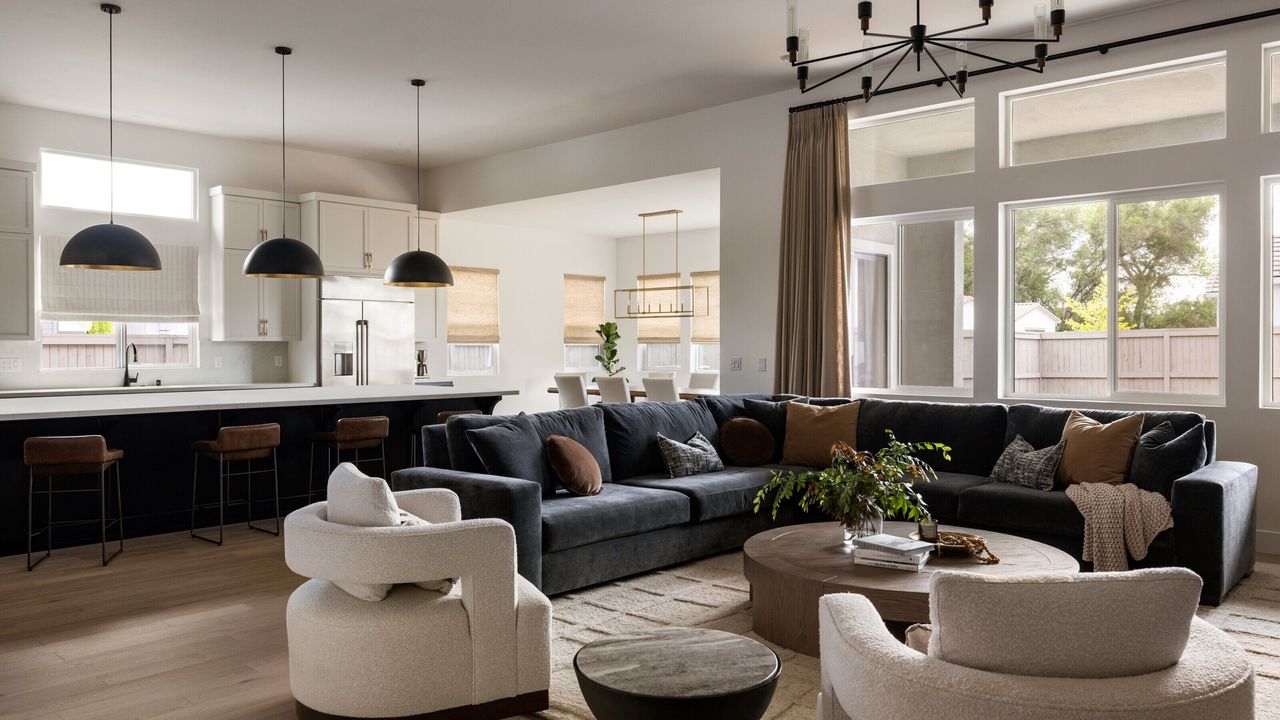
An open plan living room and kitchen space with a blue corner sofa, two curved accent chairs, and a neutral kitchen.

The realities of modern life seem to present chaos every day, making the need for a calming home more essential than ever. When you cross the door into your home, your space should instantly quiet the mind and soften the pace of the day. But without thoughtful interior design, the opposite can happen.

If clutter and visual noise dominate your home, it's likely having an effect on your mood (whether you realize it or not). "Visual stimulants in the home can be just as detrimental to relaxation and well-being as ingested stimulants such as caffeine," explains interiors stylist and author Joanna Thornhill. "Both can contribute to an anxious, racing mind and an inability to switch off. Yet while we are generally conscious of our caffeine consumption, we can inadvertently binge on the brain-unsettling visual stuff."

If your space lacks the serene quality that you desire, a few thoughtful design choices could completely shift the mood. From calming paint colors and soothing sinuous shapes, to cozy seating nooks and stylish storage solutions, these are the designer-approved ways to create a home that feels calmer, quieter, and infinitely more restorative.

1. Choose a Serene Color Palette

A neutral palette is a failsafe way to make your home feel calmer. (Image credit: Jaimee Rose Interiors)

Color holds so much power inside our homes, and neutral color schemes are one of the best ways to make any space feel more calming. Earthy, natural tones are always more gentle and unobtrusive, helping to create an environment that feels quieter, calmer, and more restorative.

They're not the only tones that create a more calming home, however. If you're fond of brighter colors, consider other nature-inspired hues like blue or green. "I always view blue as a calming and serene color that is perfect for winding down at the end of the day," explains interior designer Rebecca Hughes. "It’s so calm and serene with a beautifully timeless and classical feel."

She says the same goes for muted greens. "Whisper-soft sage, for example, makes for a beautiful backdrop, creating spaces that are simultaneously relaxed and sophisticated," Rebecca notes. "The hue also serves as a connecting element from interior to exterior, making it the perfect choice to create an inviting home."

2. Opt for Curves and Soft Shapes

Sinuous shapes will always feel more soothing that harsh, jutting angles. (Image credit: Build Media. Design: Harty Interiors)

It might sound far-fetched, but furnishings or decor with sharp, angular edges can create a harsh and unwelcoming atmosphere in the home. If you really want to dial up the sense of calm, opt for curved, sinuous lines instead.

"Many homeowners prefer rounded shapes over more rigid forms because they feel more relaxing," explains interior designer Yvonne Harty of Harty Interiors. "I love using curved accent chairs, arched mirrors, or round tables to make a space feel inviting."

We're not simply talking about curved sofas, either (although they do remain a failsafe option). Instead, think about your wider furniture, or even the architecture of your room. Take the space above, for example. Dome lampshades, curved chair backs, and a wavy side table make for softer silhouettes that contribute to a more calming, convivial living space.

A curved accent chair can make a seating area feel calmer and more relaxing compared to a more angular option. We love the unusual silhouette of this one at Soho Home.

3. Use Soothing Scents Throughout Your Space

Calm your senses with a bunch of fragrant blooms on the dining table. (Image credit: Rebecca Hughes Interiors)

Scent has so much power over our mood, so don't overlook a relaxing home fragrance if you want your home to feel as calming as possible. "There's nothing like an inviting, delicious scent as soon as you walk into your home to make all the stressors of the day fall away," says Andrea Thompson, founder of Drea Design Services.

Place a diffuser in your entryway so that your favorite aroma greets you as soon as you walk through the door, and don't forget to layer in natural fragrance, either. Fresh flowers are a great way to make your home smell good, but you could also use essential oils, simmer pots, or fragrant herbs to scent your space. The fragrances you choose should be unique to your tastes, but jasmine, lavender, and sandalwood are widely considered the most calming.

Jo Malone's English Pear and Freesia scent is a cult favorite. Add this reed diffuser to a doorway to set a calming tone as soon as you enter the room.

4. Make it Personal

We always feel calmest in a space that's familiar. (Image credit: Jaimee Rose Interiors)

In order to make your home feel soothing, it has to feel like your own. An anonymous, cookie-cutter interior devoid of personality just won't have the same calming effect.

"A lot of people confuse calm with minimal, but that's not always the case," explains interior designer Jaimee Rose. "Some of the most restful spaces are where we find ourselves able to escape." Instead of stripping down your design in pursuit of a calming interior, she urges us to focus on curating spaces that feel charming, characterful, and invite us to linger.

Rebecca also emphasizes that the most relaxing spaces are ones that are personal to us, so a "calming" interior will look different to everyone. "Designing a home isn’t just about aesthetics," she says, "it’s about capturing the essence of the people who live there and creating a space that feels both beautiful and deeply personal".

5. Layer Texture Liberally

Soft textures aren't just soothing to the touch but visually, too. (Image credit: Rebecca Hughes Interiors)

Textural design isn't just about adding variety and interest to a space; it can also help create a more calming atmosphere. Soft, comforting textiles are particularly effective (think shag rugs, velvet cushions, and chenille upholstery), but don't stop there.

Limewashed brick, woven seagrass rugs, and lacquered wood can all help create an interior that's more conducive to calm. "I often mix a variety of periods, materials, textures, and patterns to create a layered look, making a space feel like it has organically evolved over time," Rebecca explains.

Designers all agree that the key to a more calming space is combining plenty of different textures together. "I love mixing textures such as linen, natural wood, plaster finishes, wool rugs, woven wood blinds, rattan, or textured decor elements to create interest in a more subtle way," says Yvonne. "It's also a great way to add warmth when the overall color palette is neutral."

Calming textures are all about tactility, and velvet is by far one of the most soothing options available. Use it for upholstery, or add a few velvet scatter cushions to a living room that lacks the serene feeling you desire.

6. Lower Your Lighting

Soft, warm lighting immediately makes for a calmer room compared to harsh overhead lights. (Image credit: Jaimee Rose Interiors)

As Andrea notes, bright, high-lumen lighting is the antithesis of a calm, relaxed interior. "For those spaces where you spend the most amount of time, softer yellow or amber bulbs are best," she says. "They immediately put you in a more tranquil mood, which is a great transition between the bright daytime associated with work and the darkness of sleep."

Interior designer Erin Greene is also a big supporter of warm lighting to make a space feel calmer. "If you don’t have natural light in your space, your second-best option is to find nice mood lights," she says. To make a lighting scheme feel cozy, pepper plenty of table lamps, floor lamps, and wall lights throughout your space, and avoid the dreaded "big light" as much as possible.

Pooky are top of the game when it comes to decorative lighting. For a calming accent lamp that adds personality and charm to your space, mix and match bases and patterned shade options for a design that's unique to you.

Creating a calmer home isn’t about stripping a space of personality or adhering to a minimalist aesthetic — it’s about being intentional with what you surround yourself with.

Thoughtful colors, softer silhouettes, tactile textures, and clever storage are just a few of the things people with calming living rooms always have. Apply them to the rest of your home, and you'll turn it into somewhere that feels restorative rather than overstimulating. In a world that rarely slows down, designing a home that helps you switch off has never felt more valuable.

Soho Home Morrell Dining Chair Jo Malone London English Pear & Freesia Scent Reed Diffuser H&M Home Velvet Bolster Pillow Pooky Wilma Table Lamp
Sign up to read this article
Read news from 100's of titles, curated specifically for you.
Already a member? Sign in here
Related Stories
Top stories on inkl right now
One subscription that gives you access to news from hundreds of sites
Already a member? Sign in here
Our Picks
Fourteen days free
Download the app
One app. One membership.
100+ trusted global sources.