Securing full compensation after a traffic collision depends almost entirely on the quality of the evidence gathered in the initial moments and days following the incident. There are roughly 11,000 motor vehicle crashes occurring on U.S. roads every day, leaving victims to navigate complex insurance claims while recovering from injuries. Taking quick, detailed steps at the scene and immediately afterward prevents insurance adjusters from shifting liability or minimizing damage claims.
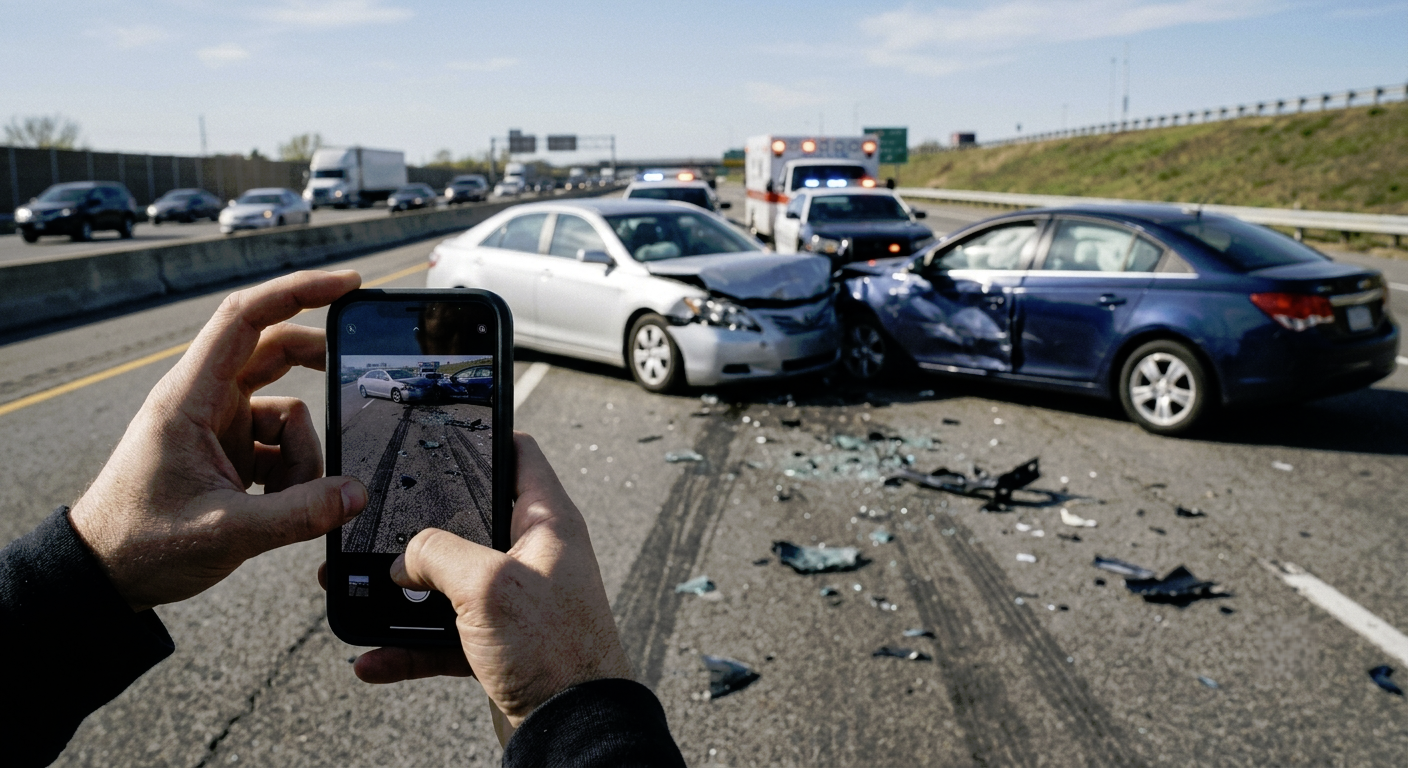
Image Source: Google Gemini
Critical Actions in the First Hour at the Scene
The immediate aftermath of a collision is chaotic, but capturing raw scene data before vehicles move or debris clears is vital. Prioritize personal safety first, then shift directly into systematic evidence preservation.
Capturing Comprehensive Photos and Video
Physical evidence degrades quickly due to weather, traffic clearance, and towing operations. Capture wide shots of the entire scene to show weather conditions, road markings, skid marks, and traffic signals.
Follow up with close-ups of all vehicle damage, license plates, shattered glass, and visible injuries, while keeping framing in mind. Take continuous video walking around the scene while narrating key details like time, direction of travel, and lane placement.
Gathering Witness Statements and Digital Footage
Independent witness statements carry immense weight with insurance carriers and courtrooms. Secure contact details, names, and recorded voice notes or written statements from bystanders before they leave the area. Look around the intersection or street for dashcams mounted on nearby vehicles and point-of-sale security cameras on surrounding commercial buildings.
Handling Law Enforcement and Police Reports
Always call law enforcement to the scene, regardless of how minor the damage appears. Ensure the responding officer interviews all involved parties and records your factual account of the collision. Obtain the officer’s name, badge number, and the official police report incident number before leaving the area.
Digital Metadata and Preserving Electronic Evidence
Modern personal injury claims rely heavily on digital footprints that prove exactly how and when an accident occurred. Preserving digital metadata ensures photos, videos, and telematics remain admissible as untampered legal evidence.
- Take digital photos using smartphones with location services enabled to automatically lock time, date, and GPS coordinates into the file metadata
- Request and back up raw dashcam footage immediately onto an external drive or secure cloud server to prevent automated overwrite cycles
- Download personal wearable fitness data or vehicle telematics logs that track speed, impact force, and sudden deceleration moments
Failing to preserve raw digital files can lead to claims of evidence spoliation, which severely undermines a personal injury case.
State Deadlines and Navigating Regional Rules
State laws dictate how fault is assigned and how long victims have to file an official claim or lawsuit. Understanding local rules protects your right to seek financial recovery.
Comparative Fault and Statute of Limitations
Most states operate under comparative negligence systems, where financial recovery is reduced by your assigned percentage of fault. If a court finds you 20% responsible for a collision, your overall payout drops by that exact percentage.
Furthermore, strict statutes of limitations govern personal injury filings. Missing your state’s specific deadline permanently bars you from pursuing compensation, regardless of how clear the liability might be.
Georgia Rules and Local Crash Corridors
In Georgia, the statute of limitations for personal injury claims is generally two years from the date of the accident. High-traffic arteries like Interstate 75 through Bibb County frequently experience high-speed collisions involving complex multi-vehicle liability and severe injuries.
Victims navigating disputes after a severe wreck along major freight routes often consult a Macon car accident lawyer to manage evidence collection and preserve crucial corporate trucking logs. Local experts are always the best choice because of their knowledge and experience, wherever you’re based.
Post-Accident Medical Documentation and Record Keeping
Documenting physical recovery is just as vital as proving liability at the crash site. Insurance companies routinely scrutinize gaps in medical treatment to deny or reduce payouts.
Seeking Immediate Medical Evaluation
Even if you feel uninjured due to adrenaline, seek an immediate evaluation at an emergency room or urgent care clinic. Many soft-tissue injuries, concussions, and internal trauma do not show symptoms for days. Establishing a direct medical link between the crash and your physical condition immediately prevents insurers from arguing your injuries were pre-existing.
Maintaining an Injury Journal and Expense Log
Keep a dedicated physical or digital journal detailing daily pain levels, mobility restrictions, missed work hours, and disrupted personal activities. Save every medical bill, prescription receipt, co-pay document, and travel expense related to your treatment. Consistent personal record-keeping creates a clear narrative of how the crash directly impacted your daily life and financial stability.
Maximizing Your Compensation Through Diligent Evidence
Strong insurance claims are built on meticulous physical evidence, secure digital metadata, and comprehensive medical documentation. Taking disciplined steps in the first hour and maintaining careful records throughout your recovery protects your legal rights. Review more of our up-to-date posts on a range of topics, ranging from legal conundrums and their outcomes to technology, current affairs, and beyond.