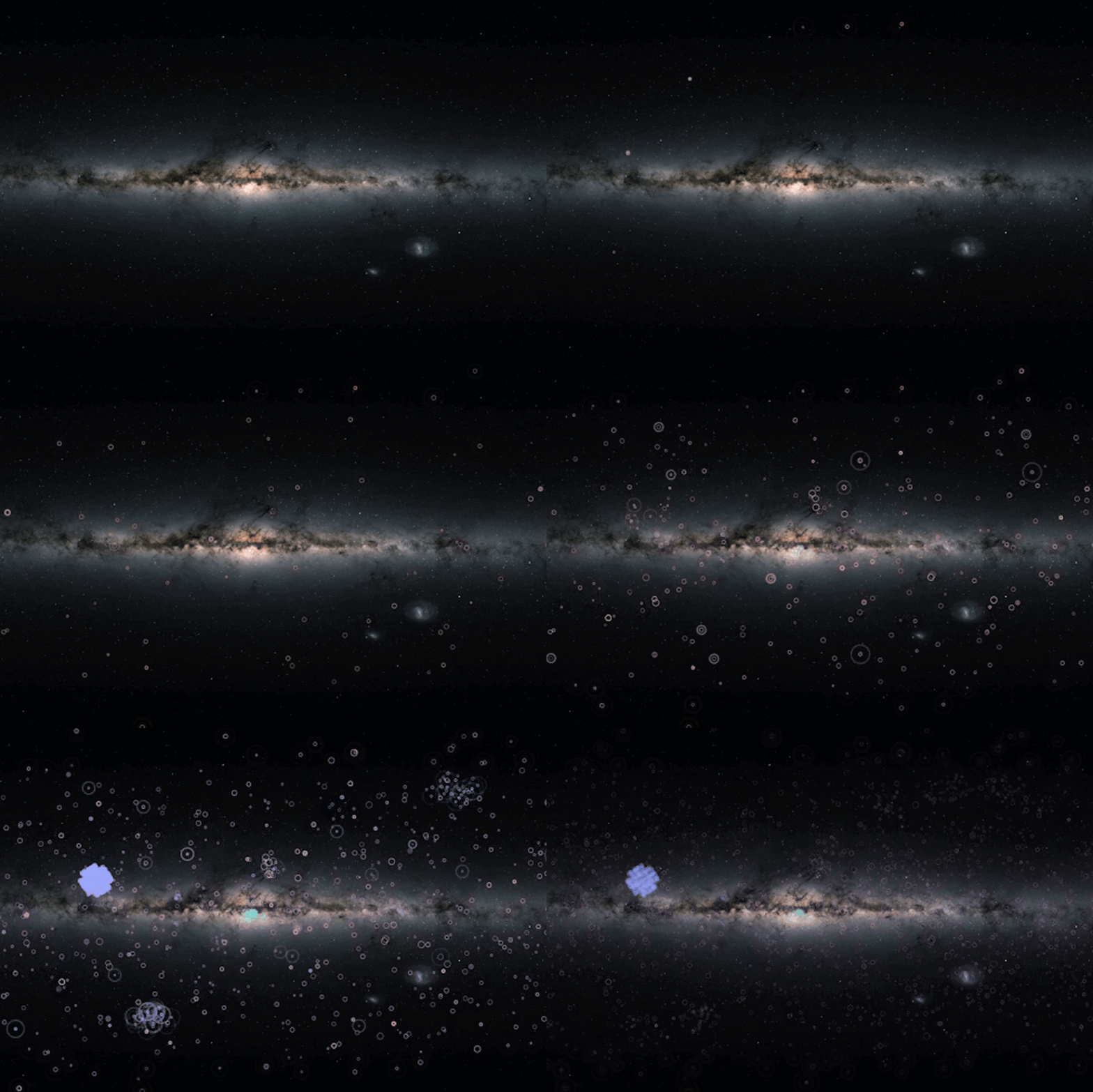
On October 6 1995, at a scientific meeting in Florence, Italy, two Swiss astronomers made an announcement that would transform our understanding of the universe beyond our solar system. Michel Mayor and his PhD student Didier Queloz, working at the University of Geneva, announced they had detected a planet orbiting a star other than the Sun.
The star in question, 51 Pegasi, lies about 50 light years away in the constellation Pegasus. Its companion – christened 51 Pegasi b – was unlike anything written in textbooks about how we thought planets might look. This was a gas giant with a mass of at least half that of Jupiter, circling its star in just over four days. It was so close to the star (1/20th of Earth’s distance from the Sun, well inside Mercury’s orbit) that the planet’s atmosphere would be like a furnace, with temperatures topping 1,000°C.