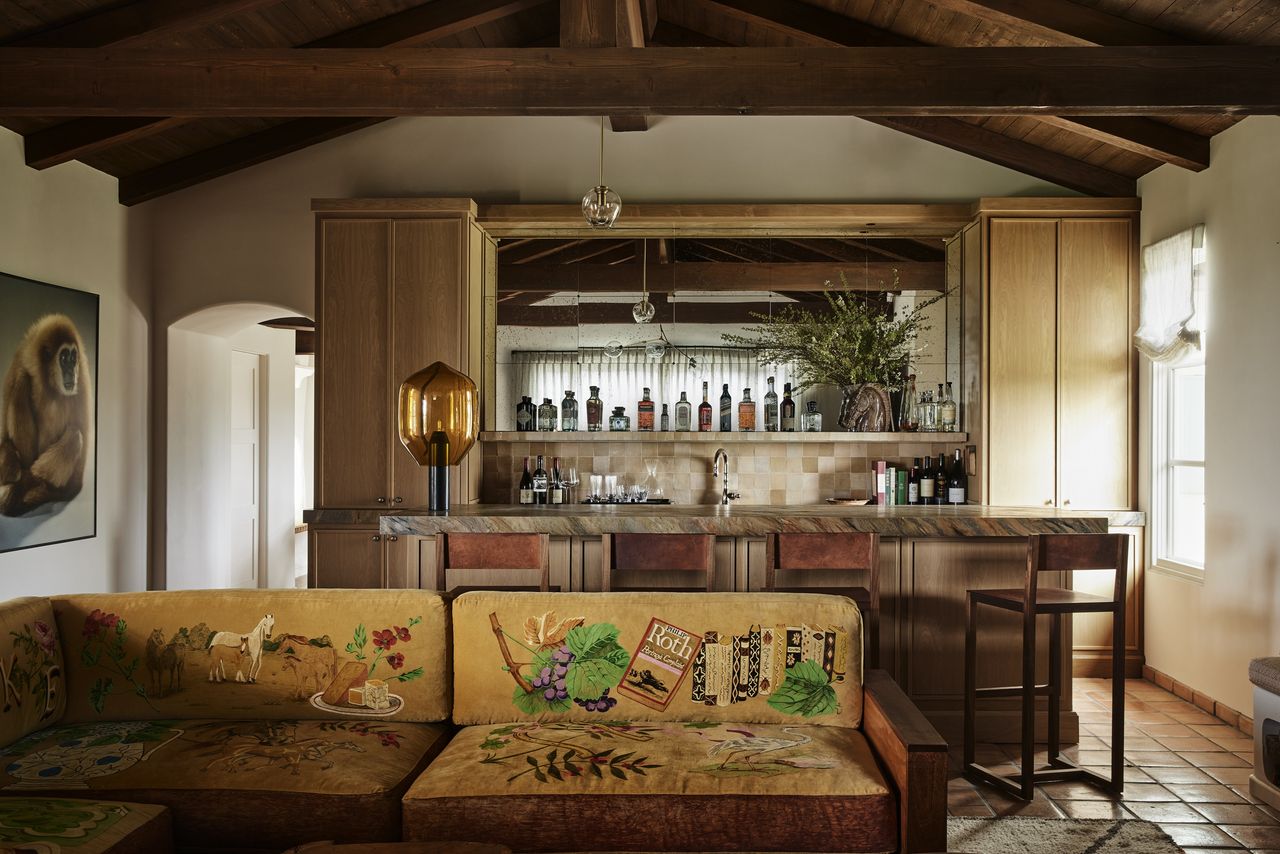
I'll be honest — when I first put the trend for interior objects customized to a deeply personal level into words in our last Style Pulse report, I called it the art of 'story telling'. However, on reflection, this didn't feel personal enough. Storytelling is, at best, something someone else does, something that loses its meaning along the way like a whispered folktale that takes a different form each time it's repeated; at worst, it feels a little bit 'marketing department'.
So, for this season's report, I'm rebranding. This isn't storytelling, this is 'lore building'. These designs we're seeing take many forms — from embroidered couches and customized Delft tiles to totally personal combinations of materials, colors, and motifs that don't make sense to anyone else but you. In each of them, there's a personal history, an in-joke, something that, generally, is going to require an explanation to anyone else but the people who really know you.
Why, you might wonder, has this interior design trend come about? It started with us drawing on our decor, from joinery to wallpaper to lampshades and everything in between, and has graduated to attempts to incorporate personalization wherever we can, be it embroidery, painted trims, or even painted sofas (the first time we talked about it, in fact, was in regards to Kendall Jenner's 'drawn-on' sofa).

But, its reason is not just aesthetic. I’m wondering: are we asking our interiors to be a bit more engaging? Is it a way to stop ourselves from scrolling on our phones and to enjoy our homes by having stuff that we can look at and appreciate? It’s bringing the detail into life, so there’s always something to notice, always something to look at on a really small scale that makes it richer and more storied.
It's also about the strive for originality. I was struck by a comment made by Simon Porte Jacquemus, founder of fashion brand Jacquemus, in a video I watched recently, where the designer explained he didn't let his creative team pull images from the internet, only from hard copy reference books. "Everyone gets served the same images through the algorithm," he explained.

"People want homes that feel individual again," agrees Victoria Sass, founder of design studio Prospect Refuge in Minneapolis. "After years of mass-produced sameness, anything with the hand of the maker, or the homeowner, feels meaningful. These small custom gestures let people add personality and story without a major renovation. We are seeing this everywhere: hand-painted lampshades, embroidered upholstery, custom hardware, and even bespoke light pulls. They are small moves, but they shift the tone of a room and make a space feel lived in and truly their own."
It's almost anti-trend in nature. Where trends more widely suggest an appeal to a mass, hyper-personalization is about the individual, a sense of permanence, and personal history. However, it also, as these things do, translates into a specific aesthetic, which is what cements it as a trend itself. The designs curated on this page have a charming and eclectic randomness to them, often feeling like Victorian curiosities, and that's the aesthetic with real resonance right now.

Yet, the idea lends itself to a less trend-led way of curating a home. It prioritizes collecting meaningful objects that preserve your stories, even if in a less obvious way, and building a home that has more of a long-term identity. It's a recurring theme in interior design trends at present, in everything from the call of a more traditional aesthetic and choosing antiques, through to the color trends defining the year — more emotional, human attachment, and a resistance to fast, throwaway design moments.