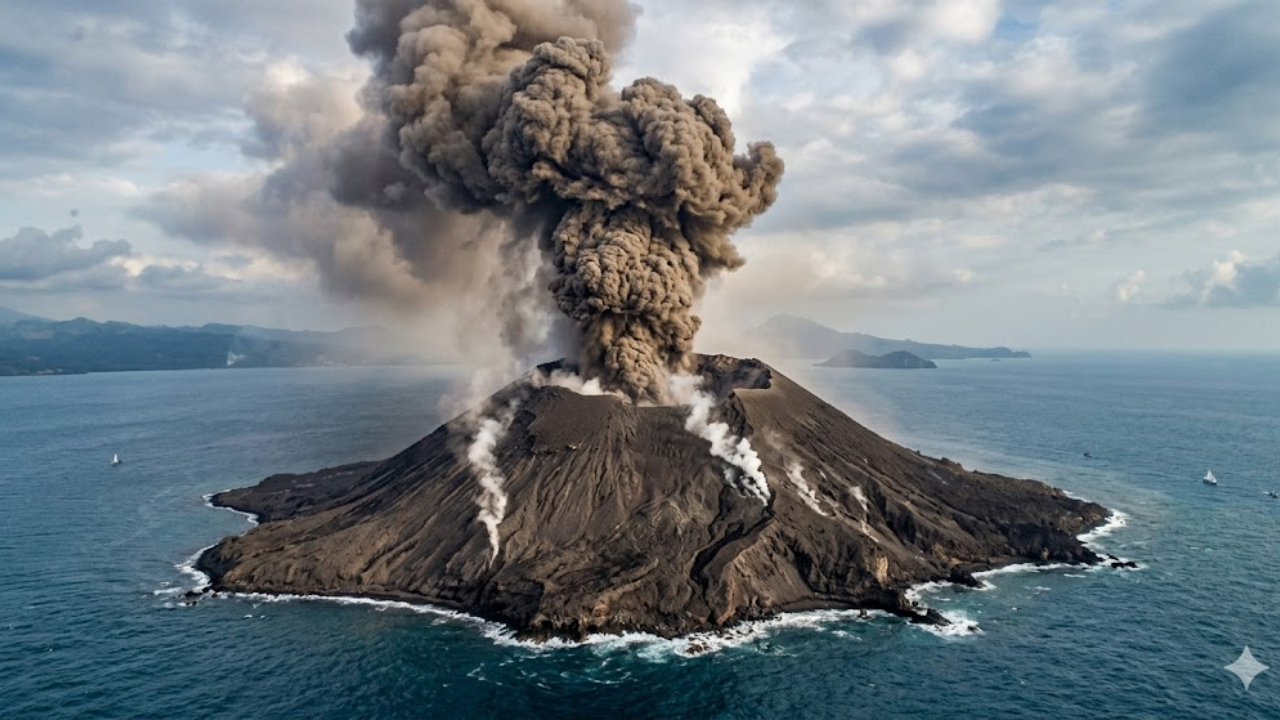
The year 1883 saw one of the deadliest eruptions in the history of volcanoes, erupting from the Indonesian volcano Krakatoa (or sometimes referred to as Krakatau). The location was the Sunda Strait that lies between the islands of Java and Sumatra. The power of the eruption was so devastating that it caused enormous tsunamis, brought darkness to half the earth, and destroyed much of the island. Years later, a new island volcano named Anak Krakatau (or Child of Krakatoa) rose from the ocean but collapsed partly in 2018. But the story of Krakatoa is not only one of devastation and disasters. The Krakatau eruption was also an ignimbrite-forming event, although the pyroclastic flow deposits and associated airfall ash were of much smaller volume than the Tambora eruption. The magma was dacitic in composition (65% to 68% Si02).