Get all your news in one place.
100’s of premium titles.
One app.
Start reading
MarketBeat
MarketBeat
Nathan Reiff

How the Risk/Reward Calculation Is Changing for Discount Retail

A weak February 2026 jobs report, active inflation, and the threat of oil price spikes and other ramifications of the ongoing Iran war all have the potential to disrupt an economy that many investors are already worried is shaky. Discount retail stores can provide unique insight into the financial stresses facing families in the lower half of the income distribution. Rising sales at these companies can signal that customers are tightening their belts and controlling spending amid economic stress.

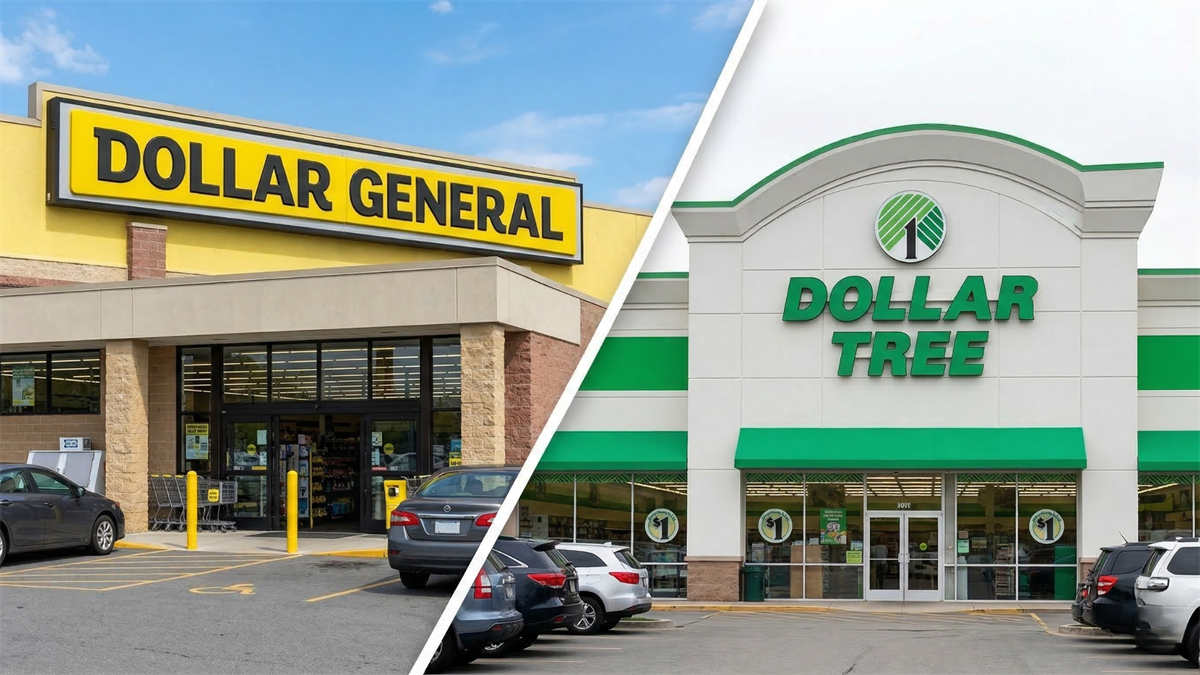
In this way, companies like Dollar General Corp. (NYSE: DG) and Dollar Tree Inc. (NASDAQ: DLTR) can offer investors insight into pressures caused by the price of essentials like food, housing, and gas. Although discount retailers can thrive in stronger economies—and their performance is, of course, closely linked to operations and company-specific concerns—their performance can also reflect broader consumer spending habits and trends.

Dollar General's Strong Recent Results May Not Outweigh Anticipated Pressures to Come

Dollar General recently came off a strong Q4 fiscal 2025 (ended Jan. 30, 2026), with revenue climbing by almost 6% year over year (YOY) to $10.9 billion on strong same-store sales improvement of 4.3%. Gross margin also improved by an impressive 105 basis points for the quarter, thanks to lower inventory and a reduction in shrink. 

The company's expansion plans are aggressive, with about 450 new U.S. stores in the works this year, a growing delivery program, and new ventures into digital territory.

Still, despite those positive signs, forward guidance came in remarkably tepid, as the company expects fiscal 2026 to see slowing same-store sales growth (only 2.2% to 2.7% for the year) and net sales growth between 3.7% and 4.2%. The company also does not plan to repurchase shares this fiscal year, which puts pressure on its valuation, given that it already trades at more than 19 times earnings.

While Dollar General is likely to see increased traffic among middle-income customers, its core base—those with household incomes of $50,000 or less—is under severe pressure. It makes sense, then, that shares of DG tumbled by more than 9% in the last week amid the earnings release, as well as 3.6% overall so far this year. Analysts see a little more than 10% upside potential for the stock, but fewer than half of the 30 ratings for DG shares are Buys.

Dollar Tree's Multi-Price Approach Continues to Succeed, But External Challenges Loom As Well

Dollar Tree also recently reported Q4 fiscal 2025 earnings (for the period ending Jan. 31, 2026), which were also notably strong in several respects. The company's comparable store sales climbed by 5% YOY, while full-year net sales rose by 10% over the same period. Gross margin improved by 150 basis points, helping to generate about $1.2 billion in cash from operations and facilitating $1.6 billion in share repurchases across the fiscal year.

The company has at least two unique factors distinguishing it from Dollar General. First, its summer 2025 divestiture of the Family Dollar brand helped it to streamline operations, allowing shares to rally by almost 70% in the last year. Second, Dollar Tree's unique multi-price strategy—which expands beyond its traditional price point to include offerings priced at $3, $5, and $7, for example—has been a success.

About 5,300 Dollar Tree locations, as of the end of fiscal 2025, are utilizing this approach, with multi-price representing about 16% of sales and growing.

Forward guidance was also more modest, with management calling for 3% to 4% in comps growth, between $20.5 billion and $20.7 billion in sales, and earnings per share between $6.50 and $6.90 for fiscal 2026. The reality is that, despite its advantages, Dollar Tree is also subject to headwinds from tariffs, rising oil and gas prices, shifting tax rates, and more.

Ultimately, Dollar Tree may have greater appeal to investors at this point, thanks to its cleaner balance sheet and stronger earnings growth path. There are still unknowns, including the external factors above, as well as the potential continued success of the multi-price strategy as the company continues to implement it on a broader scale. For the time being, analysts are also cautious about DLTR shares, assigning an overall Hold rating, with upside potential comparable to Dollar General.

Where Should You Invest $1,000 Right Now?

Before you make your next trade, you'll want to hear this.

MarketBeat keeps track of Wall Street's top-rated and best performing research analysts and the stocks they recommend to their clients on a daily basis.

Our team has identified the five stocks that top analysts are quietly whispering to their clients to buy now before the broader market catches on... and none of the big name stocks were on the list.

They believe these five stocks are the five best companies for investors to buy now...

See The Five Stocks Here

The article "How the Risk/Reward Calculation Is Changing for Discount Retail" first appeared on MarketBeat.

Sign up to read this article
Read news from 100’s of titles, curated specifically for you.
Already a member? Sign in here
Related Stories
Top stories on inkl right now
One subscription that gives you access to news from hundreds of sites
Already a member? Sign in here
Our Picks
Fourteen days free
Download the app
One app. One membership.
100+ trusted global sources.