Get all your news in one place.
100’s of premium titles.
One app.
Start reading
Motorsport
Motorsport

How the "F1" movie filmed at live grand prix weekends using custom tech

If there's one thing the F1 movie did well, it was the expansive use of technology to bring the viewer closer than they'd ever been to a Formula 1 race. It's no surprise the movie recently won two Critics' Choice Awards, one for editing and one for sound. In a recent video from Apple TV, it walks us through the ins and outs of how technology was used. 

"Formula 1 history is filled with stories like this. Teams that come out of nowhere and somehow find a way to innovate or pull off a miracle and win. It was a nice parallel to the filmmaking process," director Joseph Kosinski tells the camera. 
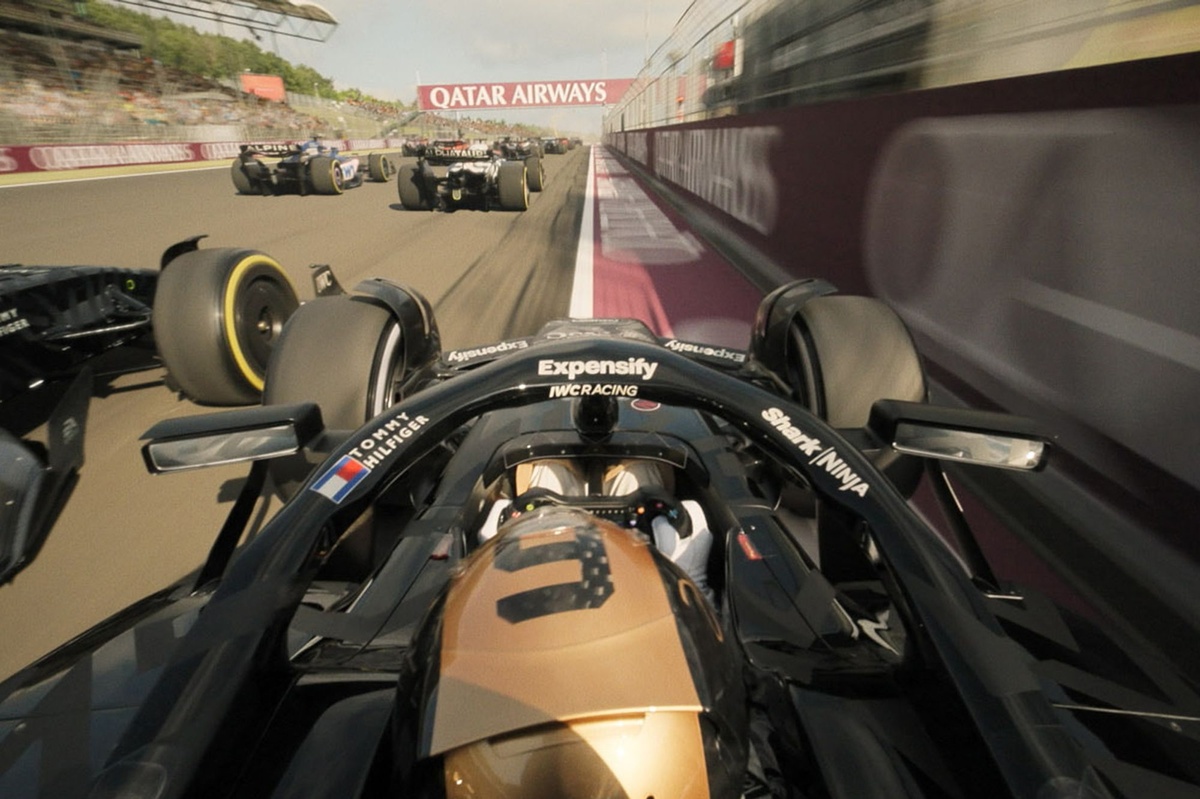
Doing something that had never been done before, the production team built large parts of the movie within F1 weekends. 

“This job's completely unique,” Gareth John, production sound manager, said. “I never thought I'd find myself trying to record dialogue at a live F1 track, a fairly hostile environment, really, with all the noise that's going on and the radio frequencies from the cars, other film crews.” To make it workable, the team leaned on motorsport-grade transmission hardware: “We’ve been using Siemens RFs, Cobham video transmitters to transmit sound of the cars back to me.

"Electrical department, props, costume, everybody. Everyone's helped facilitate the sound capture on the project."

Audio was a challenge, but filming on custom-built cars that were actually being driven by actors Brad Pitt and Damson Idris presented a whole new world of barriers. 

"In this film we needed to place the recording unit somewhere on a car that has no storage space. I mean, there's just enough room for the driver," continued Kosinski. 

Tiesto with the F1 movie car (Photo by: Bryn Lennon / Formula 1 via Getty Images)

"Now we have 16 different angles on the car. It's the first time we've ever had a remote camera that can turn and move," producer Jerry Bruckheimer added.

The cameras had to be able to capture footage in 4K while simultaneously beaming the data back to the receiver sites dotted around the circuit. To do this, the production team itself had to build not only custom hardware, but also custom code to run everything in tandem while being able to survive the environment of driving at race pace on a number of different circuits. 

"We wrote some software and sure enough, we've been able to talk to the cameras, talk to the lens control. Everything you see that's on the car in the RF, pretty much we've built and specifically to fit this car.”

With huge box-office success and countless award nominations, it seems as though the industry is rewarding an engineer-led production, and F1 is getting plenty of attention alongside it. 

Sign up to read this article
Read news from 100’s of titles, curated specifically for you.
Already a member? Sign in here
Related Stories
Top stories on inkl right now
Our Picks
Fourteen days free
Download the app
One app. One membership.
100+ trusted global sources.