Three Birds, Three Strategies
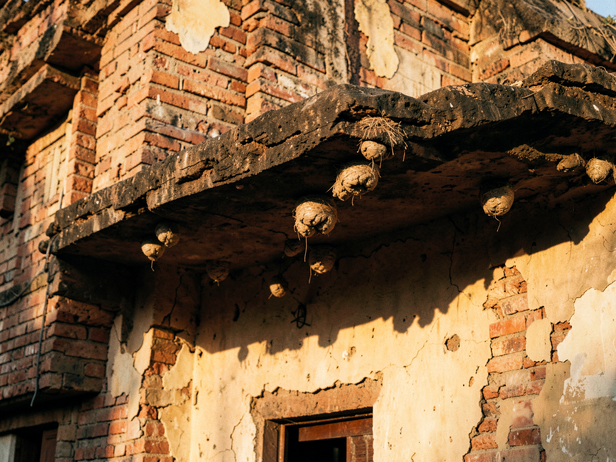
The common swift (Apus apus) does not land on the ground by choice. Its legs are so short and its wings so long that touching down anywhere except a vertical surface is a trap it cannot escape from. For centuries, the deep overhangs of Indian havelis, the ventilation gaps in brick kilns, and the hollow spaces beneath old clay roof tiles gave it exactly what it needed: a narrow slot at height, sheltered from rain, with a clear drop for take-off. The swift did not adapt to buildings. It adopted them as the next available cliff face.