
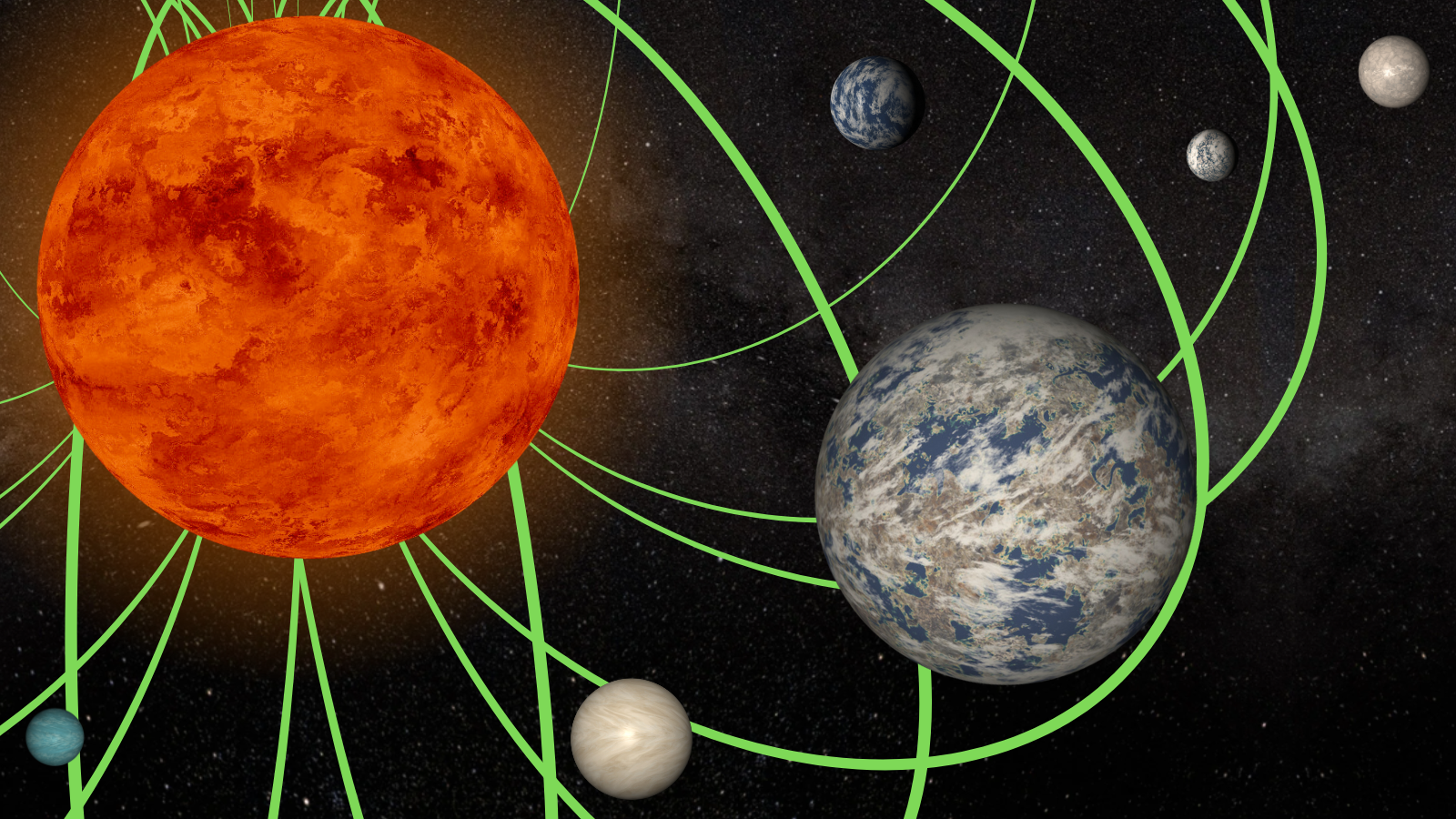
The chances of a planet hosting life depends on more than just its proximity to its parent star, and the amount of radiation it receives. New research looks at the impact a star's magnetic field has on exoplanet habitability.
You may be familiar with the so-called "Goldilocks zone" around stars, which gets its name from the fact that it is the region around a star where it's neither too hot nor too cold for a planet to host liquid water. Yet, despite the alternate name for this region — "The Habitable Zone" — merely existing in this band still doesn't guarantee that a planet will be suitable for life.