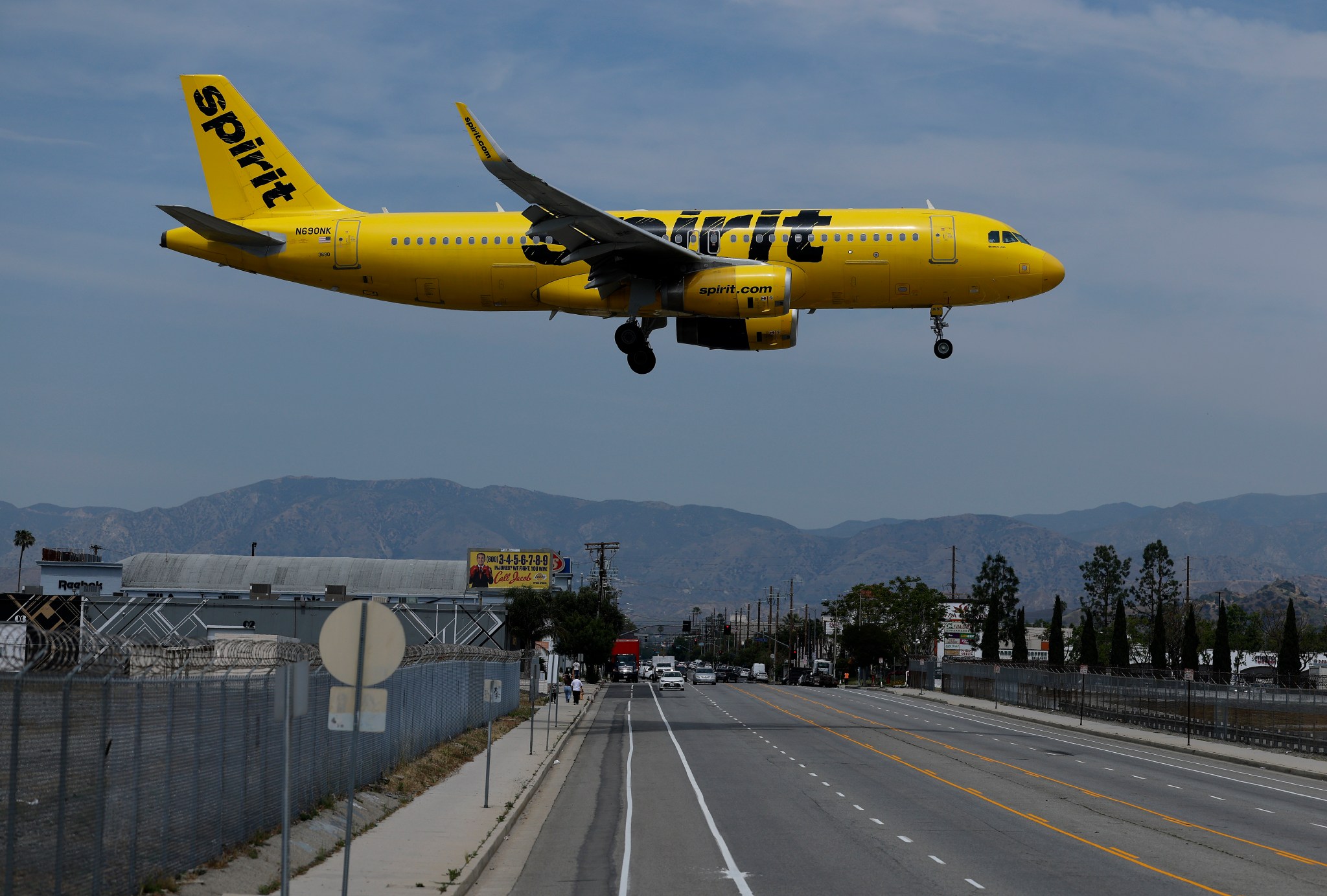
During a CNBC interview on April 21, President Trump for the first time hatched the possibility of an administration-led rescue plan for stricken Spirit Airlines. “Spirit’s in trouble,” declared the POTUS. “Maybe the federal government should help out on that one … It’s 14,000 jobs.” Prior to Trump’s statement, few if any were speculating about such a solution. Indeed, though the U.S. propped up a broad swath of carriers post–9/11 and during COVID, we’ve never seen a Washington bailout designed for an individual airline. From Trump’s surprise salvo, things moved fast. By the next day, the secretaries of Transportation and Commerce were reportedly mulling a $500 million package of loans in exchange for warrants that could give the U.S. a substantial equity stake in Spirit. The reports tagged Commerce Secretary Howard Lutnick as the chief proponent of the ownership strategy.
Spirit’s tailspin, of course, is partly of Trump’s making. The Middle East conflict has ignited an explosion in jet fuel prices, a line item that in average times amounts to 20% to 30% of airlines’ pretax, noninterest costs. Spirit has been operating under bankruptcy protection since August, and just two weeks after the war began, presented an already-fragile reorganization plan in the Southern District of New York. The blueprint projected jet fuel in the $2.20 a gallon range for this year and 2027, and even at those historically low prices, foresaw super-thin operating margins of 0.5%. Now, airlines are paying around $4.20, almost double the prewar sticker and Spirit’s forecast. A study by J.P. Morgan posits that owing to the fuel hit, Spirit is set to lose 20 cents for each dollar of revenue, and add $360 million in operating costs, an amount equal to its cash cushion.