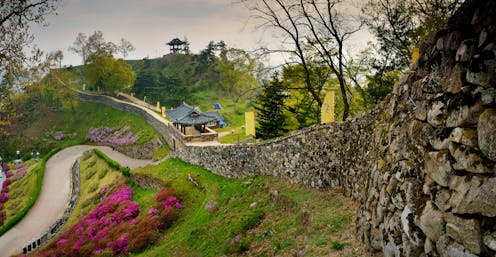
The Baekje kingdom was one of the earliest states on the Korean Peninsula (18 BEC to 660 CE), and UNESCO’s Baekje Historic Areas offer a unique testimony of its history, culture and legacy. Located in South Korea’s Midwest, the kingdom was at the crossroads of exchanges of art and Buddhist culture along the Silk Road with other kingdoms in Korea, China and Japan. Remains of temples, fortresses, tombs and many other archaeological sites dating to 475-660 CE testify to the Baekje kingdom’s creative adoption of Chinese principles of construction, art and religion.
Today, about 440,000 people now live in Iksan, Gongju and Buyeo, three cities that were once capitals of the Baekje Kingdom. As time passed, Iksan turned toward industry, while Gongju and Buyeo focused on tourism. Despite having been inscribed on the World Heritage List in 2015, both Gongju and Buyeo have suffered steady population loss and the number of tourist visits has been stagnant. Annually, about 1.5 million people visit, with most of them not staying more than a day.