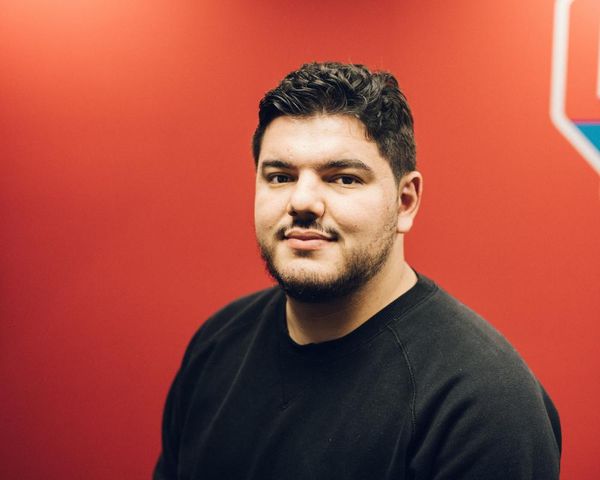
Image: Ryosuke Takenaka | Ryosuke Takenaka LinkedIn Profile
Early childhood education is facing one of its most challenging periods in decades. Teachers are under greater pressure to support young learners with limited time and limited tools. However, Ryosuke Takenaka, an educator and entrepreneur with experience across Asia and the United States, is working to change that. As Founder and CEO of Wiillow Inc., he is building an AI life-skills platform for K to 3 that delivers short guided activities and gives teachers clear, real-time insight into children’s growth.
Takenaka has become a recognized voice in the field. He has founded schools, led cross-country teams, scaled multimillion-dollar education ventures, and presented at major international conferences. In this conversation, he reflects on the work that shaped his approach and shares how he sees the future of early life-skills education taking form.
What early experiences shaped your commitment to education?
I grew up in a family of educators, so I heard about classroom challenges every day. That exposure made teaching feel like a calling. I wanted to understand how children grow, how schools work, and how a good learning environment changes a life.
By age 24, I started building my own programs. I founded a preschool in Tokyo, created a K to 6 cram school, helped build a school in Cambodia, and launched coaching organizations that grew to thousands of learners. Those years taught me how much dedication teachers pour into each student and how limited their time can be. The more I worked across countries, the more convinced I became that children need accessible ways to practice life skills and that adults need clearer signals to support them.

Image: WiiLLOW on TechCrunch | Ryosuke Takenaka LinkedIn Profile
Where did the idea for Wiillow come from?
Two forces shaped it. The first was a rising concern among teachers and counselors. Many of them were seeing more behavioral needs and more emotional strain, often in very young children. The second was becoming a father. That made me think deeply about building something I would trust for my own child: simple activities that strengthen confidence and empathy, and a system that keeps safety at the center.
If life skills remained invisible, schools would always struggle to respond. Wiillow is my attempt to make those skills measurable and understandable without increasing workload for educators.
How does Wiillow support schools in a practical way?
The platform offers short voice-guided activities that children can follow independently or in small groups. Each session targets elements of competence, autonomy, or relatedness. Teachers see quick progress indicators on a dashboard that requires no extra paperwork or long assessments.
We also focus on readiness for the classroom. Every activity is three to five minutes. Teachers already have packed schedules, so our job is to make evidence-based practice doable within a normal school day. That is why Wiillow includes a simple next-best suggestion and an optional home connection tip. The goal is clarity and ease, not complexity.
You have built education ventures in several countries. How did that influence Wiillow’s development?
Operating in Japan, Singapore, Cambodia, and the United States pushed me to refine my leadership style and product design. Each region has different expectations around privacy, curriculum, and communication. These differences forced us to build Wiillow with strong guardrails: COPPA and FERPA awareness, clear consent pathways, and research partnerships with psychologists who review our design decisions.
Leading pilots in multiple time zones also taught me how to manage cross-cultural operations. Evidence and simplicity became my guiding principles. If an activity works across cultures and stays easy for teachers to adopt, we are on the right track.
Can you describe some milestones that validated your approach?
We were selected to exhibit and pitch at TechCrunch Disrupt 2025. We presented pilot findings at ISPA 2025 in Porto with a Harvard Visiting Scholar as a co-author. We were also invited to present at CES 2026 in Las Vegas. These events put us in front of educators, researchers, and investors who confirmed that early childhood mental health is a global priority.
On the funding side, we secured more than $60,000 in non-dilutive awards, including grants from Zell Entrepreneurs, the Digital Innovation Fund, AA Spark, and Learning Levers. These resources allowed us to strengthen our academic advisory network and begin pilot discussions with private elementary schools in Michigan and California.

Image: Ryosuke Takenaka on TechCrunch | Ryosuke Takenaka LinkedIn Profile
You previously scaled large education and coaching organizations. How does that experience shape your leadership now?
My earlier ventures taught me how to build teams and how to manage complexity at scale. At GRASOL Inc., we grew to 2,000 members with strong profitability. In Singapore, I led multiple organizations, including a coaching community that reached two million dollars in annual profit. Those experiences formed my approach to team hiring, operational discipline, and product-market alignment.
But they also taught me something more personal. No matter how fast a company grows, the mission must stay anchored in human development. With Wiillow, that value is non-negotiable.
What challenges have you encountered while building an evidence-based children’s product?
Three challenges stand out. First, designing with strong privacy standards. Young children deserve the highest level of protection. Second, translating complex psychology into language that children understand and teachers can use instantly. Third, balancing academic rigor with real-world school constraints.
Each challenge pushed our team to improve. It made Wiillow more practical, more thoughtful, and more aligned with what schools actually need.

Image: ISPA 2025 | Ryosuke Takenaka LinkedIn Profile
How do educators and partners respond to your vision?
Educators consistently tell us that they appreciate clarity and simplicity. They want tools that help them act sooner rather than drown them in data. Advisors and academic partners value our focus on Self Determination Theory and our commitment to publishing evidence in peer-reviewed settings.
One counselor told me that Wiillow felt like “a bridge between research and the classroom.” That comment stayed with me. It reflects what we aim to build.
Looking Ahead
Takenaka’s vision for Wiillow is clear. He wants early life skills to be simple, measurable, and accessible for every young learner. As he expands pilots, strengthens academic partnerships, and prepares for broader adoption in the United States and Japan, he sees an opportunity to give schools clearer insight while keeping the daily experience child-friendly and practical.
The next few years will focus on deeper evidence, wider school networks, and new tools that support both educators and families. Through that growth, Takenaka stays anchored in one principle: technology should amplify human care, not replace it.