Get all your news in one place.
100's of premium titles.
One app.
Start reading
The Conversation
The Conversation
Environment
Joan Casey, Associate Professor of Environmental and Occupational Health Sciences, University of Washington

How researchers measure wildfire smoke exposure doesn’t capture long-term health effects − and hides racial disparities

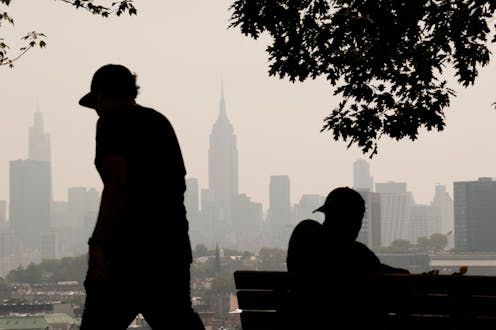
Fine particulate matter from wildfires can cause long-term health harms. Gary Hershorn/Getty Images

Kids born in 2020 worldwide will experience twice the number of wildfires during their lifetimes compared with those born in 1960. In California and other western states, frequent wildfires have become as much a part of summer and fall as popsicles and Halloween candy.

Wildfires produce fine particulate matter, or PM₂.₅, that chokes the air and penetrates deep into lungs. Researchers know that short-term exposure to wildfire PM₂.₅ increases acute care visits for cardiorespiratory problems such as asthma. However, the long-term effects of repeated exposure to wildfire PM₂.₅ on chronic health conditions are unclear.

Sign up to read this article
Read news from 100's of titles, curated specifically for you.
Already a member? Sign in here
Related Stories
Top stories on inkl right now
One subscription that gives you access to news from hundreds of sites
Already a member? Sign in here
Our Picks
Fourteen days free
Download the app
One app. One membership.
100+ trusted global sources.