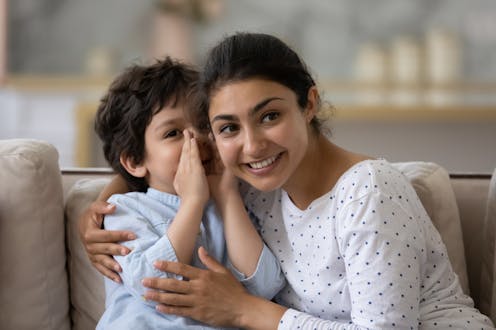
Autistic children – and adults – often communicate differently to neurotypical people. Key characteristics of autistic speech can include less eye contact, focusing on the details rather than the overall gist of a conversation, and favouring literal meaning: autistic people may find it more challenging to guess if something is being implied rather than said directly.
These differences may make some communication between autistic children and the adults in their lives difficult. But understanding them can help.