It's difficult to fully grasp the dire living conditions in Cuba right now. People line up and wait all day for basic groceries like chicken and oil, only to go home empty-handed, because the store shelves are bare. Lengthy blackouts are frequent, which means residents of the Caribbean nation can't use air conditioners or even fans at the sweltering height of summer. Hospitals and pharmacies don't have basics like antibiotics and aspirin. Plus, the island is experiencing a record spike in COVID-19 cases and deaths. Cubans haven't faced hardships like this since the collapse of the Soviet Union devastated their economy in the early 1990s.
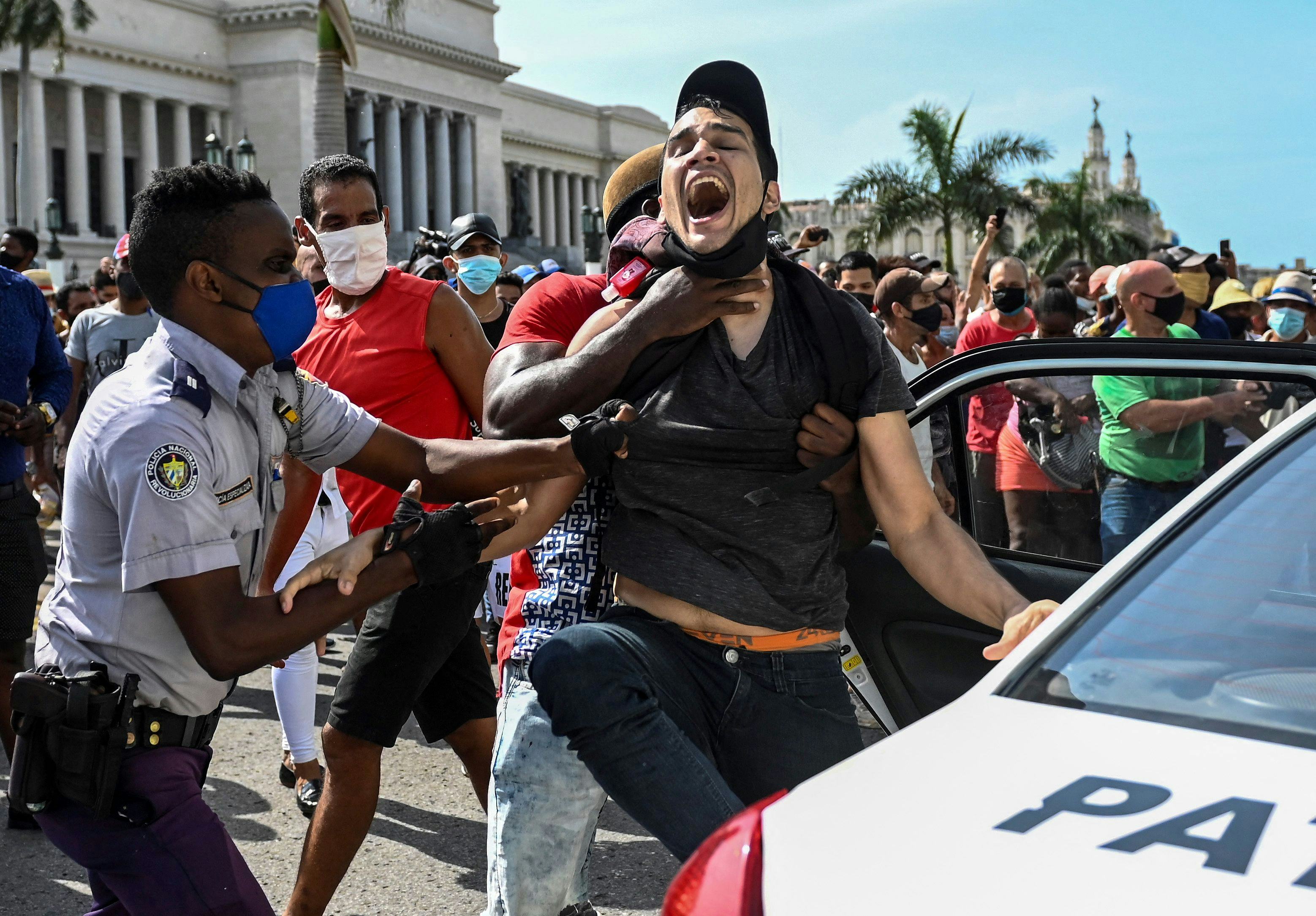
Hungry and desperate, thousands of fed-up citizens have poured into the streets all over the island in collective fury. It was Cuba's largest protest movement in decades, and the people's demands went beyond basics like food, energy, and medicine. In chants, song, and on social media, Cubans rebuffed the restrictive rule of their government and called for freedom. Marchers were heard chanting "patria y vida," meaning "homeland and life," which is a twist on the Communist slogan "patria o muerte" — homeland or death. It comes from a viral hip-hop song pointedly accusing the government of destroying the quality of life in Cuba.