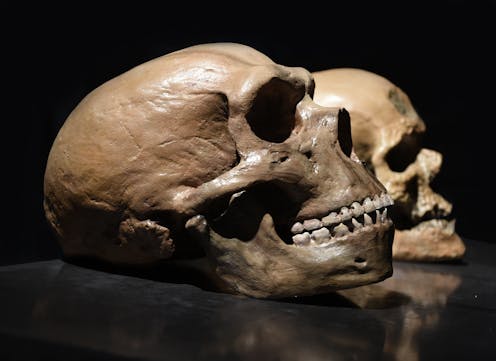
The Neanderthals (Homo neanderthalensis) fascinate researchers and the general public alike. They remain central to debates about the nature of the genus Homo (the broad biological classification that humans and their relatives fall into). Neanderthals are also vital for understanding the uniqueness or otherwise of our species, Homo sapiens.
We shared an ancestor with the Neanderthals around 600,000 years ago. They evolved in Europe while we did so in Africa, before dispersing multiple times into Eurasia. The Neanderthals became extinct around 40,000 years ago. We populated the world and continue to flourish. Whether that different outcome is a consequence of differences in language and thought has been long debated.