
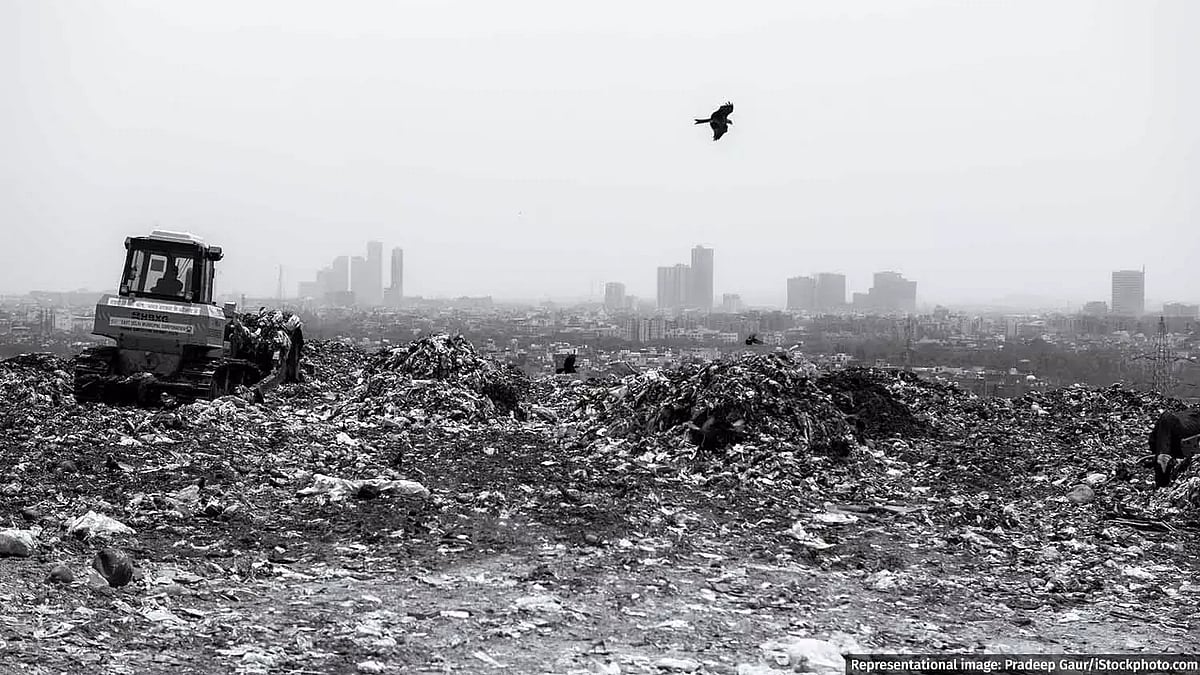
Earlier this year, Mumbai’s Kanjurmarg landfill—a place that takes in most of the city’s waste—was found to be one of the largest emitters of the greenhouse gas (GHG) methane in the world, and one of only two landfills from India to make it to the top 25 list. As global warming accelerates, causing extreme and erratic weather across the world, the Paris Agreement's target of limiting the rise in global temperatures to 1.5-2°C by 2030 cannot be achieved at a reasonable cost without reducing methane emissions by 40-45 percent by that year, according to the United Nation Environment Programme's Global Methane Assessment 2021.
Methane is an odourless gas, but coupled with other landfill gases, it adds to local pollution, contributes to health issues and is also susceptible to fires. The residents of areas near the Kanjurmarg landfill have repeatedly complained of the unbearable stench from it and as part of an ongoing case in the Bombay High Court, two judges visited the landfill at night in April to personally inspect the odour. The High Court had pulled up both the municipal corporation as well as the company running the landfill, directing them to undertake a series of measures to control the stench.














