
Minnesota is at the centre of a major clash over immigration enforcement, civil rights and even election rules, after Donald Trump sent thousands of federal agents into Minneapolis and nearby areas.

In less than a month, two US citizens have been shot dead by immigration officers, protests have spread across the country, and state officials say the federal government is trying to “ransom” the city’s safety in exchange for access to voter and welfare data.
Why is ICE in Minnesota?
Immigration and Customs Enforcement (ICE) is the US agency that carries out immigration enforcement — arresting, detaining and deporting people it believes are in the country without authorisation. In December, the Trump administration expanded a surge operation in Minnesota’s Twin Cities, calling it the “largest immigration enforcement operation ever carried out”, and brought in thousands of additional ICE and US Border Patrol officers in January.
The White House says the mission is about “public safety” and deporting “criminals illegally in the US”, and has pointed to fraud cases in Minnesota to justify the scale of the operation. Trump has repeatedly singled out the state’s large Somali community, accusing Somali residents of “ripping off” Minnesota over a welfare fraud scandal, even though many Somali Minnesotans are US citizens or permanent residents. Minnesota attorney‑general Keith Ellison has rejected that framing, saying: “It’s not about fraud, because if he sent people who understand forensic accounting, we’d be having a different conversation. But he’s sending armed masked men.”
What happened to Renée Good and Alex Pretti?
On 7 January, 37‑year‑old legal observer Renée Good was shot and killed by an ICE agent while she was monitoring immigration raids in Minneapolis. Videos show masked officers approaching her car, which is stopped at an odd angle, the car reverses and then pulls away, briefly moving in the direction of an officer who fires at close range. A private autopsy commissioned by her family’s lawyers found she was shot three times — in the forearm, breast and head — with the head wound the most serious.

The White House and the Department of Homeland Security (DHS) have labelled Good a “domestic terrorist” and say the officer fired in self‑defence after she drove at him, but video evidence indicates at least two shots were fired from the side of her car as she tried to leave. The Justice Department has said the available footage “cleared” the officer, Jonathan Ross, and that there will be no criminal investigation, a decision that prompted a wave of federal prosecutors to resign in protest.
On January 24, federal agents shot dead 37‑year‑old intensive care nurse Alex Pretti during a protest in Minneapolis, the second killing of a US citizen by immigration officers in the city in under a month. Bystander videos show Pretti holding a phone as he helps protesters who had been pushed to the ground, before officers force him onto his hands and knees. Witnesses and local officials say he was beaten and then shot multiple times while kneeling, and BBC analysis has found no gun visible in his hand in the available footage.

DHS says agents fired in self‑defence because Pretti “had a handgun” and resisted attempts to disarm him, and Homeland Security Secretary Kristi Noem has said he was shot because he was “brandishing” a gun. His family say he did own a legally registered handgun and had a permit to carry, but they had never known him to carry it, and local police confirm he was a lawful gun owner. The administration has described him as a “domestic terrorist”, which his family called “sickening lies”, stressing he had no criminal record beyond minor traffic tickets.
What’s the fight over voter data and welfare records?
The confrontation is not just on the street — it now includes a serious dispute over data on millions of people. On the same weekend Pretti was killed, US Attorney‑General Pam Bondi sent a letter to Minnesota governor Tim Walz promising “common sense solutions” to “bring an end to the chaos in Minnesota”.
Her demands included:
- Giving the federal government access to Minnesota’s voter rolls.
- Handing over state data on people receiving Medicaid and food assistance (SNAP).
- Scrapping Minnesota’s “sanctuary” policies so local officials fully cooperate with ICE.
Bondi linked those demands to what she called “out of control fraud” in Minnesota, referencing an older welfare fraud scandal that has already been used to justify the ICE surge. Vice‑president JD Vance has said the administration wants to use Medicaid and SNAP data for immigration enforcement, including checking the “last address” listed on welfare applications.
Minnesota secretary of state Steve Simon has refused to hand over voter data, calling the demand “an apparent ransom” tied to the federal presence in Minneapolis, per NPR and warning he is now “planning for” possible interference in state elections. A federal judge hearing challenges to the operation has asked whether the administration is “trying to achieve a goal through force that it can’t achieve through the courts”.
How are people in the US and overseas reacting?

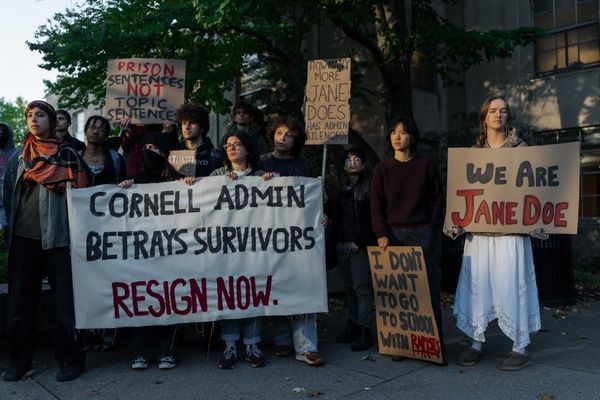
In Minnesota, protests have continued for weeks, with vigils for Good and Pretti and marches where people have chanted “ICE out now” and “No more Minnesota nice – Minneapolis on strike”. Demonstrations have spread to New York, Chicago, Los Angeles and San Francisco, with signs demanding “Justice for Renee and Alex” and “Abolish ICE”. Around 700 businesses across Minnesota reportedly shut their doors for a day of coordinated action against the federal operation, and more than 60 chief executives from companies including Target, Best Buy, 3M and UnitedHealth signed an open letter calling for “an immediate de‑escalation of tensions” and for officials “to work together to find real solutions”.
Some Republicans have broken ranks, with senator Bill Cassidy calling Pretti’s shooting “incredibly disturbing” and warning that “the credibility of ICE and DHS are at stake”, while Alaska senator Lisa Murkowski has said it raises “serious questions” about enforcement training. Gun‑rights groups, including the Minnesota Gun Owners Caucus, have also criticised officials for focusing on Pretti’s decision to carry a firearm, saying “every peaceable Minnesotan has the right to keep and bear arms, including while attending protests”.
Internationally, the crackdown has drawn criticism from human rights officials and foreign media but no global leaders. The UN high commissioner for human rights has urged the US to end the “harmful treatment of migrants and refugees” and to ensure that immigration enforcement in places like Minnesota complies with international law and basic due‑process standards.
What is Trump saying, and what happens next?
Under pressure, Trump has said his administration is “reviewing everything” about Pretti’s killing and will “come out with a determination”, but he has not committed to a timeline. He has also said “at some point we will leave” Minneapolis and claimed federal officers have done “a phenomenal job”, while demanding on social media that Walz, Minneapolis Mayor Jacob Frey and “EVERY Democrat Governor and Mayor” cooperate with his administration and end sanctuary policies.
At the same time, his team has moved to cut funding for ICE body‑worn cameras and sidelined internal watchdogs overseeing immigration agencies, which critics say has weakened accountability just as enforcement has intensified.
For people in Minnesota, that means raids, protests and legal battles are still part of daily life, and the future of the operation — and the data demands tied to it — will likely be decided in court, in Congress and on the streets in the weeks ahead.
Lead image: Getty
The post How Minnesota Became Ground Zero For Trump’s Deadly ICE Raids And Data Demands appeared first on PEDESTRIAN.TV .